

Before the Industry Had Words: Pascale Brousse (Trend Sourcing) on Clean Beauty, Longevity, and Resilient Care
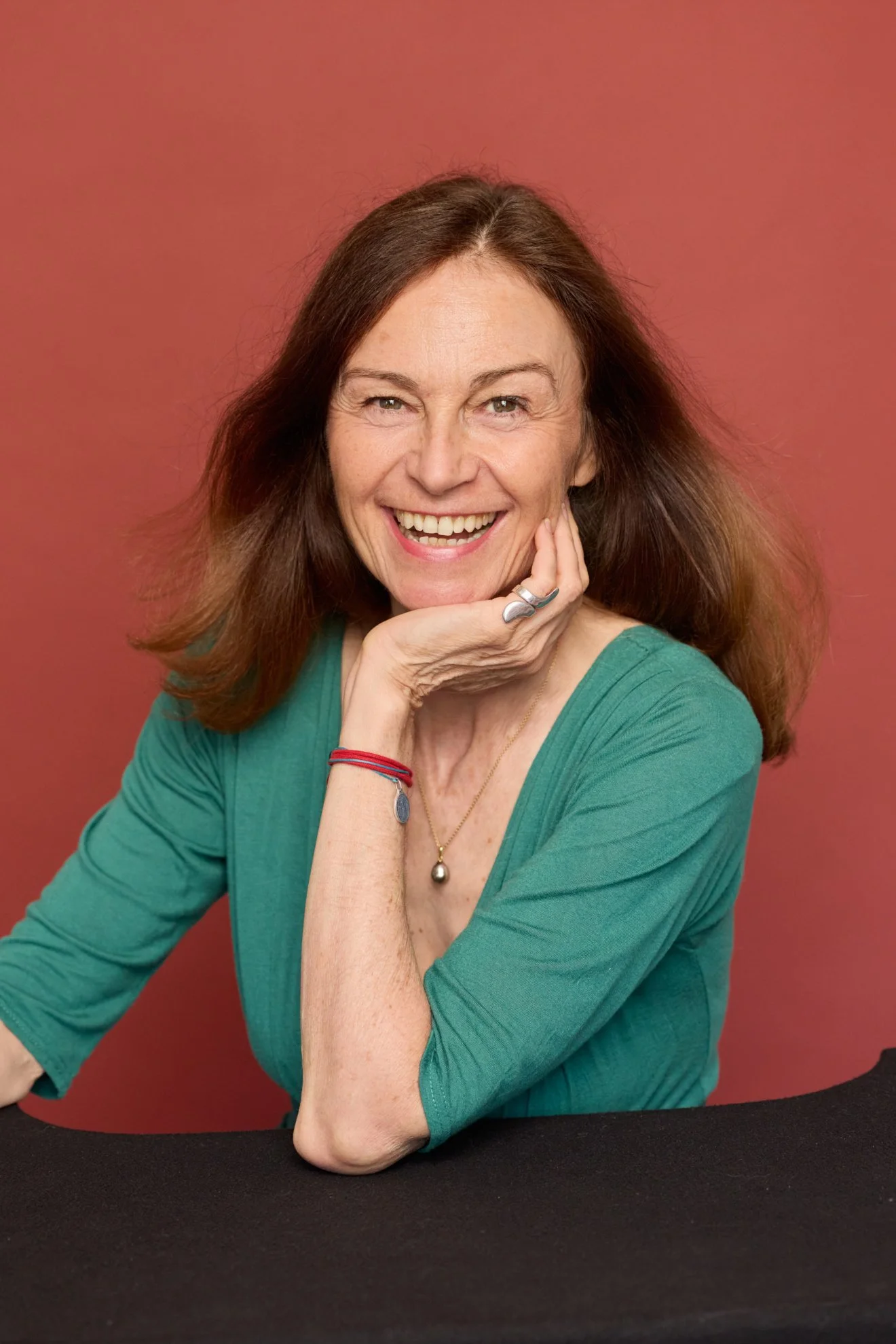
When Pascale Brousse recognizes a major shift in beauty, she describes feeling it in her body: a blow to the solar plexus. Something she reads or hears lands with such force that she needs to understand it. I like the physical precision of that description. It gives us a glimpse of the curiosity behind the studies, the presentations, and the work of helping a brand decide what deserves its attention.
During her years at L’Oréal, that curiosity took a very practical form. Working in marketing coordination, she returned from her travels with hauls of cosmetics, food, and design products to show her colleagues. A product discovered elsewhere could open a conversation about how people were living, what they valued, and what they might soon expect from beauty. She was interested in the world around the bathroom shelf as much as the products on it.
She founded Trend Sourcing in March 2000 with a conviction that still runs through her work: beauty belongs within health. Nutrition was her first passion, and she studied it through naturopathy. Spas, exercise, and different approaches to medicine became part of the same inquiry. When concerns about cosmetic ingredients began attracting her attention in 2004, she followed them into a broader examination of health as a personal priority. Her first study on what she calls the “Health Statement” movement followed in 2010.
That history interests me because it shows how a forecaster chooses what to keep looking at. The concern, the practice, and the language around it can develop at different speeds. Pascale has stayed with the relationship between beauty and health through those changes, while building a business that helps brands work out what it means for them. In our interview, she is candid about the scale at which she prefers to work, the value of close collaborators, and the need to involve the people who will put a strategy into practice.
Her Climate Adaptive Care research brings that attention to the conditions surrounding the skin. She asks what care should become as heat, pollution, and unpredictable weather affect daily life. The questions reach from formulation to packaging: how a product feels on hot skin, what it is intended to protect, and how it holds up in high temperatures. Her work on Shades of Skin raises a related question about whose needs have guided research in the first place.
There is a personal thread throughout this conversation, too. Pascale Brousse speaks openly about the practices she tests, the beliefs she holds, and the areas she prefers to explore through other people’s expertise. Her forecasts can be provocative. What I wanted to understand was how she arrives at them, and what happens between noticing a change and helping a brand respond. This interview follows that process, from her early travels to the questions she is asking about care, representation, and the future of her own profession.
If this article resonated, come inside the Future of Skincare newsletter on Substack. Beauty Signals is the deeper layer within it, weekly patterns where skincare meets culture, for skin intellectuals, beauty anthropologists, and the cosmetics curious. Read the opening free, full access at latte with me level.
You began your career at L’Oréal, ultimately transitioning from sales to strategic coordination. What did that pivotal decade teach you about the beauty industry, and about yourself as a future forecaster?
The cosmetics industry was quite set in its ways. It had a traditional side, was not yet very adventurous, and attention went almost exclusively to the major brands. But important molecules were discovered during that period: liposomes, SOD (superoxide dismutase), retinol…
For my part, I continued to explore the world in my role as a marketing coordinator, bringing back hauls of cosmetics, food, and design products to show the teams what was emerging. It was a newly created role, almost 30 years ago.
Before words like “clean” or “holistic” were industry buzzwords, you were already championing them. Where did that intuitive sense for the future come from, and what first sparked your curiosity for emerging trends?
I have always been drawn to anything new, whether a product, an interior, a place, or a person. I had a particularly sharp eye from a young age. Some people called me “Miss Know-It-All,” and yes, I wanted to see everything and know everything, haha. I was also passionate about sociology and sociocultural and geopolitical movements around the world.
When I spot a major trend, I first feel its impact and relevance in my body. It is like a blow to the solar plexus: the news I am reading or hearing hits me like a bomb. For example, when doubts began to spread about the safety of cosmetics in 2004, or the “Health Statement” movement that would become so prominent in our lives and in beauty. My first study on that subject dates to 2010.
When you launched Trend Sourcing in 2000, the idea of trend consulting was still a niche concept. What was the vision you had for the company, and how has it evolved across the last two decades?
Right from the start, I put forward the idea that beauty was part of health, as it is in all medical traditions: Chinese, Ayurvedic, Hippocratic… When I launched Trend Sourcing in March 2000, the agency’s purpose was to observe everything that contributed to our longevity. And to think that word is becoming a buzzword too, ah. That meant nutrition, my first passion, which I studied as part of my naturopathy training, as well as spas, exercise, all forms of medicine, holistic practices, and so on.
And I tried everything, with an enormous appetite.
As for Trend Sourcing, I considered growing the agency by hiring more employees. But with just two, I quickly realized that it took too much of my energy and that I was no longer doing the work I loved. Working with passionate consultants was, and still is, the right solution. The one I work most closely with, Hugo, has become a friend. The collaborations are fruitful and energizing, and the quality of the work is excellent.
In terms of our assignments, we have greatly expanded our work on brand platforms and strategies, which clients started asking us for quite early on. We like to bring a forward-looking perspective while ensuring alignment with the brand’s values.
Your philosophy, that beauty cannot be separated from health, feels more relevant than ever. How did you arrive at this integrated view, and why do you think it took the industry so long to catch up?
In my twenties, I had a realization about the importance of taking care of my health, starting with nutrition. It came through people I met. I particularly remember a man at a hotel buffet in Cuba who was looking at the guests’ full plates and said to me, “My body is not a trash can.” That radically changed my relationship with food, toward eating healthily and without excess.
Then, at Biotherm, there was a plan to open a spa. We were studying the Cretan diet and the whole field of well-being, which became my passion and something I studied extensively. To me, it was obvious that beauty largely reflected how we took care of our health and our bodies. I was looking at and buying lots of products containing superfoods, as well as dietary supplements, in Japan and the United States, where this was already very developed.
It took a long time for the cosmetics industry to embrace this because French people were not as open to complementary medicine as people in English-speaking countries or Northern Europe. There was the influence of Descartes’ famous separation of body and mind, of Catholicism… But also our healthcare system, with medication available at almost no cost, which did not encourage us to take an active role in our own health. To focus on prevention.
Everything changed when three factors came together: the Millennial era, the arrival and then the influence of social media, especially Instagram, and technology. Health and healthy living became desirable. From there, an all-encompassing view of beauty could enter the equation again.
Your recent Climate Adaptive Care study dives deep into the effects of climate change on skin health. What were some of the most surprising findings, and how should the industry respond to this new frontier of “climate dermatology”?
The first revelation was making the connection between climate and human health. An obvious connection… yet few people had identified it. In fact, we could not find dermatologists specializing in the subject in France, unlike in the United States, Brazil, and elsewhere. The media were talking about climate change in relation to our environment, our lifestyles, and our homes, but not about the health problems it would cause, or its implications for skin and beauty routines.
Then came understanding how to rank the factors and risks affecting our health, beauty, and overall well-being. For example, pollution, with its ultrafine particles, is actually the number one environmental threat to our health, and to our skin.
From a strictly dermatological perspective, what surprised us most was that we really are heading toward a change of paradigm, toward “Climate Dermatology”: worsening skin diseases, new concerns, and so on. Extreme, sudden, and even moderately intense weather events will have an impact on skin problems on a scale we have not anticipated. Sensitive skin will obviously become even more sensitive, and more people will experience it.
We also found, unfortunately, that “weather-related conditions,” such as air pressure fluctuations and spring fatigue, are not gender-neutral. They affect women more, particularly during menopause and perimenopause, when the ability to regulate body temperature decreases considerably. The same applies to babies and young children, who have not yet developed the ability to regulate it themselves. Social class also makes a difference. This is another dimension of intersectionality.
Beyond the skin, the effects on our well-being will be immense. For example, people become more irritable, even more violent, as temperatures rise, because neither the body nor the nervous system can rest, especially when temperatures remain high at night. “Climate anxiety” is therefore a crucial area for the well-being industries to consider, through topical care as well as broader treatments and therapies.
You’ve described a rise in conditions like “ultra-acne” and “frozen skins.” How do you envision formulation science adapting to meet these emerging challenges in thermoregulation and skin balance?
Controlling skin temperature is not actually new. It is an established practice that comes to us from Asia, particularly Japan, where stabilizing body temperature, or homeostasis, is essential to health and therefore to beauty. We found many cosmetics across every category, including face care, body care, hair care, sun care, and makeup, with new technologies and claims that allow skin temperature to be lowered considerably. For example, AHC’s Cream To Sun Sherbet has a patented sorbet texture that claims to lower skin temperature by 14.73°C after application. (In collaboration with Asia Cosme Lab.)
Cooling on one side, “frozen skin” on the other, and pollution in between… The industry needs to develop protective shields and solutions for temperature regulation, with the ultimate aim of minimizing inflammation and protecting the skin’s balance. Inflammation causes a whole host of secondary effects, particularly in skin phototypes 4, 5, and 6, which we have studied specifically in relation to beauty.
The notion of ‘resilient care’, from climate-smart sourcing to adaptogenic ingredients, feels like a paradigm shift. How can brands embed these principles meaningfully, without falling into greenwashing?
This was also the starting point for our study: whenever the media or anyone else talks about climate, the discussion moves to sustainability, in the hope of slowing or stopping climate disruption, and ends there.
The concept of “resilient care” is broader. It is a new approach to care. It is a response to unpredictable climate conditions, for the individual, for the skin, and for skincare; it is not a sustainability measure.
The aim is to establish a range of solutions, a roadmap for adapting cosmetics to these new conditions.
On one hand, “climate-smart sourcing” aims to secure the long-term supply of ingredients despite these uncertainties. It is a new paradigm for sustainable sourcing that reduces strategic risks for the business.
On the other, adaptogenic and extremophilic ingredients, including those developed through biotechnology, should be considered an extraordinary source of actives that can help resilient care protect and regulate the skin in the face of unpredictable climate conditions.
There are other dimensions and stages to developing resilient care, including packaging, to protect cosmetics from extreme heat, for example.
Resilient care will bridge people’s unprecedented needs in the face of climate change, the solutions brands must provide in this context, and the ecological requirements needed to mitigate the climate catastrophe rather than make it worse.
Your study on phototypes 4, 5, and 6 brings long-overdue attention to melanin-rich skin. What blind spots persist in how the beauty industry treats skin diversity, and how must R&D evolve to address them?
It was the same sense of astonishment as when we connected climate with beauty and health.
How could we, as an industry and as beauty analysts, have overlooked something so vast? Eighty percent of the population is non-Caucasian, yet their needs and skin physiology are still poorly understood.
This question goes beyond cosmetics. It is political.
Change will be long and slow, because it touches on structures of domination and values that some people are unfortunately not ready to reconsider. We can clearly see the reversal in the United States on Diversity, Equity, and Inclusion (DEI) initiatives over the past two years.
So there are ups and downs, but also glimmers of hope. A little like Bad Bunny at the Super Bowl halftime show, paying a vibrant tribute to the cultures of THE AMERICAS, under the banner of love rather than hate or violence.
This is not simply about adding ingredients from Africa. It is about rebuilding the foundations of basic and dermatological research first. Dermatology is, or let us say has been, a science founded by white people, for white people, that has mainly studied… white people. An enormous field of discovery could open up to us. That is the most crucial point.
The pharmacopoeias of African countries offer an immense range of remarkable solutions, whose effectiveness through ancestral and empirical use is beyond doubt. But most have not yet been objectively assessed or scientifically proven, except for the best-known ones, such as shea butter. Investment in this research is lacking and goes to other continents, such as Asia, where the prospects are more promising.
When it comes to storytelling, brands have a political role to play, but a delicate one, because the risk of cultural appropriation or “wokeism” is real. It is a difficult and sometimes perilous transition, but a necessary one for ALL BRANDS. Each must create and communicate according to its own codes and identity, while balancing the tensions around it. It is a courageous and essential direction for the long term.
Trend Sourcing doesn’t just analyze data, it translates trends into actionable brand strategy. How do you guide companies through this process of transformation? Can you share an example where insight became tangible innovation?
We work as partners to brands and businesses, on an equal footing and collaboratively. There are two aspects to our tailored methodology.
It is not just about delivering a list of trends, but about understanding the brand, the company, and its perspective. We then assess the brand with care, but without complacency.
Trends can then complement its strengths, draw attention to certain weaknesses, and broaden the range of opportunities that are relevant to that particular brand.
We prompt questions and develop conversations. Our proposals and recommendations are much more relevant and effective because we build them together. When teams are heard and involved, everyone supports the ambition to innovate and transform. Building a shared ambition.
As for examples:
Personalization with Etat Pur.
Centifolia’s brand repositioning.
We can say that NDAs prevent us from discussing recent examples in detail.
You’ve consistently been ahead of the curve, from wellness-beauty fusion to ingredient transparency. What are the next big signals you see emerging now that we might not be talking about yet?
We are living through a historic moment as the boundaries between beauty, health, and longevity disappear, driven by growing individual awareness and advances in technology and science, including epigenetics, neuroscience, and the microbiome. Barbara Lavernos, L’Oréal’s Deputy Chief Executive Officer, even speaks of a radical transformation, an acceleration of change unlike anything seen in 35 years, which will reshape the entire beauty industry: the intersections between “AI personalization, sustainability, science and technology.”
Among the developments we still talk about very little is what I call “Convergent Care”: the connections between beauty, emotions, and energies, continually amplified by technology. Cosmetics will be considered like Emotional Rescue Remedies, offering therapeutic sensations & mind care, part of a large, vibrant, specific ecosystem. This specifically addresses the demand for “mental wellness” and goes beyond it, for everyone. Skincare, makeup, and fragrance will become the new therapists. They will repair, beautify, and soothe the face, body, soul, and mind. There will no longer be boundaries, either in the physical or virtual world. Energy will also be the next quality grade / Vibratory cosmetics. We already have fragrance brands offering us fabulous synesthetic experiences.
This reflects the power of the invisible in our lives and a growing awareness of it. More people are ready to explore other channels of energy. I like making connections between the tangible and intangible worlds. We all have access to telepathy and magnetism, but we have not, or no longer have, been taught about them. I am happy to provide energy treatments by activating the magnetism in my hands, alongside my work in forecasting and brand strategy.
You’ve said your great passion is wellness and “body issues.” How does your personal relationship with wellbeing influence the way you lead, advise, and live?
This echoes my earlier answers. An expert in forecasting and innovation told me 20 years ago that he had never met someone so aligned with her convictions about well-being, someone who lived what she said. That sums it up well. The only areas I do not test on myself are aesthetic medicine and extreme technologies, such as certain forms of biohacking. On those subjects, I prefer to interview experts and observe people.
After years in the industry, what continues to excite you most about your work? How do you keep your sense of wonder alive in such a fast-moving, often noisy sector?
The fact that we are at a historic meeting point of major trends in cosmetics is precisely what makes it exciting and fascinating. Especially as this coincides with a tense geopolitical context. But it also creates a great deal of fear and uncertainty for individuals, as does the rise of AI into a superpower.
What will become of forecasting? Will trend forecasters still be needed? For now, our value lies in our ability to discern what will really matter most to a company and how it can be used to transform and innovate. We also have a new role: overseeing AI-generated content.
If you could redesign the future of beauty from scratch, what would be its non-negotiable pillars?
Sustainability, without hesitation. Combined with well-being. Everything is connected.
As someone shaping the next decade of skincare, what legacy do you hope to leave behind, not just for brands, but for consumers and the planet?
Taking care of ourselves and, by extension, our loved ones and all living things. Health is my number one motivation. My wish would be for everyone to be conscious of their consumption as a whole, beyond cosmetics alone. Because pollutants are everywhere: think of the exposome and the cocktail effect. Starting with ultra-processed foods, which make up 80% of the products on offer in supermarkets and hypermarkets, and fast-fashion clothing that is extremely toxic to the body. Links with chronic diseases and cancers have been established.
So starting by checking the ingredients in your personal care and beauty products with the help of an app, and applying fewer products to your skin by simplifying your routine, helps reduce substances that are problematic for your health and that of your loved ones. Particularly in fragrances, which are a ticking time bomb. I bet they will be banned in public spaces within 15 years, as they already are in certain places in the United States. Applying at least a dozen products a day, including shower gel and toothpaste, means that around 300 ingredients penetrate the epidermis and mucous membranes: excipients, additives, active ingredients. It is simply too much. Not to mention the damage to water and soil, and then to animals, insects, birds…
Here too, all microbiomes are connected, from the soil to humans. Another fascinating field of research for improving and restoring health.
