

CÉNÉE’s Le Fluide de Teint SPF30 and the Return of Foundation with Conditions
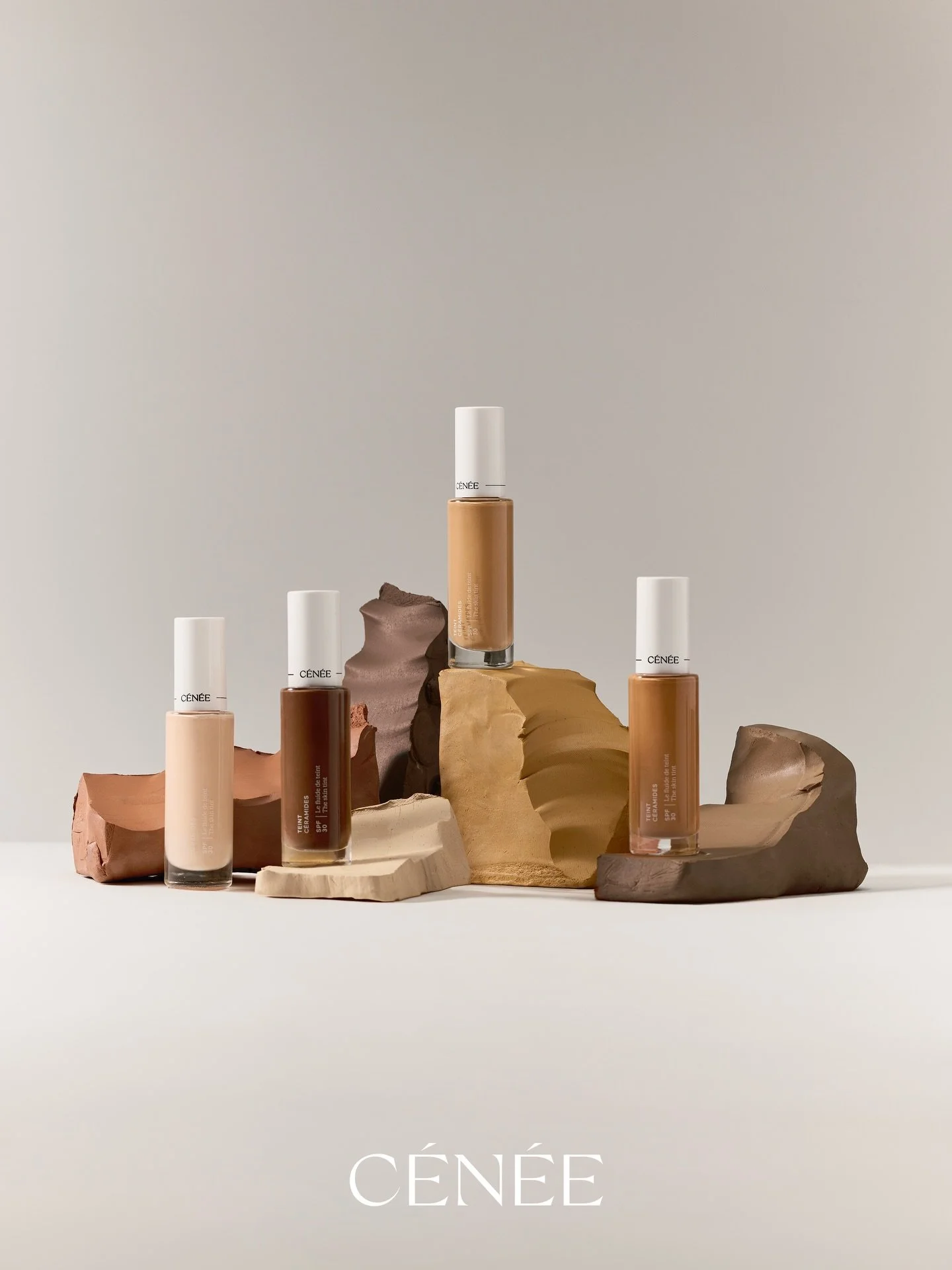
When Nassim Hamek first spoke to Future of Skincare about CÉNÉE, complexion was the category the brand had not yet entered. That absence was telling. It was not a lack of ambition. It was the opposite. Complexion was the place where the brand’s promise would be hardest to keep.
CÉNÉE had launched around a thesis Nassim Hamek articulated clearly: most hybrid makeup remains unbalanced. Either it is skincare with light pigmentation and weak wear, or conventional makeup carrying only symbolic amounts of active ingredients. His ambition was more demanding: the pigment load and performance of makeup, with active concentrations closer to what one would accept in a cream or serum.
That proposition can sound elegant in lipstick, mascara, or nail lacquer. It becomes much less forgiving in foundation. A complexion product has nowhere to hide. It must meet undertones, texture, pores, redness, dryness, movement, friction, daylight, heat, and the politics of shade. It has to perform immediately, then keep behaving for hours. It has to make the face look more even without making the skin feel absent. It has to be makeup enough to matter, and skin-aware enough not to feel like a regression.
This is why Le Fluide de Teint SPF30 matters in the CÉNÉE story. Not because the market needed another base. It did not. But because CÉNÉE had already said, in effect, that complexion would only come when the brand could carry the technical and ethical weight of the category.
If this article resonated, come inside the Future of Skincare newsletter on Substack. Beauty Signals is the deeper layer within it, weekly patterns where skincare meets culture, for skin intellectuals, beauty anthropologists, and the cosmetics curious. Read the opening free, full access at latte with me level.
The category CÉNÉE had been waiting to enter
In his FUTURE OF SKINCARE interview, Nassim Hamek described CÉNÉE as a refusal of the false choice between makeup performance and formula integrity. The brand name itself, drawn from Ovid’s Metamorphoses, carries the idea of transformation without fixed category: woman, warrior, bird. In product terms, that mythology becomes more pragmatic. A formula should not have to choose between color and care, but it also should not pretend the choice is easy.
That last part is important.
CÉNÉE’s interest lies less in claiming that makeup can be skincare than in admitting how difficult that is to formulate. Nassim spoke about compatibility issues between pigments and actives, strict blacklists that exclude common makeup ingredients such as silicones or isododecane, and the need to reformulate again and again when stability, payoff, or wear failed. Some products could launch. Others had to wait.
Complexion was one of those waiting rooms.
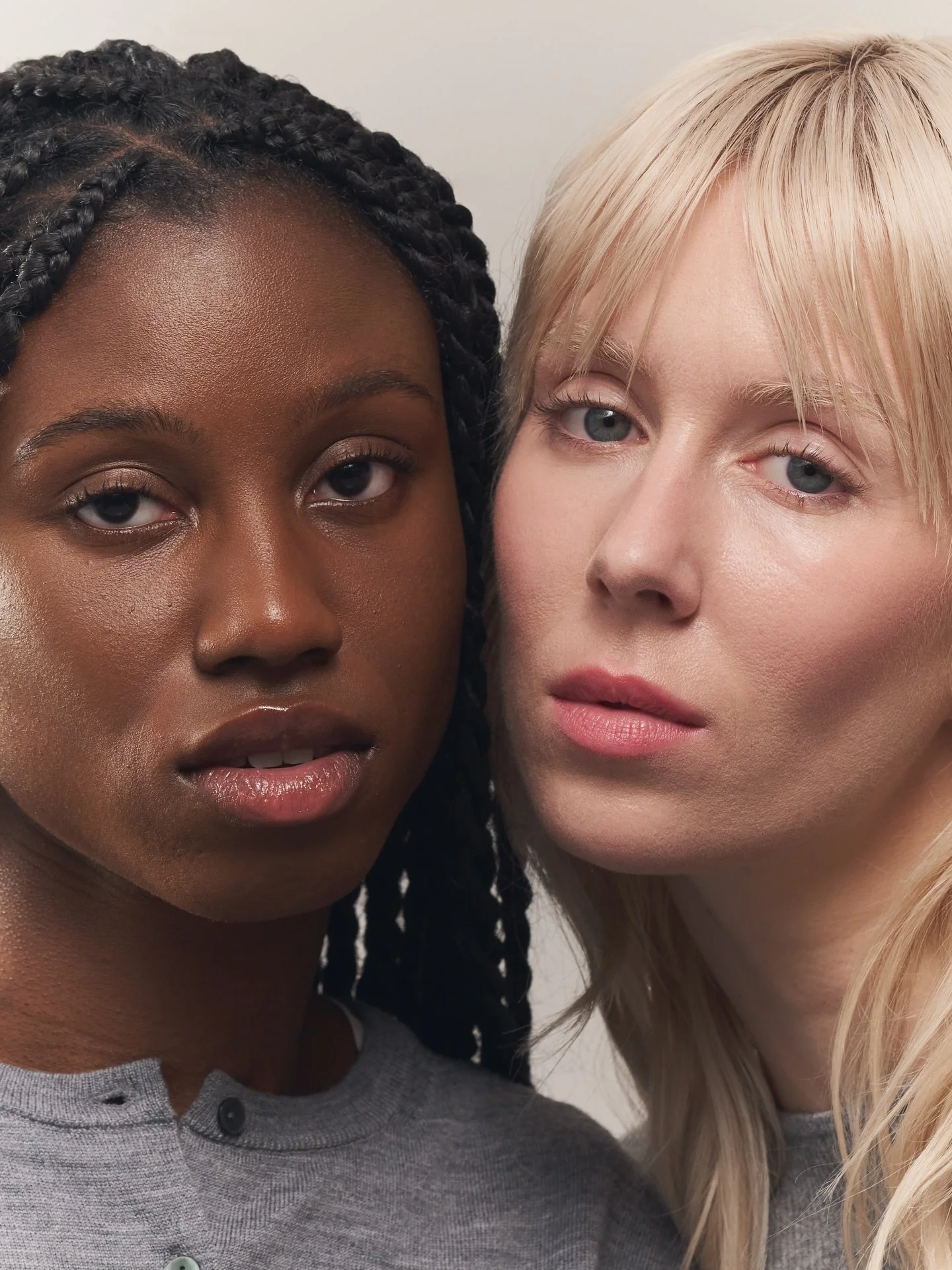
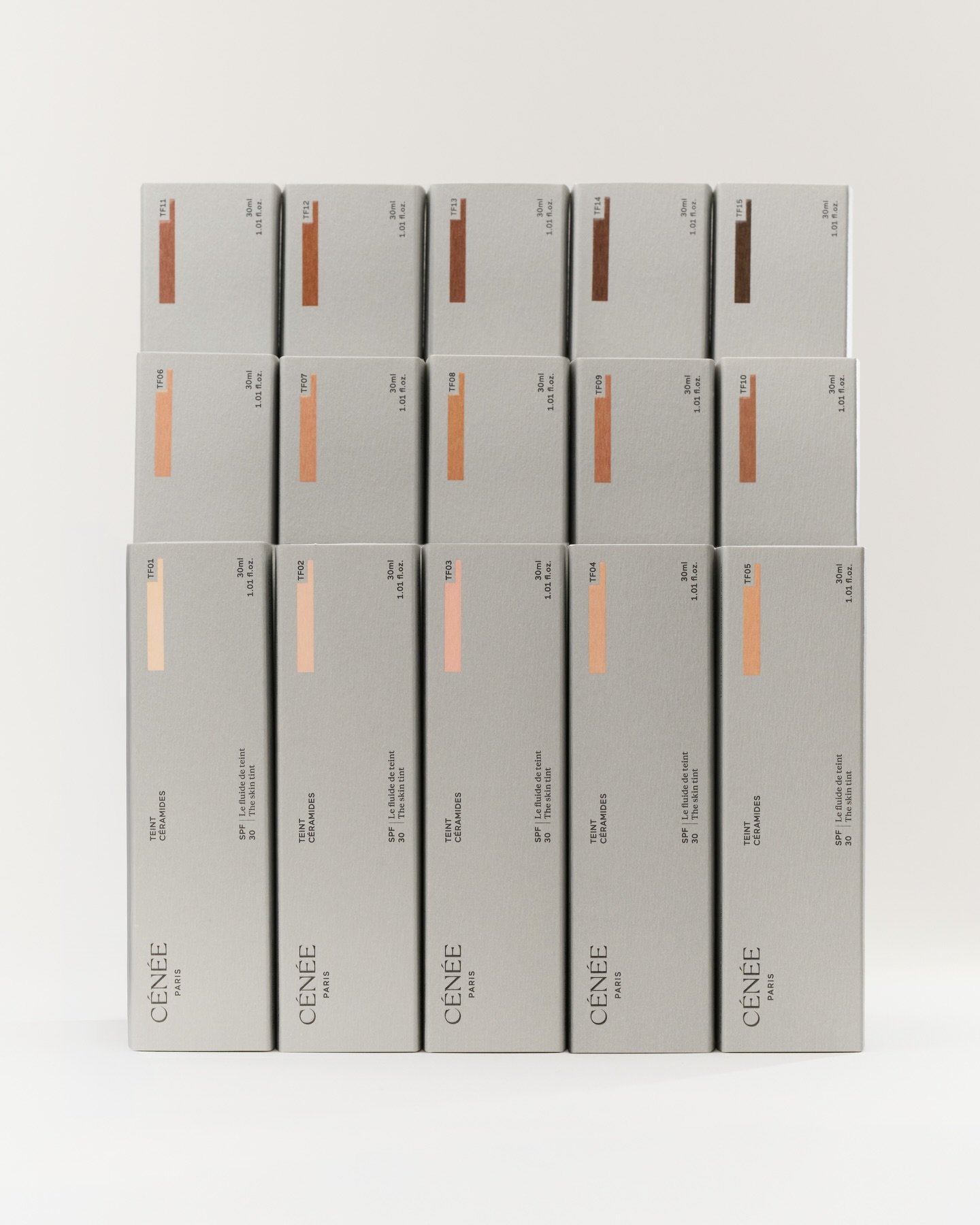
Because foundation is not only a texture. It is shade infrastructure. In the earlier interview, Nassim Hamek explained that CÉNÉE had not yet released complexion products because producing the number of shades required to serve everyone remained difficult at the brand’s scale. That makes Le Fluide de Teint SPF30 more than a line extension. It is a test of whether CÉNÉE can bring its founding doctrine into the category where inclusivity, performance, and formulation constraint collide most visibly.
Foundation returns, but not unconditionally
The return of foundation is not a return to the old face.
The old foundation fantasy was correction. Less redness, less texture, less evidence, less self. Even when the language softened, the visual ideal often remained a kind of disappearance. Then came the backlash: bare skin, skinimalism, tints, drops, glow fluids, “your skin but better.” Some of it was liberating. Much of it became another script.
Because most people did not stop wanting polish. They stopped wanting the old cost of polish.
They became less willing to tolerate heaviness, oxidation, clogged texture, brittle wear, shade approximation, or the feeling that their face had been replaced by a finish. They wanted complexion, but under conditions. The product had to respect texture. It had to move. It had to remain comfortable. It had to acknowledge that the skin underneath was not passive.
Le Fluide de Teint SPF30 enters that mood.
Its promise is not the abolition of foundation. That would be too neat. It is foundation with more conditions attached: buildable light-to-medium coverage, SPF30 PA+++ protection, a natural luminous finish, 15 shades, and a formula organized around Ceramide NP, squalane, probiotics, and biomimetic collagen.
The list matters less than the question behind it: can a base product stop behaving as though the skin were merely a surface to correct?
The skin underneath is part of the result
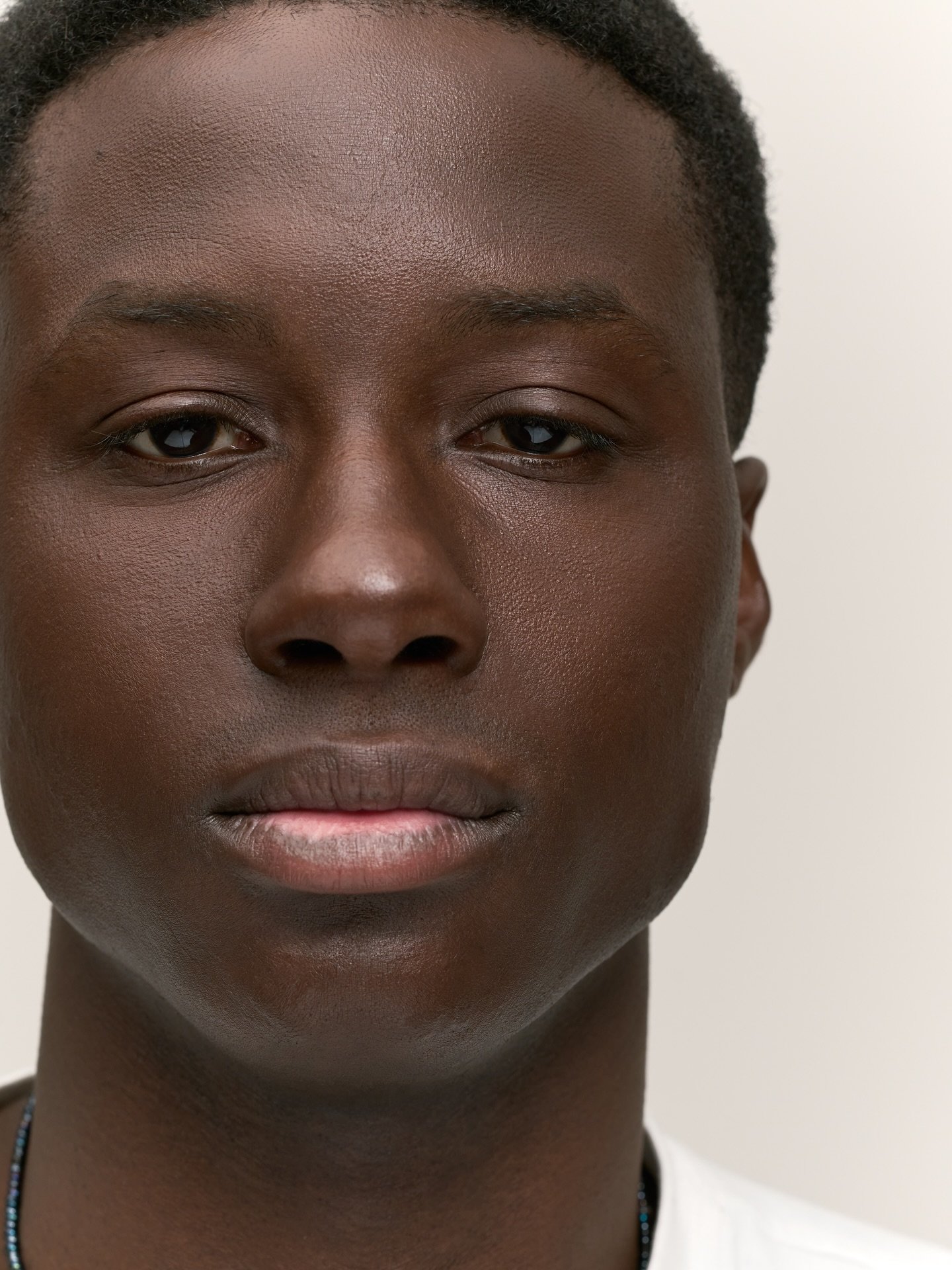
The interesting part of Le Fluide de Teint SPF30 is not that it borrows skincare vocabulary. Many products do. The more interesting claim is structural: the condition of the skin underneath is part of the makeup result.
Anyone who has worn foundation for a full day knows this. A base does not fail only when it looks cakey. It fails when the skin tightens beneath it. When pigment catches around dry zones. When the finish separates from expression. When the glow becomes residue. When the product still looks acceptable from a distance, but the skin feels increasingly uncomfortable inside it.
This is where CÉNÉE’s barrier language becomes useful.
Ceramide NP points to the structure of the stratum corneum. Squalane brings slip and suppleness without necessarily forcing the formula into greasy shine. Probiotics, depending on their exact form, enter the more delicate conversation around microbiome support and reactivity. Biomimetic collagen signals the longer relationship between surface, comfort, and time.
None of this should be overstated. A foundation does not become a treatment simply because it contains active ingredients. But in CÉNÉE’s case, the point is not to turn foundation into serum. The point is to make foundation stop ignoring the skin conditions that determine whether makeup still looks and feels good hours later.
SPF, but without the fantasy of shortcuts
SPF30 PA+++ is one of the product’s strongest signals, and also the one that needs the clearest editorial framing.
A complexion product with SPF reflects how people actually live. Many apply makeup more consistently than they apply dedicated sunscreen. A base that adds UV support can therefore be useful, especially when protection becomes part of a daily gesture already in place.
But SPF is not decorative. It depends on quantity, even application, film formation, and reapplication. Most people do not apply foundation in the same amount they would apply sunscreen. Le Fluide de Teint SPF30 should therefore be read as support inside a broader photoprotection routine, not as permission to skip one.
That honesty makes the product more credible. The mature version of skincare-makeup is not the product that claims to do everything. It is the product that understands what role it can actually play.
The difficulty of looking like skin
“Second skin” has become one of the most overused phrases in complexion. It often means very little. Sometimes it means sheer. Sometimes it means dewy. Sometimes it means so invisible that the product no longer performs.
But looking like skin is not the same as doing less.
A good base has to manage light, pigment, undertone, texture, adhesion, migration, and time. It has to give enough coverage to change the face without creating a new one. It has to make the surface more coherent without flattening the living irregularity that makes skin believable.
This is the harder, more adult version of the category.
The beauty market has overproduced easy glow. Glow can be pearl, oil, residue, or lighting strategy. It can look healthy for the length of a reel and unstable in real life. What matters now is not more radiance, but better behavior: a finish that does not announce itself before the face, a texture that does not punish dry areas, a base that knows when to disappear and when to hold.
Le Fluide de Teint SPF30 will have to be judged there, not in the language of launch claims, but on skin, in motion, at the end of the day.
The real test is duration
The real test of this product is not whether it looks beautiful at application.
It is whether it still feels like a good decision later.
Does the pigment stay respectful around texture? Does it move with expression instead of separating from it? Does the glow stay controlled? Does the formula remain comfortable on sensitive skin? Does the shade logic hold across undertones? Does SPF integration disturb elegance, or does it disappear into the wear? Does the product feel like a skincare tint pretending to be makeup, or like a foundation that has learned restraint?
These are the questions CÉNÉE has invited by entering complexion.
And they are the right ones.
Because the future of foundation is not disappearance. It is accountability. A base product can no longer rely only on pigment, finish, and shade. It has to explain its relationship to the skin beneath it. It has to perform visually without making the face feel compromised. It has to hold enough makeup logic to be useful and enough skincare intelligence to be acceptable.
That does not mean every foundation must become skincare. It means foundation has to stop acting as if the skin were passive.
Le Fluide de Teint SPF30 is compelling because it arrives after CÉNÉE had already named the difficulty. The brand knew complexion would be hard. It knew shade, pigment, wear, actives, naturality, and performance would not easily coexist. It waited until it could make the attempt.
