

Where Land Meets Lab: The Philosophy Behind Laboratoires Botanique Avancée
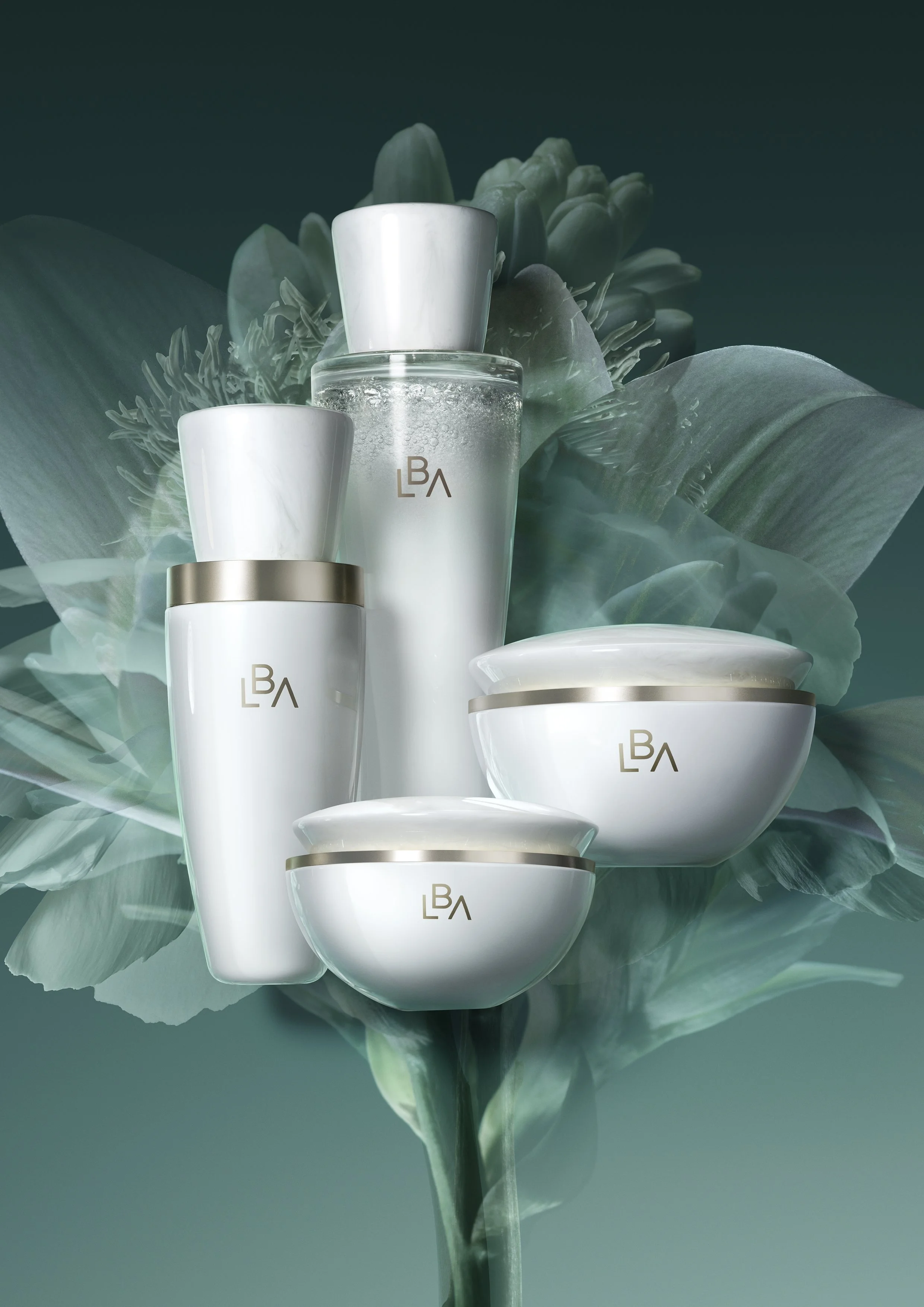
CREDITS: LABORATOIRES DE BOTANIQUE AVANCÉE
*LABORATOIRES DE BOTANIQUE AVANCÉE
*LABORATOIRES DE BOTANIQUE AVANCÉE
The herbarium has 9,000 species. It was assembled by Joseph Pitton de Tournefort, botanist to Louis XIV, and the man who developed the first systematic botanical classification. The collection lives on a volcanic estate in Provence, on basaltic rock, fed by two mineral springs rich in magnesium, calcium, and silica. 300 hectares of something that has been accumulating knowledge, in one form or another, for several hundred years.
Laboratoires Botanique Avancée launched in December 2025. 4 products, 3 years in development, built from this place. Not in a lab, or not only in a lab. On land that insists on being taken seriously before it offers anything.
If this resonated, come inside the Future of Skincare newsletter on Substack. Beauty Signals is the deeper layer within it, weekly patterns where skincare meets culture, for skin intellectuals, beauty anthropologists, and the cosmetics curious.
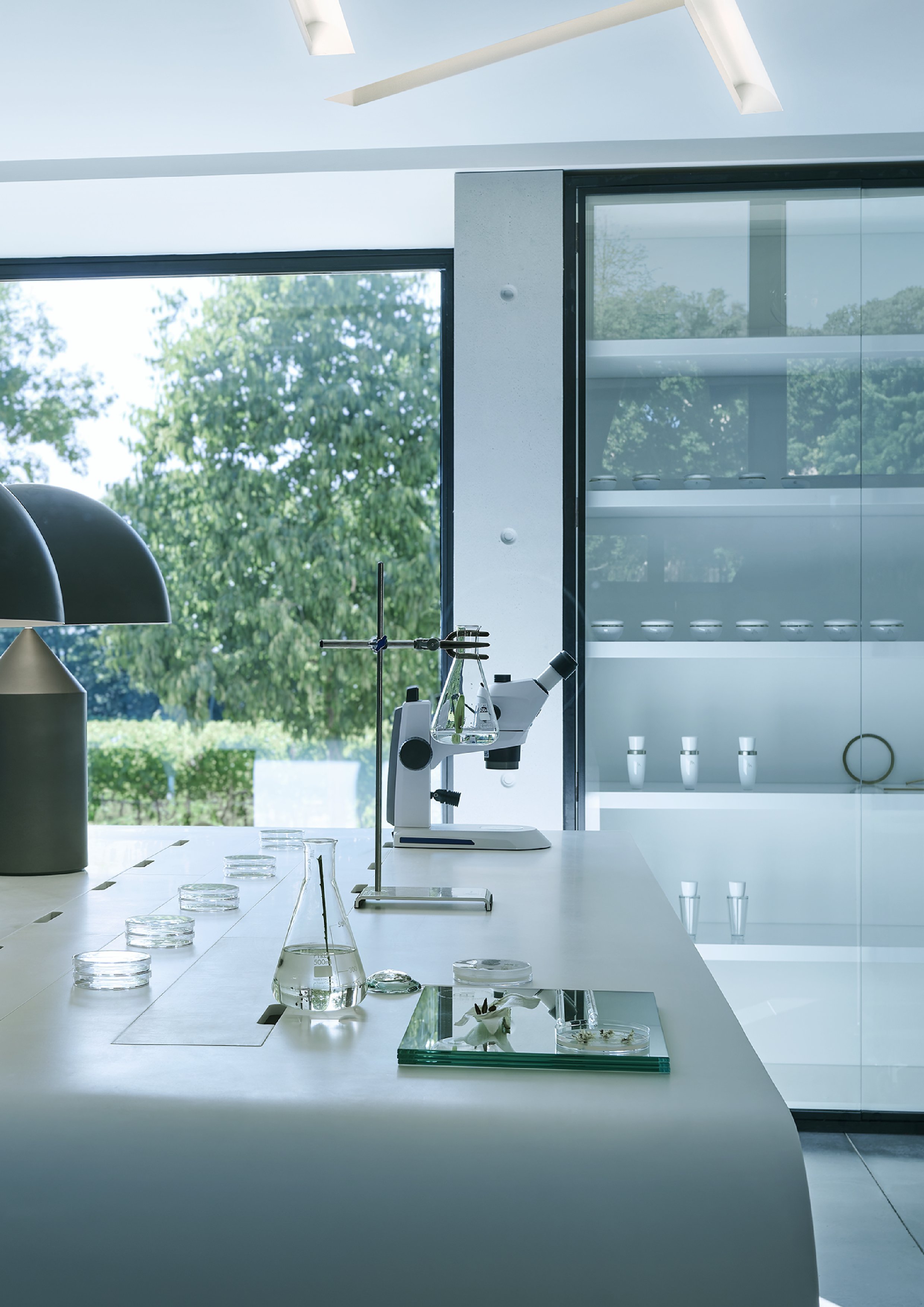
CREDITS: LABORATOIRES DE BOTANIQUE AVANCÉE
The Domaine de Baulieu, is where Laboratoires Botanique Avancée’s plant stem cells are cultivated: white lily and peony, grown on site. Two research gardens, the Jardin des Simples and the Jardin du Laboratoire, frame the formulation work. The mineral water from the estate's springs is encapsulated in lipidic liposomes and present in every formula. This is the detail that separates LBA from brands that use terroir as metaphor: the place is not background. It is material. The water in your skin is the water from that ground.
LBA funds the restoration and digitisation of Tournefort's herbarium. That work (taxonomy, the slow discipline of naming, the refusal of the vague) runs through the brand's logic more than any single ingredient claim.
The brand's scientific platform, NEO-REGEN, was developed with Dr. Jean-Marc Lemaître, INSERM researcher in regenerative biology. His work focuses on senescent cells: cells that stop dividing yet refuse to die, accumulating in tissue and feeding chronic, low-grade inflammation. The biology of aging, understood through his research, is not primarily a story of decline. It is a story of accumulation and signal disruption, and it can be interrupted.
LBA is the first cosmetics brand to use 3D skin organoid testing: models cultivated from human stem cells, measuring gene expression, cellular behavior, and tissue response simultaneously across the molecular, cellular, and tissular levels. NEO-REGEN is reported to modulate 136 genes involved in aging. The figure is not a marketing construction. It is the output of a system designed to observe skin the way medicine does, across pathways governing collagen synthesis, inflammation, cellular energy, and matrix integrity at once.
Running through every formula, as a structural constant, is ectoin: an extremolyte produced by microorganisms that survive in extreme environments. Its evolutionary advantage is membrane stabilisation under stress. In the context of the LBA range, it is not a supporting actor. It is the throughline: the molecule that holds the system together under pressure while the regenerative actives do their work.
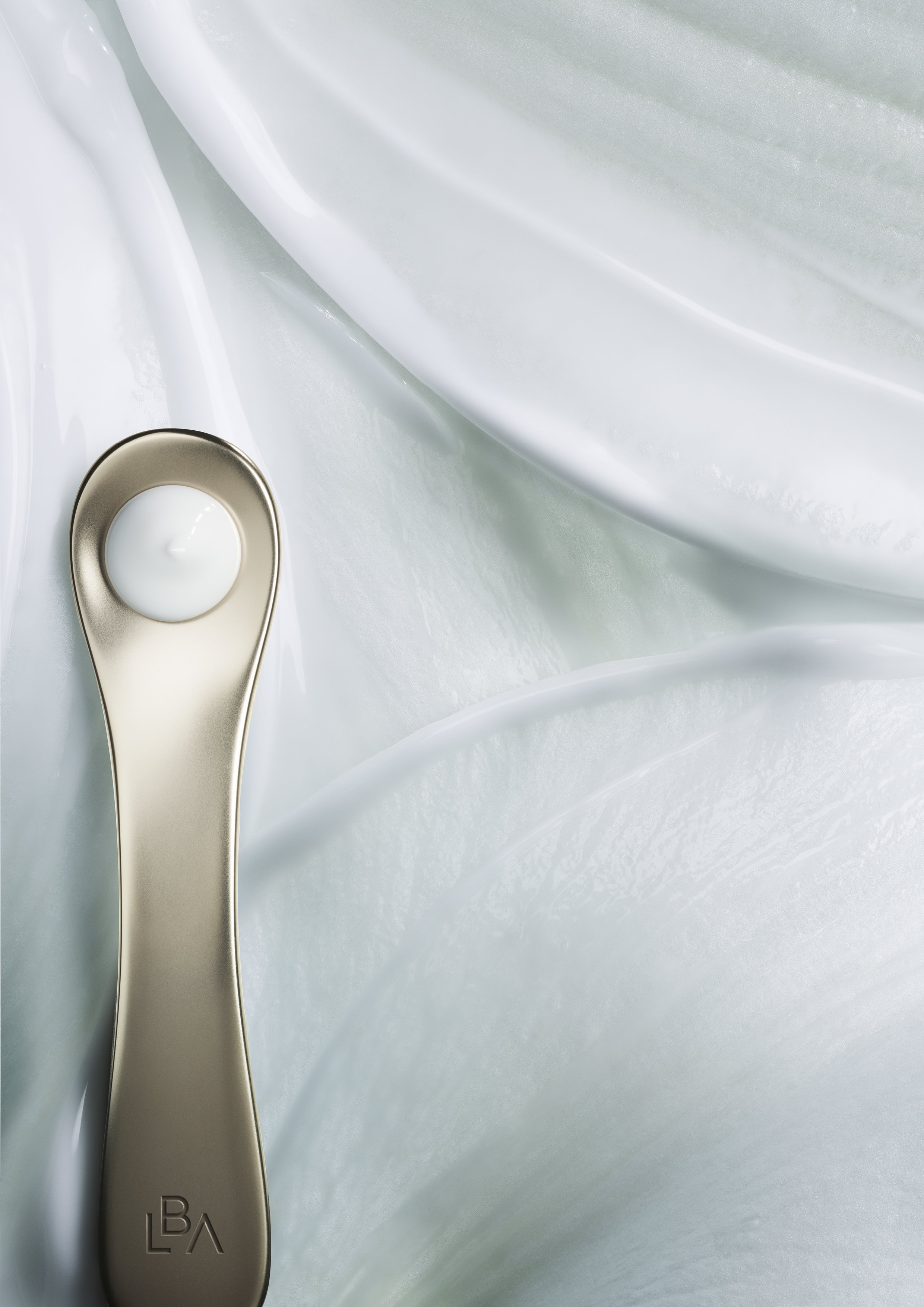
CREDITS: LABORATOIRES DE BOTANIQUE AVANCÉE
The four products are sequenced as a protocol, each conditioning the skin for what follows.
The Lotion Infusion d'Hydratation opens the ritual: a biphasic formula you shake before applying, so that oil microdroplets activate on contact and melt immediately into the skin. The gesture is deliberate. Shaking a product changes the relationship to what follows. It is a small interruption to automatism, a moment of presence before the skin receives anything. Seven million plant stem cells, glycolic acid for cellular renewal, moss cells for intercellular communication, the Domaine's encapsulated mineral water. The moss is worth noting: these are organisms whose evolutionary advantage is the ability to desiccate completely and rehydrate without cellular damage. An older biological intelligence inserted into a contemporary formulation. After one month of clinical testing, 100% of participants recommended it and wanted to purchase it.
The Sérum en Crème Régénératif is where the formulation architecture becomes most visible. A lamellar structure (lipid and aqueous layers alternating in direct biomimicry of the skin's own architecture) at 30% actives, with 7.5 million stem cells. Iris stem cells for collagen and elastin support, adenosine, a postbiotic ferment, Centella Asiatica, vitamin E, ectoin. The lamellar approach means the formula is built to behave like skin rather than sit on top of it: delivery through biomimicry rather than penetration by force. Achieving 30% actives within this structure, at 95% natural origin and without silicones or PEGs, narrows every easy formulation choice. The constraint tends to produce something that feels precise, like a decision was made at every step. Three-month results: −21% wrinkles by instrumental measurement, +53% firmness, +49% radiance, −18% insensible water loss. Seventy-five percent of women found their skin more supple within seven days.
The Crème Yeux Soyeuse Régénérative addresses the eye zone through a specific botanical logic. Tuberose stem cells, selected for their role in extracellular matrix remodelling (the scaffolding work beneath the surface). A tetrapeptide and caffeine combination for decongestion, D-panthenol, ectoin, five million stem cells. The zone-specific approach reflects a broader shift in how people relate to their skin: less interest in a single product claiming universality, more interest in formulas that understand a place on the face well enough to address it specifically. At one month: 95% found their eyelids firmer, 93% found their eye area more rested and luminous, 80% saw a reduction in wrinkles, dark circles, and puffiness.
The Crème Fondante Régénérative carries the weight of the line. Twenty million plant stem cells (the highest concentration in the range). NEO-REGEN at double intensity. Seven ceramides providing structural barrier support, niacinamide, Pro NAD+ with peptides for cellular energy and redensification. Barrier function is treated as part of the regeneration architecture: structure, energy, and matrix integrity addressed as a single biological conversation rather than competing concerns. Three months: +53% firmness, −20% wrinkles, +34% hydration, +24% barrier function, +24% skin tone evenness, +92% comfort, +41% radiance measured immediately after application. The signature fragrance runs through all four products, composed by Céline Barel at IFF: bergamot, jasmine sambac, white lily, iris root, vetiver. Scent is part of the experience, and part of how consistency is maintained long enough for the biology to respond.

CREDITS: LABORATOIRES DE BOTANIQUE AVANCÉE
Four products. A protocol with a beginning, a middle, and an end. The choice to launch with only four reflects a discipline that extends through the entire project: the same discipline that chose 15 days of artisan work per cap, refillable packaging by Entreprises du Patrimoine Vivant, and a launch exclusively through Airelles spa properties in Courchevel and Versailles before any retail or e-commerce.
That launch strategy is worth understanding on its own terms. The treatment room (LBA's 90-minute spa protocol, La Sève, combining fascia work, silk cocoon techniques, and deep tissue gestures) is where the brand's first argument is made. Before any purchase decision, before any review, the skin receives the product through practitioner hands, in conditions of attention and slowness. Sensation becomes the first form of evidence. In a category where claims are contested and photography is suspect, the body's own experience is the most direct route to trust.
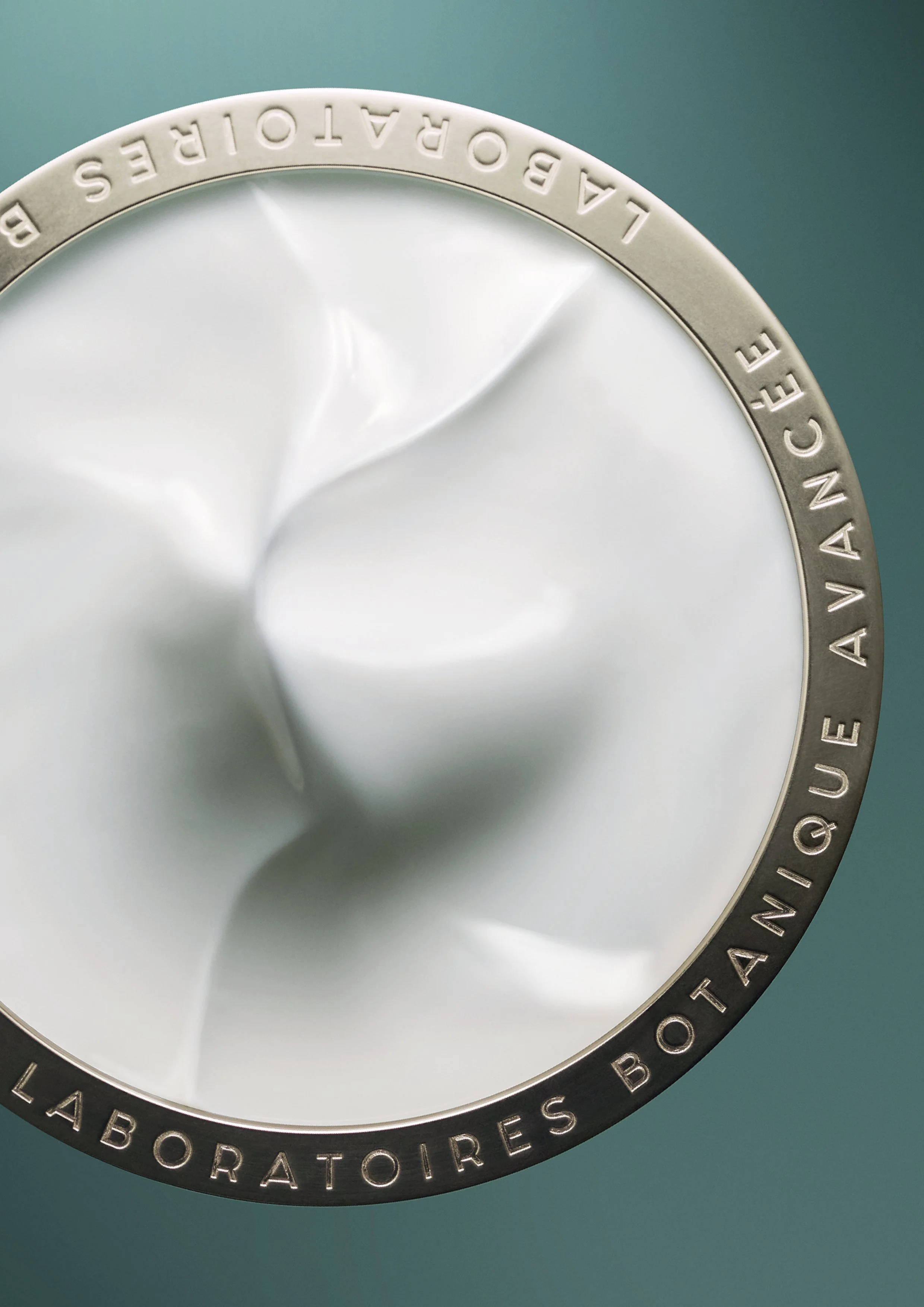
CREDITS: LABORATOIRES DE BOTANIQUE AVANCÉE
The Domaine de Baulieu will eventually become the brand's primary site: a place where the laboratory, the gardens, the spa, and the product exist in the same geography. That integration is the project's deepest logic: not a brand that references a place, but a brand that cannot be extracted from one.
LBA launched four months ago. The herbarium Tournefort assembled has been on that land for three centuries. The mineral springs have been flowing longer than that. Against that timescale, a skincare launch is a very recent event, and the brand seems to know it. The science is documented, the formulas are measurable, the clinical data covers every product across the sequence. But the ambition visible in the project is longer than any of those numbers. It is building toward something that takes years to become itself.
That gap between the brand's age and the age of the knowledge it draws from is, in some ways, what makes it worth watching. The most interesting thing LBA has done is not a single product or a single claim. It is the decision to build a cosmetics house the way a domaine builds a wine: from a specific place, through a specific method, with results that are only fully legible over time.
