

What EstheClinic Gets Right About Body Treatments
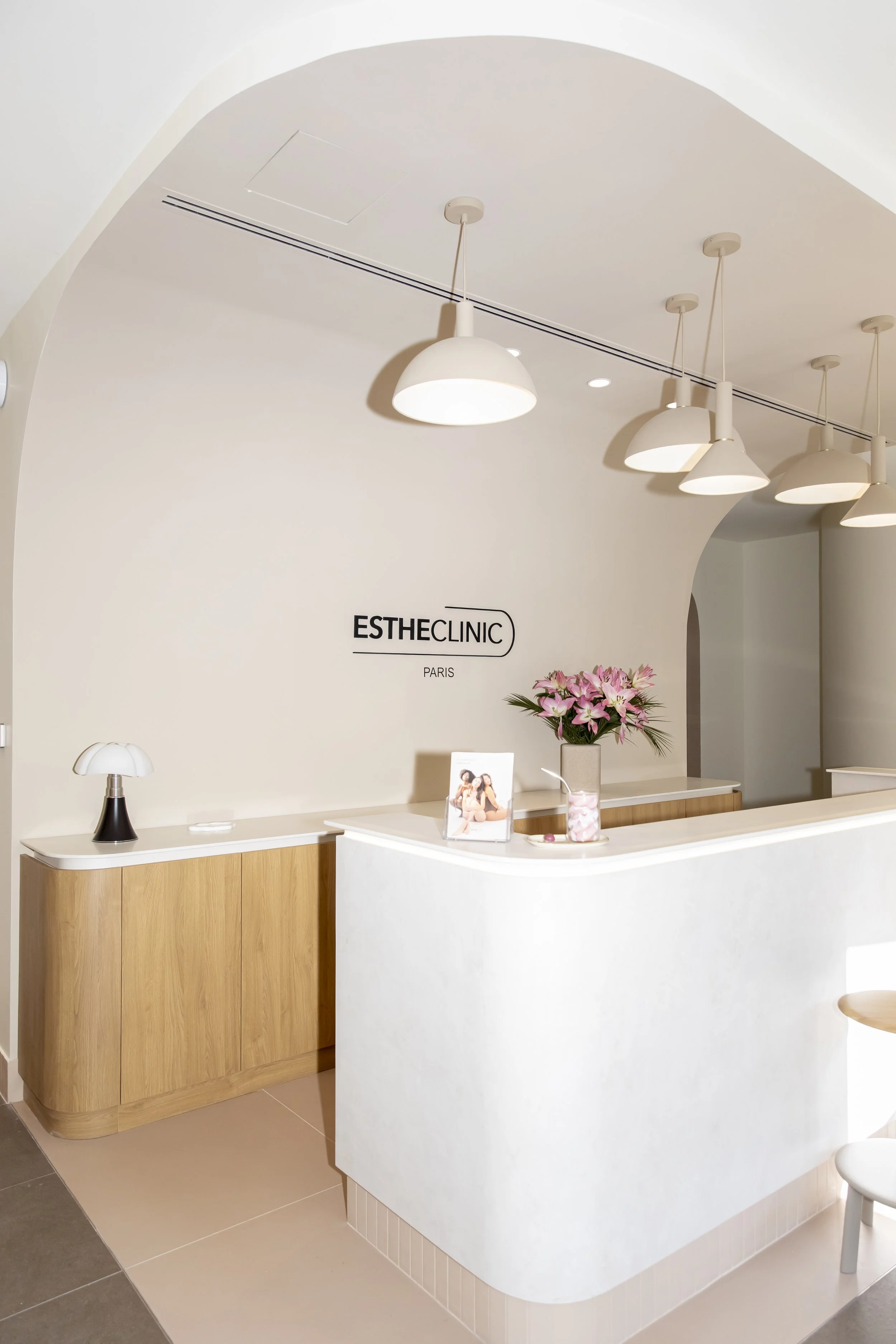
credits: EstheClinic
Skincare has spent years learning to personalize, to read a skin state before prescribing, to sequence actives, to treat the face as a system rather than a surface. Body care still has a habit of becoming generic as soon as summer arrives. Firm, slim, smooth, prepare: the language turns urgent and identical, as if the body were unfinished until a holiday forced a deadline.
EstheClinic proposes another logic. Founded in France more than two decades ago, with its devices developed inside the family company and centers across Paris and Neuilly, it does not put a machine at the center of the promise. It is body care organized as a protocol.
I did that protocol at the end of July, at the Paris 9e center. 3 × 30-minute sessions, closely spaced, combining radiofrequency and E-Sculpt on the abdominal area. I went in exercising regularly, with no interest in anything invasive, and no wish to replace the work I already do with a machine.
If this article resonated, come inside the Future of Skincare newsletter on Substack. Beauty Signals is the deeper layer within it, weekly patterns where skincare meets culture, for skin intellectuals, beauty anthropologists, and the cosmetics curious. Read the opening free, full access at latte with me level.
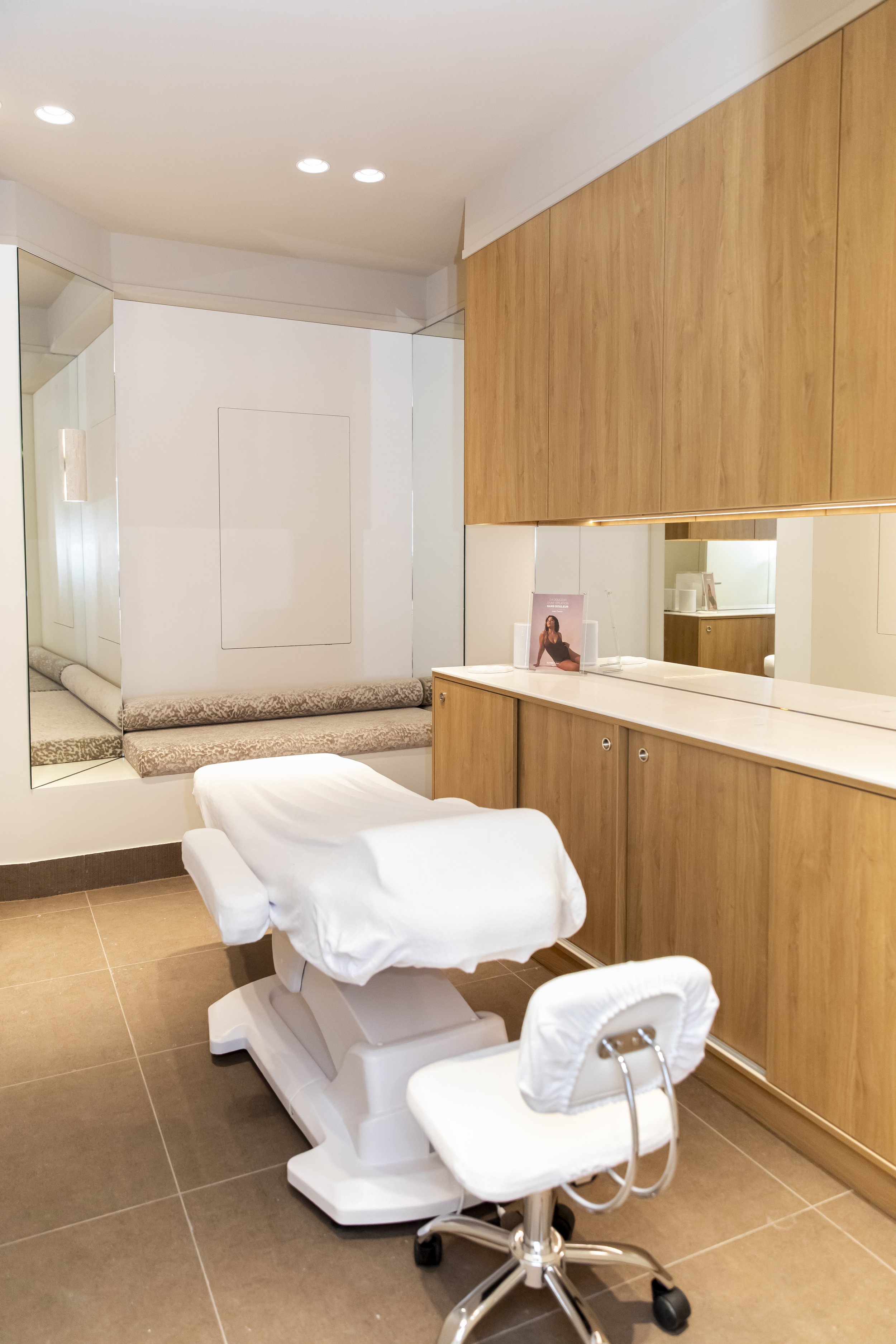
credits: EstheClinic
EstheClinic was founded in France more than two decades ago by Manon Allano’s father, a doctor who wanted to offer his patients a non-invasive alternative to surgery. Its parent company, BVA Technology, has manufactured and distributed medical and aesthetic equipment for doctors and dermatologists across Europe for more than fifteen years. The brand grew out of the machines, not the other way around.
Manon Allano did not initially plan to join the family business. After business school and experience in luxury, she spent five years working with EstheClinic in Paris, then opened the first Singapore center with her husband, Bastien, in 2015. The Asian chapter became more than a geography. In her account, Singapore exposed the company to a culture of earlier, more regular aesthetic care, maintenance rather than intervention only once a concern had become pronounced. The couple brought that sensibility back to Paris in 2021, and the concept has expanded since.
The current identity sits between two worlds: technology developed from a medical-aesthetic heritage, and an environment designed to make that technology feel approachable and part of an ongoing rhythm of care. It explains details that might otherwise seem secondary, the absence of a cold atmosphere, the weight given to consultation, even the collagen drink offered afterward. The machines are central, and the experience is deliberately larger than the machines.
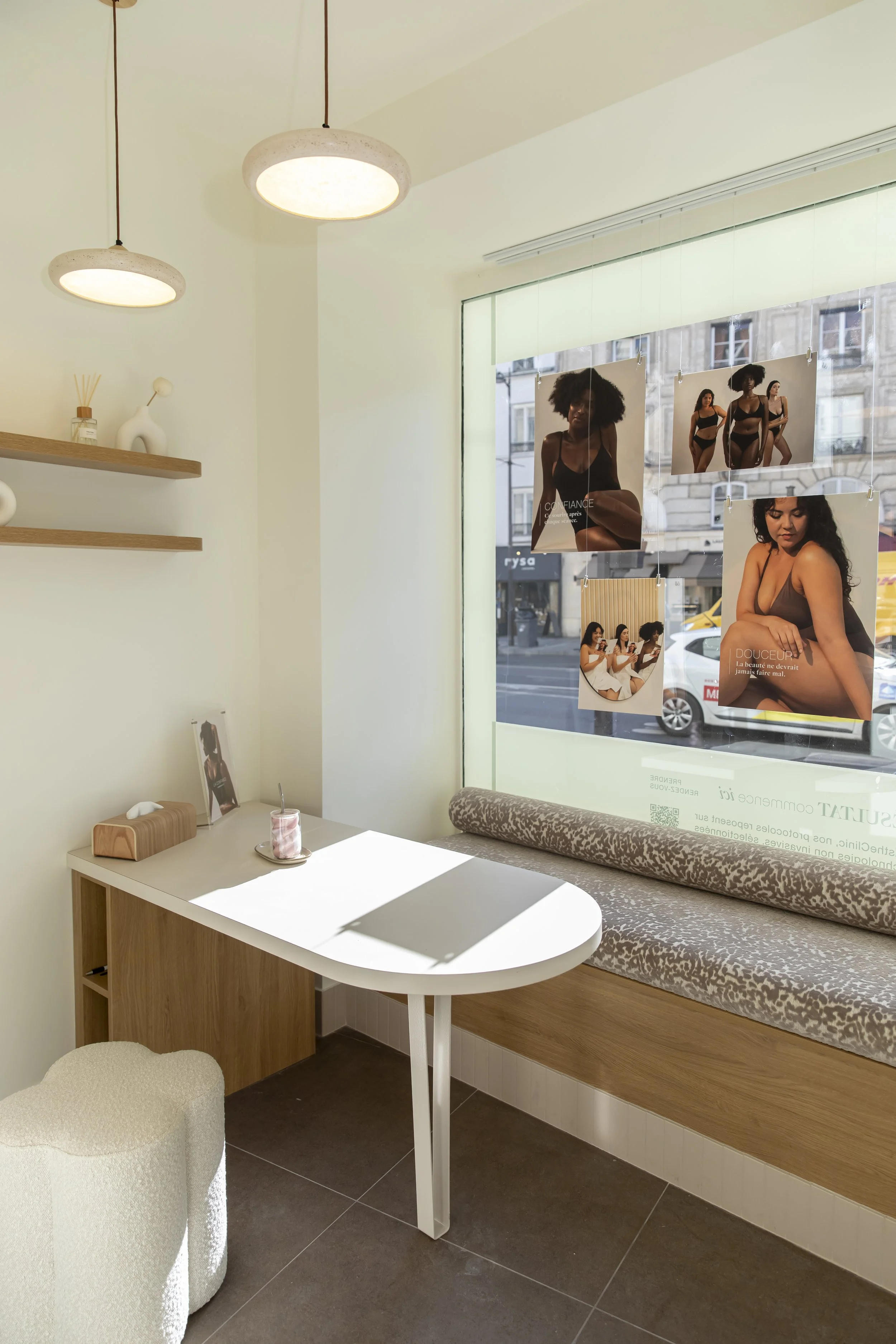
credits: EstheClinic
The heart of the model is that nothing is switched on before a conversation. EstheClinic describes a diagnostic meeting as a standard part of its process, a discussion of goals, the exercise a person already does, the areas that make sense to treat, a health questionnaire, a review of contraindications, and only then a personalized plan.
Body technology is usually marketed through the capacity of a machine. This begins with the person, then asks which technology is right for her, and everything that follows is decided from there.
The protocol pairs two technologies that do not do the same job. Radiofrequency uses electromagnetic energy to create controlled heat in the deeper layers of the skin. In aesthetic practice it supports collagen remodeling and improves the appearance of laxity and texture over time. The sensation is warmth, steady and easy to sit with.
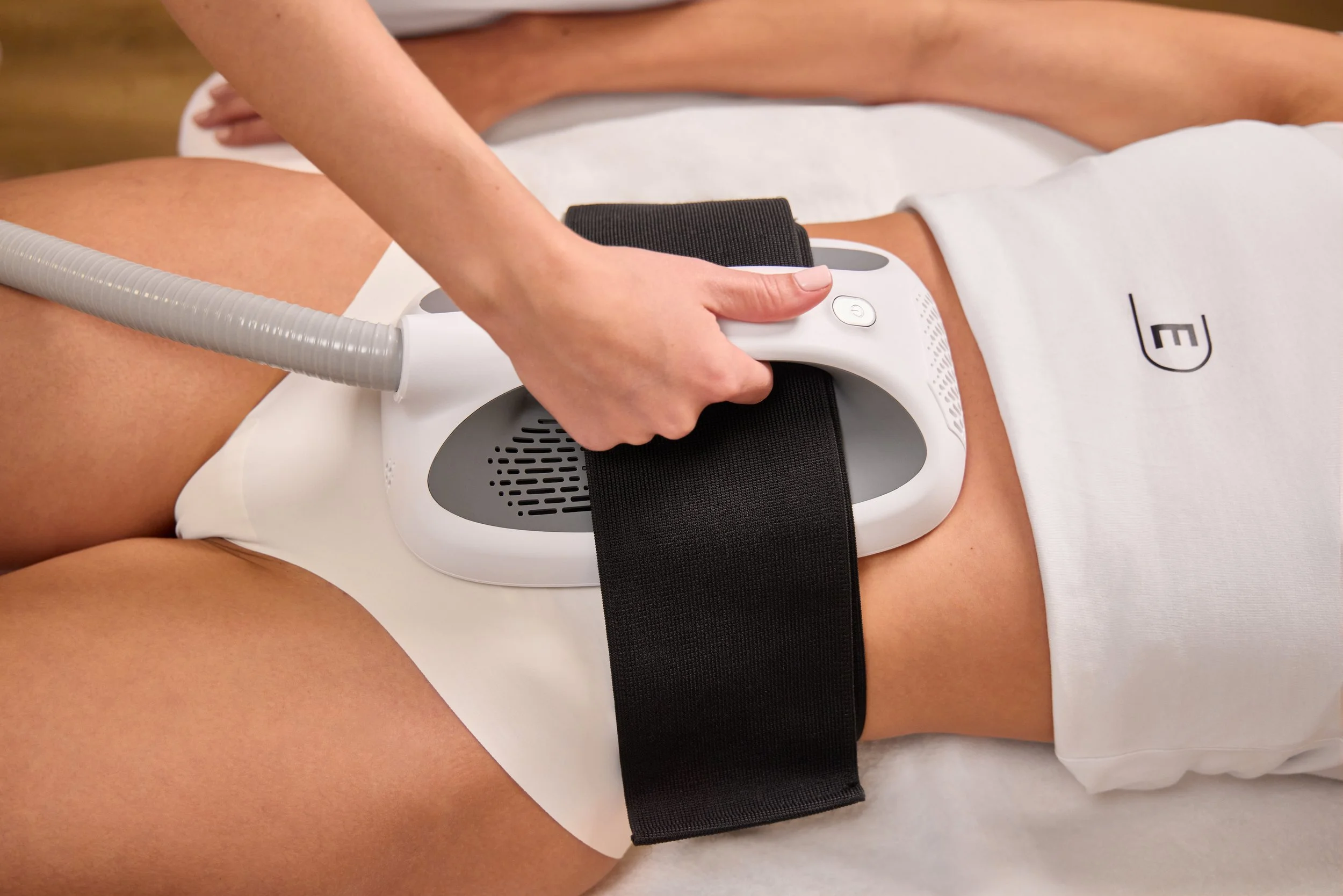
E-Sculpt works at another level. It uses high-intensity electromagnetic stimulation to produce involuntary muscle contractions in the targeted area. A 30-minute session delivers the equivalent of up to 20 000 abdominal contractions, and the intensity is raised session after session as the body adapts, up to a level of one hundred. EstheClinic is precise about what that covers: the treatment is not designed to replace sport. Exercise affects cardiovascular health, metabolism, mobility, bone, coordination, mood, the whole body. E-Sculpt is built to work alongside an active life. Combined with radiofrequency, the sequence becomes coherent: one step addresses the skin, the other recruits the muscle below it.
At the end of an appointment, the centers offers one of the drinks developed with 48 Collagène Café, the Paris concept known for beverages built around marine collagen and antioxidant ingredients. Its role is experiential. It softens the transition out of a highly technical appointment and places the brand inside a wider culture of beauty that now moves between devices, skincare, nutrition and social ritual. This is where the Paris and Singapore history becomes visible: technical care delivered with the cadence of a contemporary beauty destination.
credits: EstheClinic
I rarely undergo aesthetic body treatments. I arrived at the Paris 9e center less than a week before leaving on vacation, after a stretch of work in which I had not been able to hold my usual rhythm. No training, no lymphatic drainage, none of the maintenance I normally make time for. The question I brought with me was not whether a device could produce a summer body in five days. It was whether a selected sequence could do something useful for a body that was simply active and under-attended.
Session 1:
The first thing I noticed was not a machine. It was how little friction there was in being taken care of. The consultation went through what was possible, what made sense given the time I had, and what I wanted to work on. The decision came out of that conversation rather than off a menu. We settled on the abdominal area, radiofrequency for the skin and E-Sculpt for the muscle, in a single thirty-minute session.
Radiofrequency reads as warmth. Heat travels through the zone, steady and easy to sit with. E-Sculpt works in another register. The contractions build in stages, and the intensity is raised progressively as the body accepts it. There is no pain at any point, only a sensation of contraction that stays well within what you can hold. What there is, on a first session, is surprise. The rhythm is unfamiliar, and part of the appointment is spent learning to receive it. I left able to see firmness in the treated area straight away, which I had not expected this early.
Session 2:
This was the session where the protocol showed what it does. The intensity went up again, and my body took it more easily than one week of adaptation would suggest. The sensation had already moved from something to manage to something close to neutral. The more interesting part happened between the appointments. The effect of session one had not stopped when I walked out. It had kept working, so session two did not start from zero. It started from that. Of the three, this was the peak.
Session 3.
By the third session I was completely at ease. The intensity reached one hundred, and five or ten minutes in I nearly fell asleep on the table. That is the most honest measure I can give of how quickly the body adapts across a short protocol. The contractions had become a rhythm rather than an event.
Session three is also where I understood why the sequence is three and not one. One session gives you something. Two build on it. The third holds it, as if the sequence handed the body an instruction to keep going on its own. A week into vacation, well past the last appointment, I could still see it.
This is a protocol built to be kept. The centers sit where people work, thirty minutes fits inside a lunch break, and you leave with a collagen drink and go back into your day. I did these three sessions at the end of July, before vacation, and what I notice now is that none of it depended on that timing. For someone who already moves, who has a defined area she wants to retone, and who needs care to fit inside a working life rather than reorganize it, the sequence does exactly what it sets out to do. Body care becomes more intelligent when consultation, selection, sequence and follow-up matter as much as the technology, and that is the version of it I found here.
EstheClinic Paris 9e, 1 rue de Caumartin, 75009 Paris.
Protocol experienced: 3 closely spaced 30-minute sessions combining radiofrequency and E-Sculpt on the abdominal area. Book at estheclinic.fr. The other centers run the same protocols.
estheclinic.fr · @estheclinic_france
This treatment was offered by EstheClinic. As always, the experience and editorial perspective are my own.
