

Where Science Meets the Southern Sky: Elizabeth Barbalich on 20 Years of Antipodes
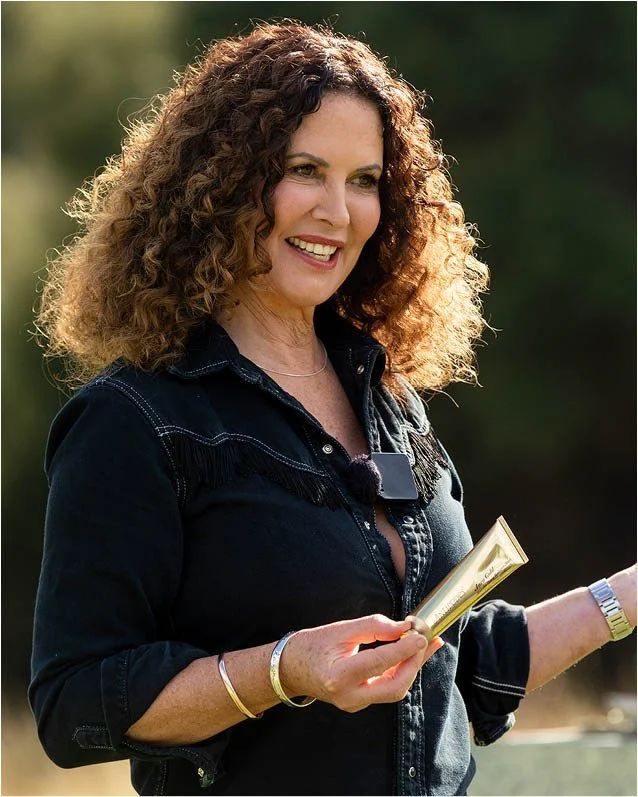
There is a particular kind of courage in building a natural beauty brand before the world was ready to believe in it. When Elizabeth Barbalich founded Antipodes in New Zealand in the early 2000s, the industry had already drawn its lines: natural was gentle, perhaps lovely, but not serious. Efficacy lived in the lab, in synthesis, in the language of actives that could be clinically measured. Nature, it was implied, was something else: a feeling, a story, a comfort. Not a proof.
Elizabeth Barbalich refused that division. A biologist by training, she brought to Antipodes something the natural beauty world rarely offered at the time: rigorous, third-party in vitro testing on every formula, an unwavering commitment to science-backed performance, and a founding belief that New Zealand's botanical landscape - untouched, extraordinarily concentrated, unique in its UV exposure and biodiversity - held genuinely exceptional active potential. This was not an aesthetic choice. It was a scientific argument built quietly over two decades, product by product.
Twenty years later, Antipodes is a case study in what happens when conviction compounds. The Avocado Pear Nourishing Night Cream still in production, unchanged, still beloved. The Maya Hyaluronic 72-Hour Hydration Serum landing like a milestone. And now, a move into haircare - three ranges, a Lime Caviar Hair Mask that crosses categories with the same formulation intelligence that shaped the brand from the start. In this conversation, Elizabeth Barbalich reflects on what it means to build slowly, test rigorously, and stay faithful to a philosophy when the market keeps asking you to simplify.
Read the full interview below.
If this article resonated, come inside the Future of Skincare newsletter on Substack. Beauty Signals is the deeper layer within it, weekly patterns where skincare meets culture, for skin intellectuals, beauty anthropologists, and the cosmetics curious. Read the opening free, full access at latte with me level.

You launched Antipodes at a time when natural skincare was often seen as virtuous, but not necessarily high performing. From the beginning, what did you want your formulas to do that the market was not doing well enough?
From the beginning, I wanted our formulas to deliver genuinely healthier-looking skin, regardless of age, by working with ingredients that mimic the skin’s own molecules and lipids.
Nature is incredibly powerful. High-tech bioactive ingredients, when used as part of an intelligent, harmonious formulation, have the ability to improve skin and support its natural function.
What interested me most was creating formulations from nature that work with the skin’s physiology. In our green range, for example, several formulas have been investigated in-vitro and shown to stimulate Type I collagen synthesis in human fibroblast cells (the cells that make collagen). That means they have the potential, in the right environment, to support and enhance the skin’s natural collagen function – above and beyond what it could do on its own.
It’s important to note that our formulas don’t contain collagen itself. Instead, they use antioxidants, plant oils and extracts to trigger the pathways involved in collagen production. They are also designed to be breathable and to move through the epidermis in a way that supports communication with fibroblast cells in the dermal layer.
Your background is in biology and medical technology, not branding first. How has that shaped the standards you apply to a formula before you will stand behind it publicly?
The formula must meet rigorous standards – from ingredient quality through to end-formulation testing, including scientific assays where relevant.
At the same time, texture and absorption are essential. The product has to perform scientifically, but it also has to feel incredible on the skin.
Our branding has evolved alongside this. The Antipodes aesthetic – our maximalist ‘wallpaper’ design inspired by New Zealand nature – was designed to spark intrigue and invite trial, but it is the formulation itself that ultimately builds trust.
Antipodes has always balanced pleasure and proof. When you are developing a product, how do you know when that balance is right?
It depends on the product’s purpose. For products that directly change the skin – serums and moisturisers – science and in vitro testing are central to the development process.
This is developed alongside texture profiling and absorption. Achieving a natural moisturiser that absorbs easily is not straightforward, but it’s critical.
For wash-off products, which still need to be efficacious even with short exposure times, the balance shifts slightly towards texture and sensorial experience.
You have invested heavily in third-party in vitro testing. What drove that decision?
All of those factors. I am very critical of any formulas that promise results without evidence.
My move into natural skincare was partly driven by personal frustration. After years of using synthetic products without meaningful change, I began studying formulations and realised that natural, well-designed ingredients could work with the skin’s function and actually make a difference.
I am particularly motivated by robust scientific testing – in vitro, in vivo and clinical studies. Many natural brands have traditionally sat in a “feels nice”, or “no nasties” category, which is more about what is NOT in the formula, rather than developing high-performance formulations supported by science.
Avocado Pear Nourishing Night Cream has remained beloved for years. What do you think that formula got right so early, and why has it endured?
Avocado oil is an exceptional ingredient – rich in omegas, minerals and lutein, with genuine collagen-supporting properties.
It creates a rich, thick and luxurious texture, but importantly, the formulation remains breathable. Unlike many synthetic formulations, it allows the skin to function overnight, so you wake up with skin that feels healthier and more resilient.

If someone used only one Antipodes product and you wanted them to understand the brand immediately, its values, its efficacy, its sensibility, which product would you put in their hands, and why?
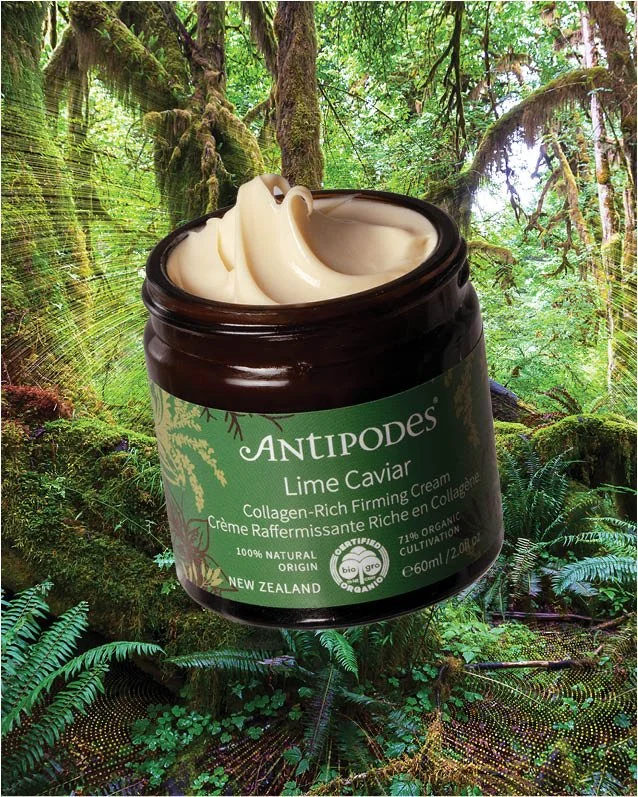
Lime Caviar Collagen-Rich Firming Cream. It is certified organic, vegan, and features New Zealand plant oils alongside advanced actives.
It includes a peptide that supports hydroxyproline, which is essential for collagen production. It has been independently tested in-vitro and has incredible customer feedback. It represents the combination of natural formulation and scientific validation that defines the brand.
Has Antipodes' "it product" changed over time? In other words, is there a difference between the formula that built the brand and the formula that best represents where the brand is today?
Our core brand builders remain consistent – Avocado Pear, Kiwi Seed Eye Cream and Vanilla Pod are still among our top products.
What has evolved is the expansion into more targeted categories, addressing concerns like pigmentation, blemishes, stressed and dehydrated skin. These newer formulations reflect where the brand is heading – a more specific, high-performance approach to natural skincare.
The launch of Maya Hyaluronic 72-Hour Hydration Serum felt like more than a new product. It felt like a statement. What did you want that formula to say at the 20-year mark?
I’m fundamental to your beauty ritual, day and night. I support hydration through a three-step mechanism – Pheohydrane marine extract helps draw water into the epidermis, hyaluronic acid binds and holds water both within and between skin cells, and bamboo ferment helps retain that moisture. I am your skin barrier saviour!
Antipodes has always worked at an interesting intersection: New Zealand botanicals, patented actives, and a very clear belief in formulation science.What makes an ingredient or active interesting enough for you to build a product around it?
The testing behind the compound, and its relationship to both nature and the skin.
I am particularly interested in compounds with bio-identical molecules – ingredients that mirror what already exists in the skin, such as hyaluronic acid, ceramides and hydroxyproline. These tend to work more effectively with the skin’s natural processes.
It’s also important to recognise that skin is dynamic. It responds to many variables, so formulations need to support the skin in its current state rather than trying to fundamentally change it. It’s the same with hair, no formulation will fundamentally change your hair but good formulas can help improve the texture, strength and create optimal conditions for healthy growth.
There is a lot of ingredient theatre in beauty now. Consumers are sold long lists of actives without always understanding the formula as a whole. Do you think the industry has become too obsessed with individual ingredients at the expense of formulation intelligence?
Yes – there’s a real overemphasis on individual ingredients, often at the expense of formulation intelligence.
Consumers are frequently sold percentages of one ingredient as proof of performance, but a number on its own doesn’t tell you how a product will actually do on the skin. Ingredient percentage claims are often more about marketing than meaningful efficacy.
Skincare performance comes down to the formula as a whole. Every ingredient needs to work in balance, supporting how the skin functions rather than acting in isolation.
High-performing formulas rely on synergy, stability and bioavailability. Ingredients need to be used in the right form, within the right range, and supported by the rest of the formulation to be effective. A higher percentage does not mean better results – and in some cases, it can reduce efficacy or increase irritation.
What ultimately matters is whether the finished formula performs. That’s why the focus should always be on total formulation performance, not single-ingredient hype.
Haircare is a significant extension for Antipodes. What made you feel this was the right time, and what did you want to bring to the category that felt distinct from what was already there?
It required time and focus. Hair biology, particularly follicle health, is very different from skin.
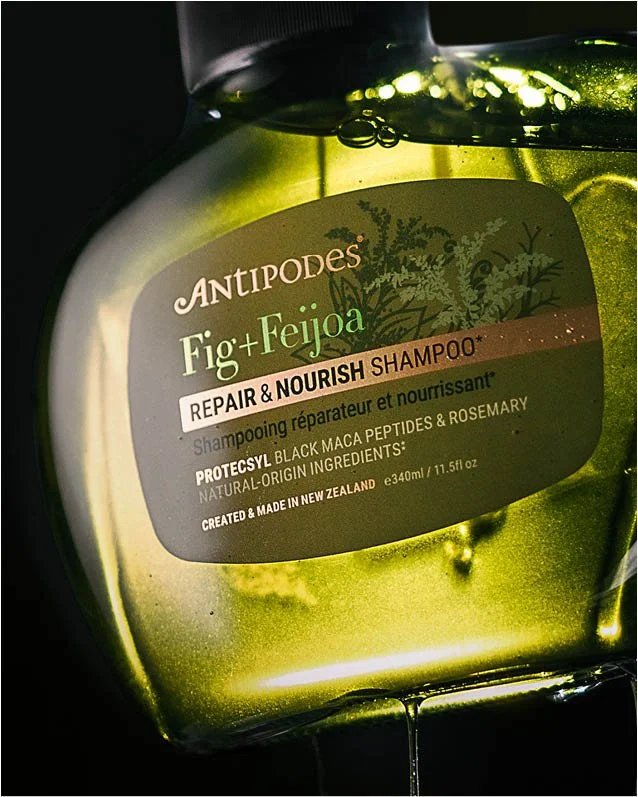
More recently, more advanced natural compounds have become available, which made it possible to develop high-performance formulations. The goal was to bring performance-oriented, salon-grade results into natural haircare, while supporting long-term hair health.
The 3 ranges, repair, hydration, and volume, are very clearly defined. How did you decide on that structure, and what were the unmet needs you felt each range had to answer?
Through extensive market and product research, supported by in vivo trials.
The unmet need was improving the actual condition of the hair – not relying on silicones that coat the hair shaft, but helping hair become healthier and less dependent on synthetic coatings that deprive hair and scalp of nutrition over time.
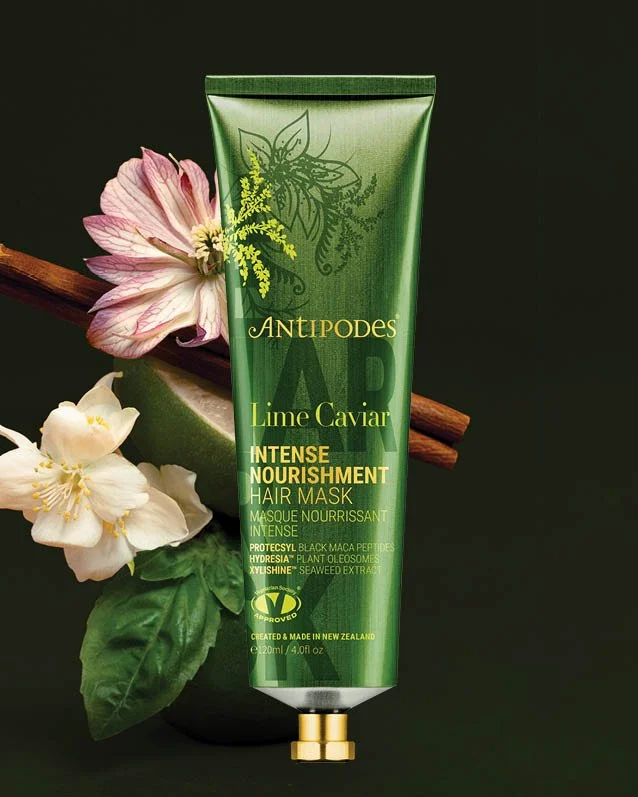
The Lime Caviar Intense Nourishment Hair Mask feels especially interesting because it crosses categories: treatment, scalp care, curl support, performance product. Did you know early on that this would become one of the range's defining formulas?
I knew it was a strong formulation from my own experience trialling the mask with my type 3B curls, but the in-vivo trials confirmed how effective it is.
It performs exceptionally well for curl definition, while also delivering nourishment for wavy and straighter hair types.
You've spoken about healthy skin rather than ageless skin. How would you define beauty now, in a culture that still often treats youth as the default ideal?
I think beauty ideals are transitioning – it’s acceptable to be your age, and it should be celebrated. Many icons are reinforcing this position. Marketing perpetuates this youth ideal, not the real woman on the street. I love meeting French women as their approach to ageing much more graceful, healthy and accepting – in my view a real face is much more beautiful to look at!
Has your own relationship to beauty changed as you've grown older, not just as a founder, but as a woman living inside the questions your products are trying to answer?
Not really – in fact now I am more determined than ever to deliver a message of holistic health for beautiful skin and hair.
Where is the most meaningful work still to be done in beauty?
Sustainability is the missing link – we must be focused on planet friendly ingredients and packaging. Environmental health is directly connected to human health, and that cannot be overlooked.
When you think about the future of Antipodes innovation, are you more interested in discovering new actives, revisiting timeless needs with better formulas, or creating products for life stages and concerns the industry still doesn't fully understand?
Discovering new bioactives remains central – it’s such a fascinating part of my work. There is also more work to be done around life stages such as menopause, and revisiting timeless needs like hydration and barrier support with a more holistic perspective.
