

Caroline Briant-Larose and the Gray Hair Revolution: Inside the Making of GRIS

credit images: Margaux Buisson
Beauty offers women a strangely narrow script for the arrival of gray hair. Conceal it, correct it, or turn the decision not to color into a declaration of principle. Each option can become another instruction. GRIS begins where those scripts fail: with the freedom to choose, and to choose again. The brand does not ask women to embrace gray hair as proof of self-acceptance. It asks why a change in pigment should dictate an identity at all.
For Caroline Briant-Larose, that question is personal. She found her first white hair at 22, pulled it out, and began coloring at 26. Years later, repeated color had left its mark on her scalp and fiber, while the white strands she had learned to hide began to attract compliments. Her relationship to them shifted without settling into a conversion story. She might let them show, return to brunette, or consider an autumn-toned gloss. The point is not the final color. It is the latitude to move between them. The idea for GRIS arrived in 2024, during a few days alone on Hydra, as she was reading Sophie Fontanel and thinking about the public invisibility of women over 50.
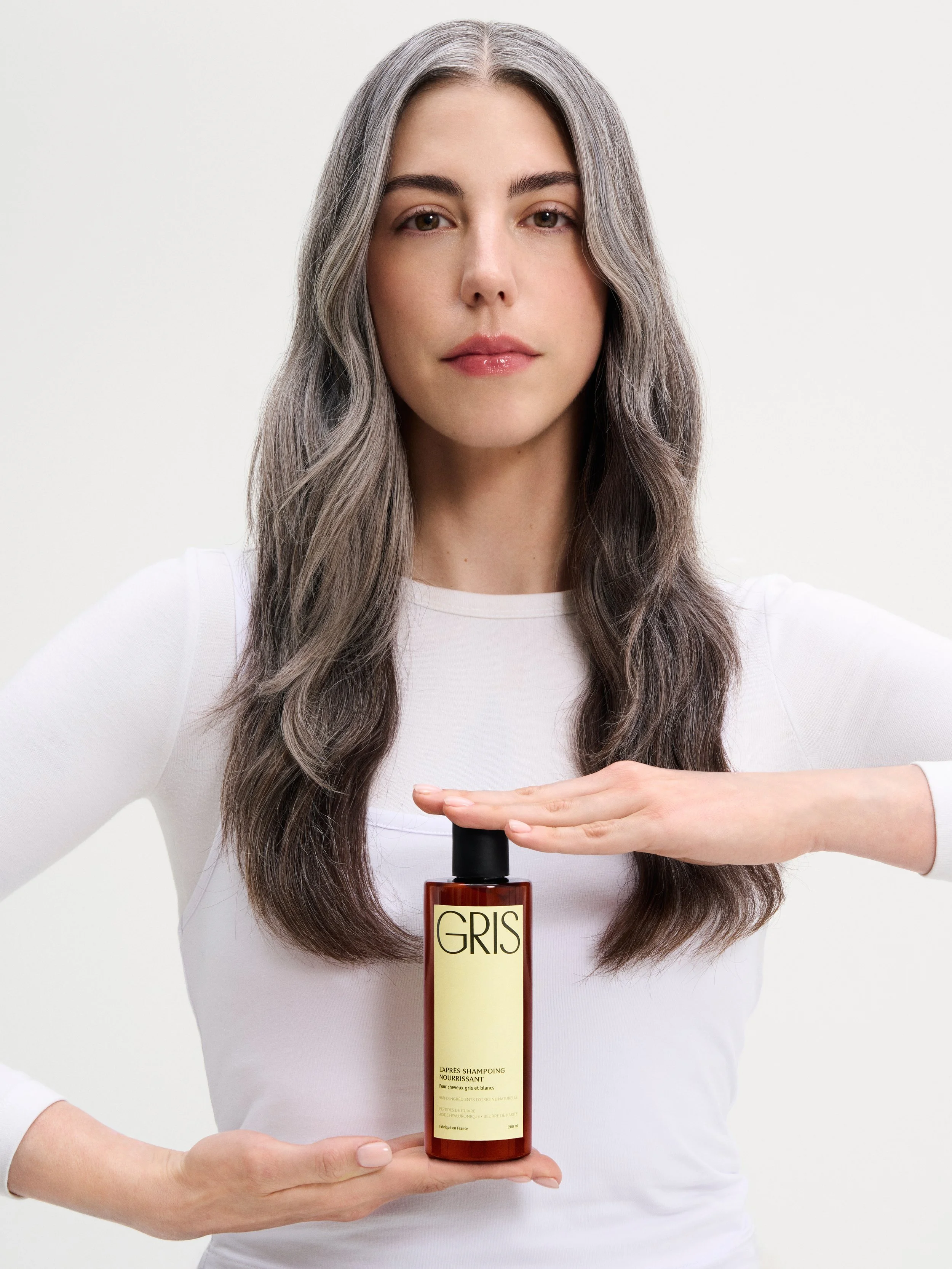
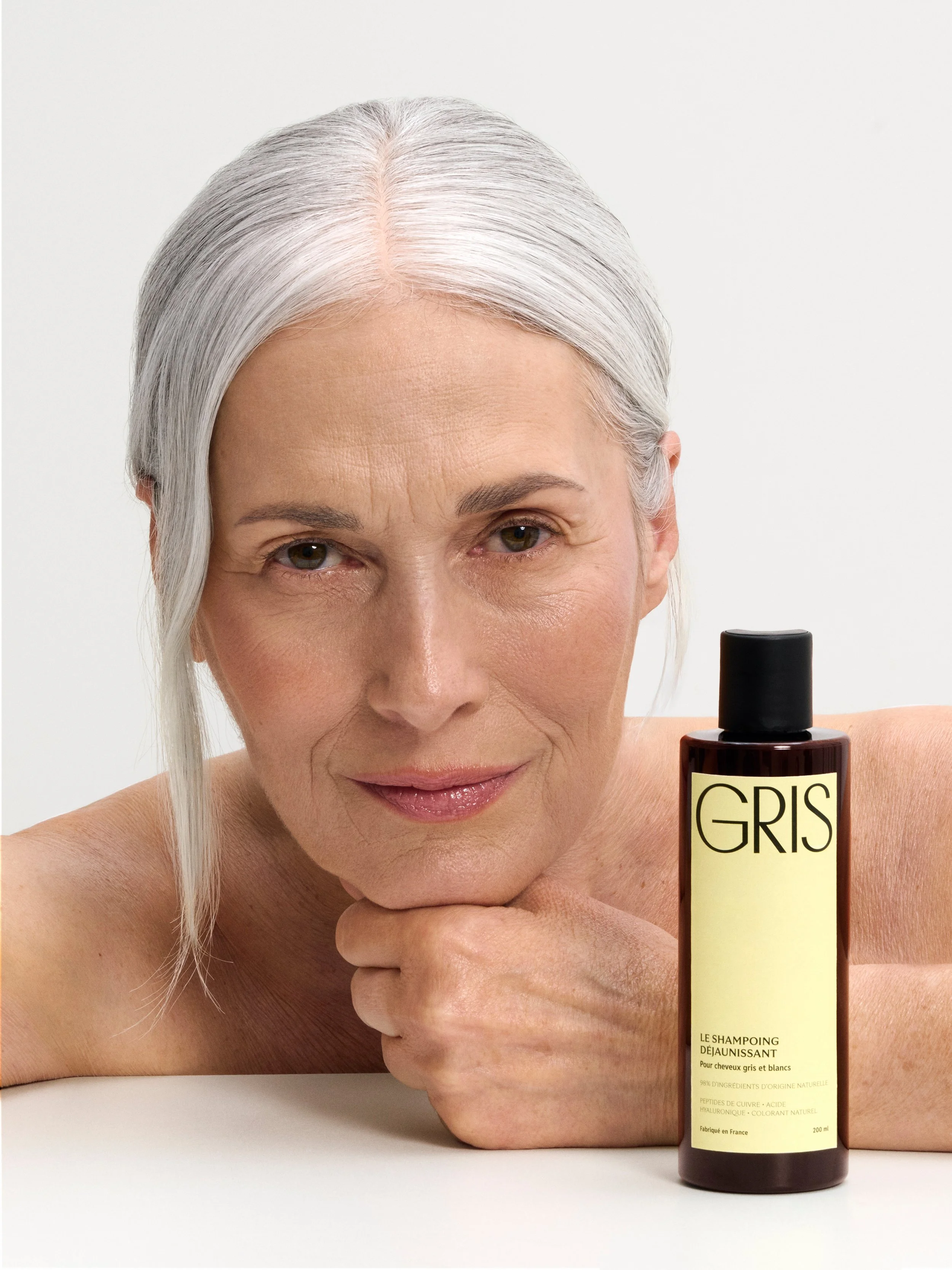
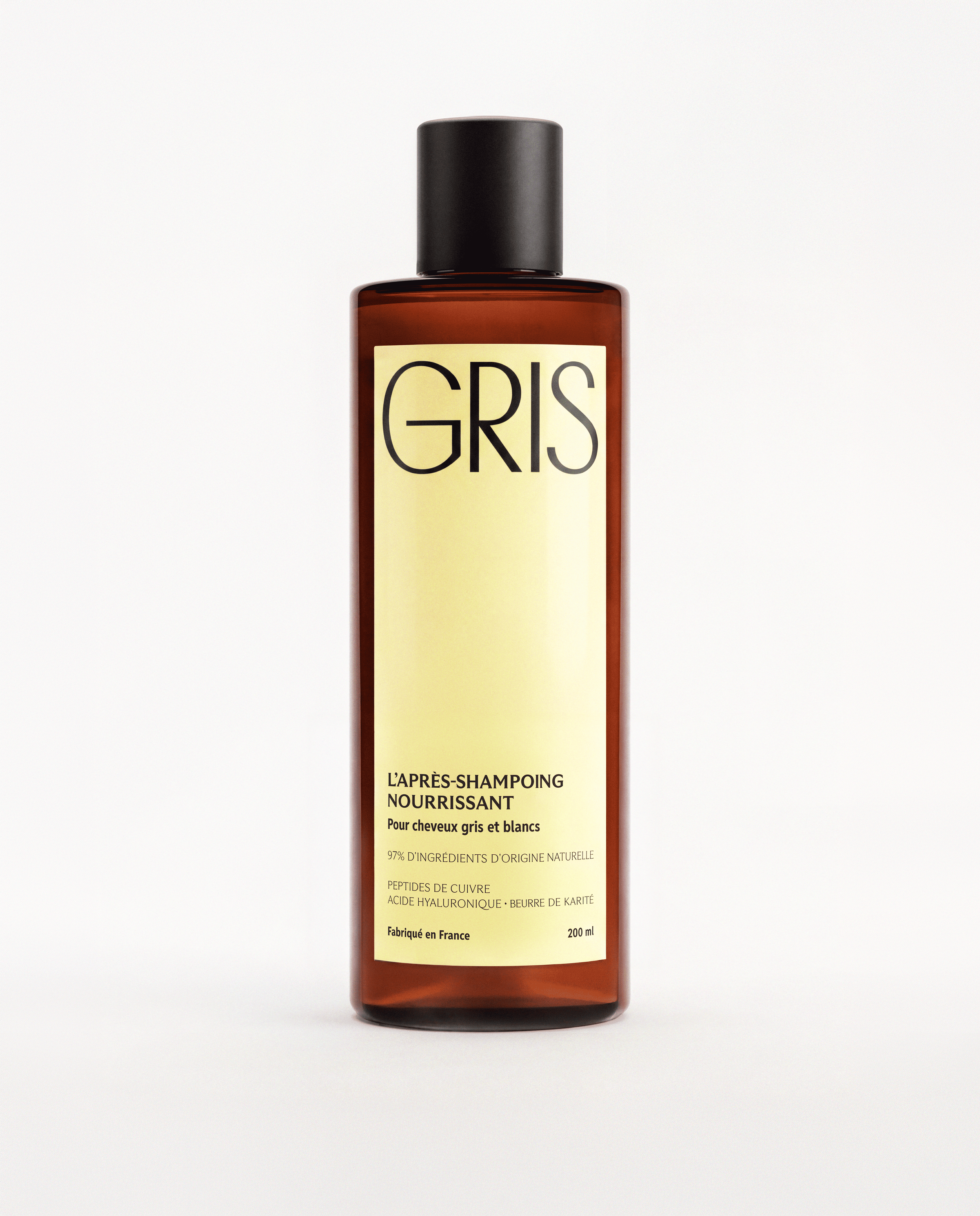
That cultural premise led to a formulation question. Gray hair has largely been treated as a color problem, which explains the category's reliance on purple shampoo. GRIS approaches it as a material with its own changes in porosity, hydration, lipid balance, texture and resilience. Its first line, Sublimation, is conceived as a modular four-step wardrobe: a hydrating shampoo, a purple shampoo used when needed, a conditioner and a leave-in treatment. Yellow tones still matter, but they are no longer allowed to stand in for the entire biology or experience of the fiber.
GRIS follows Moodz, the period-underwear company Caroline founded six years earlier, but the new brand speaks from a different moment in her life. The impulse to loosen the rules around women's bodies remains. The expression is calmer, and the work is shared with cofounder Charlotte Bregeon. Together, they are trying to give gray and white hair the research, imagery and language that beauty has long granted other categories. In this conversation, Caroline discusses the day GRIS became real, the science behind its first routine, what early testers revealed, and why a brand built around gray hair should never tell a woman whether to keep it.
Read the conversation below.
If this article resonated, come inside the Future of Skincare newsletter on Substack. Beauty Signals is the deeper layer within it, weekly patterns where skincare meets culture, for skin intellectuals, beauty anthropologists, and the cosmetics curious. Read the opening free, full access at latte with me level.
credit images: Margaux Buisson
With Moodz, you built a brand around a more open conversation about menstruation. GRIS now turns to another deeply personal subject: the arrival of gray hair. What drew you to this new chapter?
GRIS is a natural continuation of MOODZ. Both brands were born from the same conviction: to change the way women's bodies are seen and open the conversation around subjects that are still governed by expectations.
MOODZ was born from a desire for independence and a determination to break with the conventions surrounding periods. With GRIS, the subject changes, but the common thread remains. Like periods, gray hair is still often associated with something that should be concealed, a quieter way of asking women to hide their age.
What has evolved is the way I carry this fight. With MOODZ, I wanted to move periods from shame into conversation. With GRIS, I want to move gray hair from expectation to freedom. Today, I am more at peace, with a kind of quiet strength. My convictions remain the same, but the way I express them has matured.
Do you remember the moment GRIS first became a real idea? Was there a conversation, an image, or a personal experience that made you think: this brand needs to exist?
The idea for GRIS was born in 2024, six years after the creation of MOODZ. That first adventure had been as demanding as it was exhilarating, and the desire to create again was becoming very present. For several months, I explored different paths, often linked to intimacy, but none of them truly stood out. I felt that I needed a territory and to find a subject capable of holding a broader creative expression.
At the time, I was very interested in the invisibility of women over 50 in public space. I also needed to take a step back. I went alone to Hydra, Greece, for a few days, with Sophie Fontanel's book Une apparition in my suitcase. One day, sitting on a small platform facing the Aegean Sea, the idea for GRIS appeared with almost immediate clarity.
I had discovered my first white hair at 22. So I knew intimately the emotions, hesitations and needs connected to this transformation. Imagining a brand specializing in gray and white hair, capable of accompanying its evolution, felt both very personal and profoundly universal.
The project brought together everything I was looking for: an intimate story, a cultural issue, a category that was still largely neglected and an immense aesthetic territory. Like textured hair a few years ago, white hair still receives little consideration from the hair industry. The first white hair appears around the age of 34 on average, and more than 40 million French people have gray hair. This is not a niche market. It is a reality that already concerns many women and will only become more significant.
credit images: Margaux Buisson
What is your own relationship with gray hair, and how has building GRIS changed the way you think about it?
Hair turning white is linked to three factors: genetics, diet and stress.
My mother began coloring her hair very young. So did my maternal cousin. I expected my hair to turn white very quickly.
Yet when I discovered my first white hair at 22, it came as a real shock. I pulled it out. Then I began coloring my hair at 26.
Over time, my perspective shifted. I noticed the effects of repeated coloring on my scalp and hair fiber, while my white hair drew many compliments, curiously more often from men than from women. I began spacing out my color appointments, then looking at gray differently: no longer as a countdown, but as a material, with its texture, its light and its own sophistication.
Today, my hair has become a field of expression. Sometimes I want to let it show fully, then I want to be brunette again. At the moment, it is salt-and-pepper and my last color dates back to 2025, although the idea of a gloss with autumnal tones is becoming more and more appealing. Creating GRIS did not ask me to choose a side. It only reinforced the freedom I give myself.
credit images: Margaux Buisson
GRIS presents gray hair not as something to correct, but as an aesthetic in its own right. What did you want to change in the way women see and speak about this transition?
I see so many women suffer because of how other people look at their hair, and color it because they feel required to. I want to pass on to them this freedom to choose, which is at the heart of the brand. With my business partner, Charlotte Bregeon, we wanted to bring about three major changes in the way gray and white hair is approached.
The first is to create a new aesthetic. In the collective imagination, the woman with gray hair is still the woman who does not take care of herself or the aging woman. From the start, I wanted to celebrate the beauty of white hair, and create a beautiful, inspiring aesthetic world to change the codes and the way people look at it. The second is to create products that can accompany women during their transition. Until now, they had two options: color it or use a purple shampoo. White hair is a material in its own right. It needs specific products. We created a new holistic approach to strengthen it, reveal its radiance and give confidence to women beginning their transition.
The third is to change the vocabulary. We talk about “letting yourself go,” “looking old,” and “no longer maintaining yourself.” It is a vocabulary of resignation and decline. I wanted to replace it with a vocabulary of light and material, sublimation rather than correction. White is not an absence. It is a color. As long as we talk about “hiding” and “fixing,” we maintain the idea that there is something wrong. I want a woman to be able to say “I'm going gray” in the same tone she would say “I'm coloring my hair”: an aesthetic choice, not a capitulation.
The brand is proudly pro-choice. How do you create space for every decision, whether someone wants to color, blend, grow out, or fully reveal her gray?
At GRIS, the freedom to choose is not a position. It is the brand's founding principle. With my business partner Charlotte, we want to give women the confidence and tools they need to decide freely on their hair story, according to who they are and who they want to become.
After enduring the pressure to hide their gray hair for so long, women do not need a reverse pressure telling them to keep it natural. For us, the best answer to an expectation is the freedom to choose. Coloring, blending, growing it out, revealing it or changing your mind: every decision should be possible without justification.
This conviction structures GRIS's three main territories: Delay, Transition and Sublimate. Some women want to preserve their pigmentation for longer, others want support through the grow-out process, and still others want to reveal their gray fully. We want to offer each of them a rigorous response, without creating a hierarchy among their choices.
credit images: Margaux Buisson
Gray hair can appear at 30 or 60 and carry a very different meaning for each woman. Who did you have in mind as you created GRIS?
I first thought of the woman I was at 22. Because my white hair appeared very early, I went through fear, coloring, hesitation, then a form of reconciliation. I imagined the brand that would have reassured, supported and, above all, inspired me at the time.
Very quickly, I wanted to compare that experience with those of other women. At the beginning of the project, I conducted many interviews. One summer in Arles, I stopped women in the street whose white hair caught my attention and asked if they would speak with me. We would then continue the conversation by video call. I also had many conversations on social media, particularly with Louise Damas and Charlotte Magnan. All those voices nourished the vision Charlotte and I carried for GRIS.
And then there is my mother, my first supporter. She began spacing out her color appointments, then stopped coloring while we were developing the first formulas. She was our very first tester, including when the products were still being adjusted. Her hair is now entirely gray. She receives many compliments and would not color her hair again for anything in the world.
Most gray-hair products focus first on brassiness. GRIS begins with hydration, softness, and light. What did you discover about the fiber that led you to approach the category differently?
With GRIS, I truly went back to school. I spent entire weekends reading, listening to specialists and building my own files on the structure and function of hair.
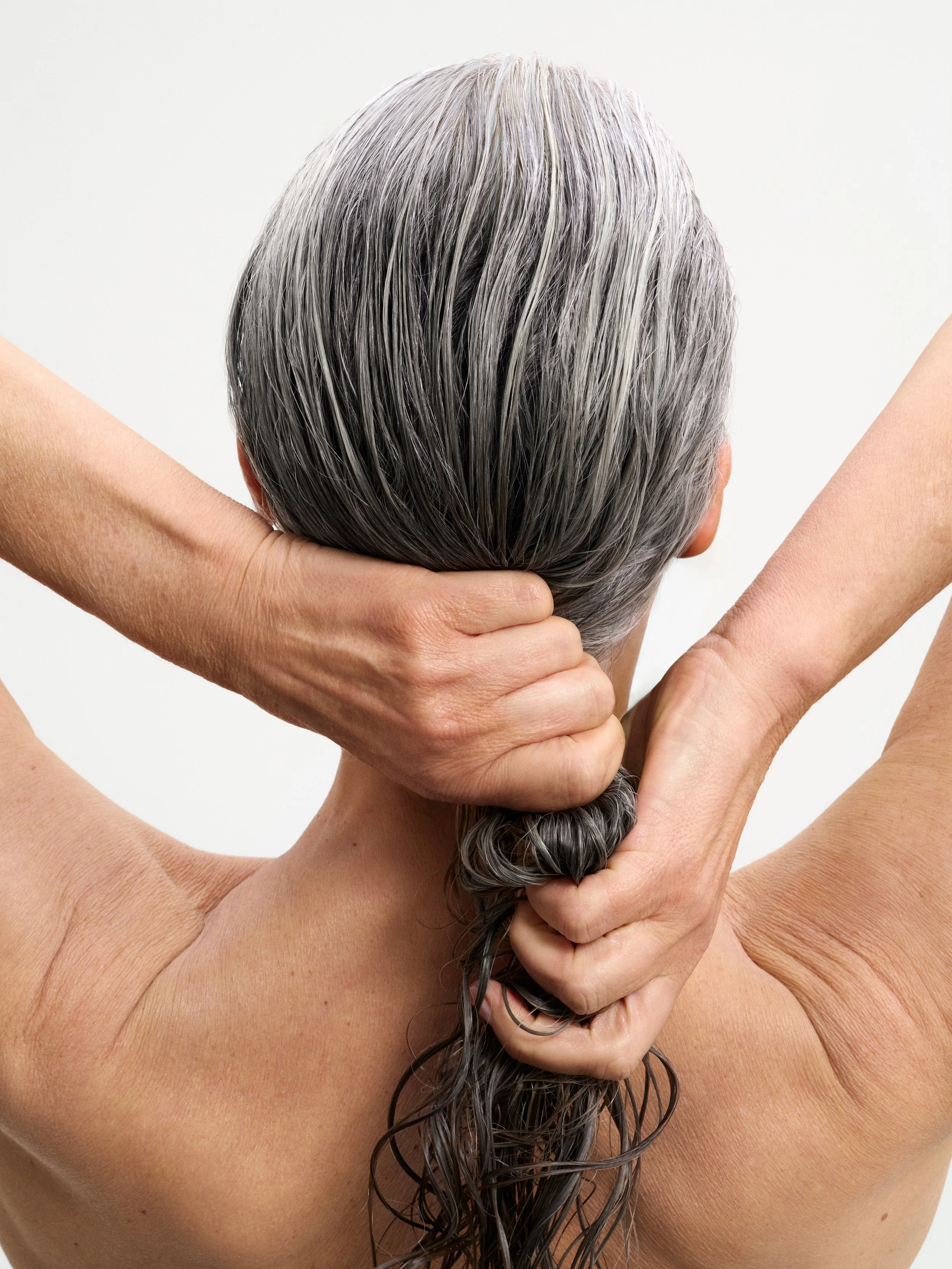
Charlotte and I quickly understood that yellowing was only the most visible sign of a much more complex biological reality. The reduction in melanin does not only change the color. It reduces part of the fiber's natural protection and is accompanied by changes in its water and lipid balance, porosity and mechanical properties.
From that point on, limiting gray-hair care to simple color correction no longer made sense. GRIS imagined a complete routine, conceived as a system in which each formula addresses the specific needs of gray and white hair. The products' action is far more complete. GRIS science offers immediately visible results, luminosity, flexibility and softness, while supporting the fiber's evolution over time by preserving its water balance, mechanical properties and beauty as time passes.
credit images: Margaux Buisson
Gray hair is also incredibly diverse, from white and salt-and-pepper hair to colored lengths and every texture. How did you make sure the formulas could respond to such different realities?
Gray is not a uniform category. It is a spectrum. Between pure white, salt-and-pepper, natural roots with colored lengths, straight, curly or coily hair, the realities are profoundly different. The degree of depigmentation, texture and porosity transform the needs.
We therefore built the formulas around a shared architecture capable of acting on the fiber's fundamentals: hydrating and nourishing without weighing it down, preserving flexibility, refining the feel, reviving shine and, when necessary, neutralizing unwanted tones.
The treatments were then evaluated on a wide diversity of profiles, from white to colored hair and from straight to curly and coily textures. Our ambition was not to impose a standardized response, but to create formulas intelligent enough to adapt to the singularity of each head of hair.
You describe GRIS as bringing skincare thinking into haircare. What did skincare teach you about the way a hair routine can be formulated and experienced?
What interested me about skincare was both its image and the way its products are formulated. I wanted to bring gray hair an aesthetic as premium and glamorous as makeup or skincare. Hair plays just as essential a role in self-confidence, the expression of personality and seduction. I saw no reason for that not to be reflected in the brand's world too.
From a formulation perspective, skincare taught us that an effective routine does not rely on a miracle product, but on complementary steps, the precision of the active ingredients and consistency. We adopted that logic, as well as active ingredients and approaches drawn from skincare, such as molecular biomimicry, adapting them to the hair fiber and scalp.
GRIS is therefore not simply a collection of products. The four treatments form a genuine system: each addresses a precise need, while pursuing the same objective, to preserve the quality of the fiber over time and reveal the full beauty of gray and white hair.
credit images: Margaux Buisson
At the heart of the range is a pro-age complex combining super-low-molecular-weight hyaluronic acid with rice-derived Nutripeptides. Why were these the right ingredients for gray hair, and what results mattered most to you?
Gray hair often has a more porous, drier, sometimes rougher and more fragile fiber. We therefore wanted a response capable of acting simultaneously on hydration, structure, surface quality and the scalp environment.
Very-low-molecular-weight hyaluronic acid was selected to support the fiber's water balance and flexibility. Rice-derived Nutripeptides support its resistance and structural quality. Around this duo, Prodew 500, an amino-acid complex, helps refine the feel, softness and shine, while KeraScalp cares for the scalp's balance.
Charlotte and I wanted our products to deliver perceptible results from the first use, but also to strengthen the fiber over time. Immediately: softer, more flexible, more manageable and more luminous hair. Over time: hair that is better supported as it evolves, with its water balance, mechanical properties and aesthetic quality preserved.
Today, more than 90% of GRIS testers find that their hair is healthier after using our routine. That is a real source of satisfaction for us.
The formulas contain 97% ingredients of natural origin. How did you balance that commitment with the level of performance and sensoriality you wanted?
Natural origin was never a claim added after the fact. It was part of the brief from the beginning. But our first requirement remained performance: each formula had to address the specific needs of gray and white hair with precision, without compromising on feel, lightness or pleasure of use.
We therefore combined advanced active ingredients, such as low-molecular-weight hyaluronic acid, with ingredients of natural origin such as shea butter and castor oil. We also chose to formulate without parabens, sulfates or silicones.
Exceeding 97% ingredients of natural origin while retaining an elegant texture and visible results required numerous adjustments. This balancing act is precisely what interested us: demonstrating that natural origin, sensory sophistication and efficacy can be part of the same formulation standard.
Sublimation launches as a complete four-step routine. How did you choose those first four products, and what does each one bring to the ritual?
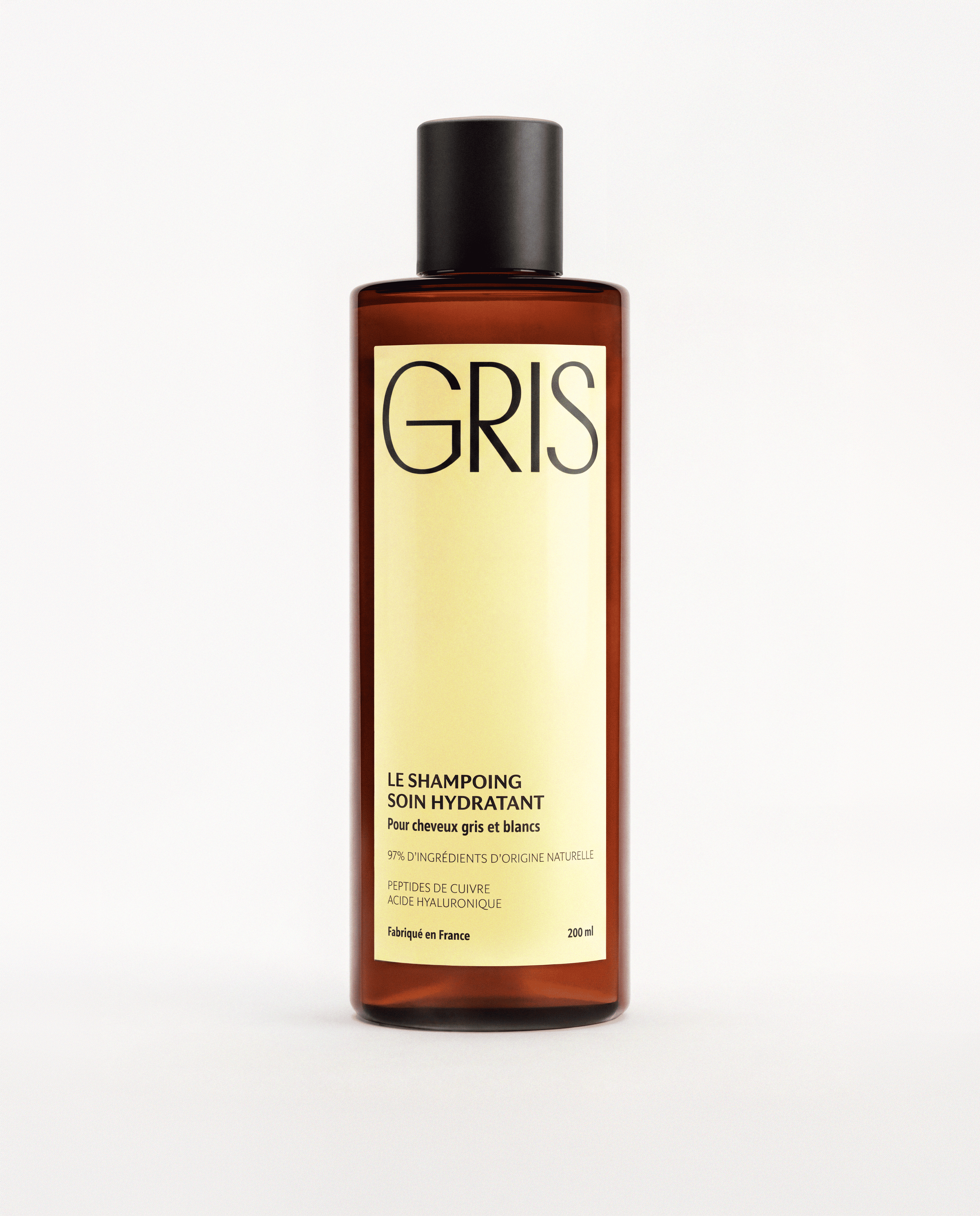
We designed the Sublimation range as a care system, not simply a succession of products. Each formula addresses a precise need while preparing for or extending the action of the others. Together, the four steps cover the essentials of the ritual, from cleansing to daily protection.
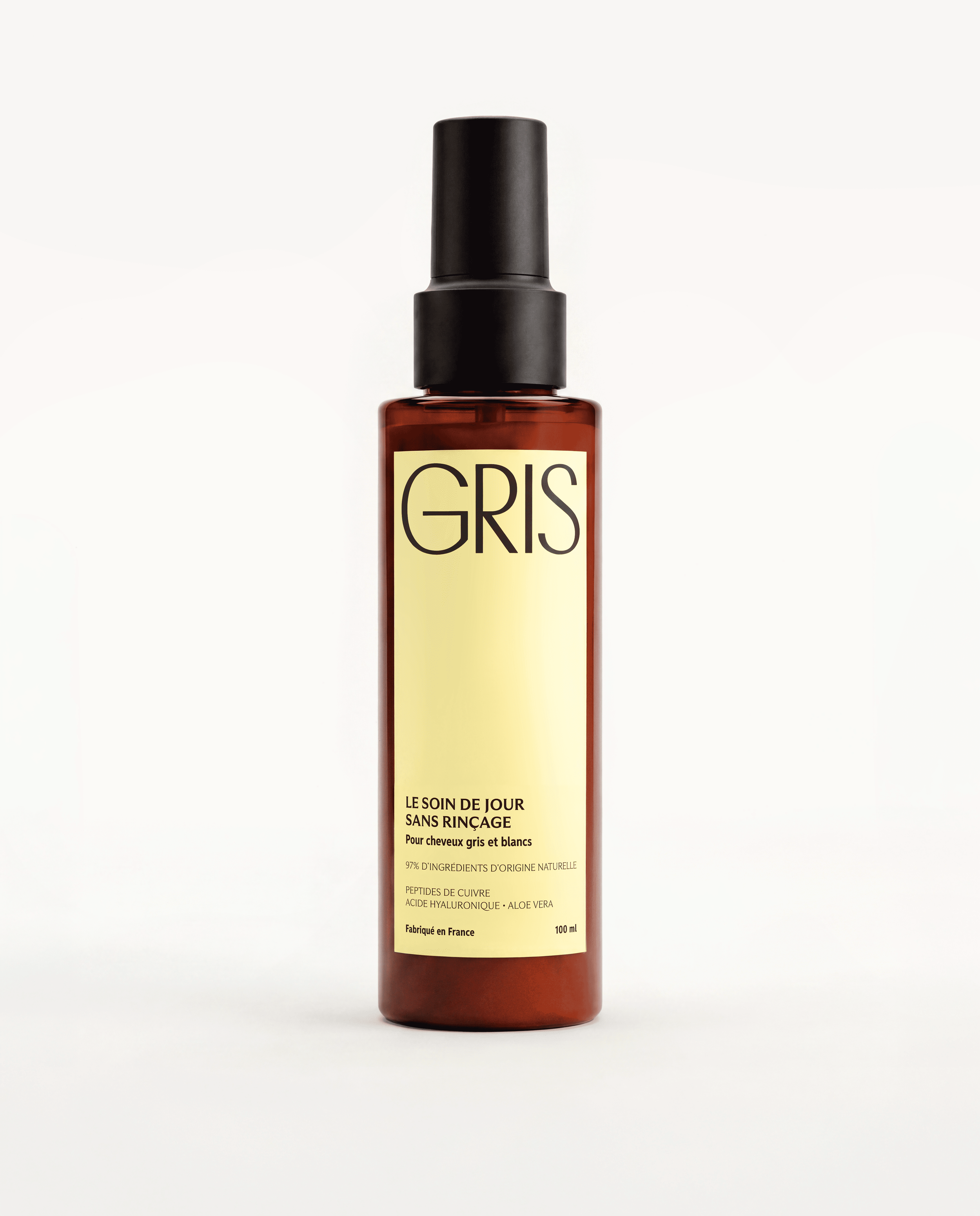
The hydrating care shampoo cleanses gently while preserving the balance of a naturally more porous fiber. The purple shampoo is used occasionally to neutralize yellow tones and restore color purity without sacrificing comfort. The conditioner helps rebuild the protective film, smooth the cuticle and restore a more flexible texture. Finally, the leave-in treatment maintains hydration and protects the fiber throughout the day, with a light finish.
These four products are therefore not four layers to be systematically applied on top of one another. They compose a care wardrobe that each person can adjust according to her texture, washing frequency and needs at that moment.
The purple shampoo is designed to neutralize yellow tones without drying the hair. How did you rethink such a familiar product so that it feels like care rather than correction?
We reversed the usual hierarchy: care first, correction second. A purple shampoo is often formulated almost exclusively around its color result, at the risk of leaving the fiber dry or rough. We wanted ours to be perceived as a true beauty step, with yellow-tone neutralization as only one dimension.
The purple pigments correct unwanted tones and restore purity to gray and white. But above all, the formula uses the hydrating foundation of the entire routine: low-molecular-weight hyaluronic acid, Prodew 500, vitamin B12 and rice Nutripeptides. We added 5% glycerin to preserve the fiber's hydration, flexibility and comfort.
The ambition was to achieve a more luminous color without ever feeling that the hair had been corrected at the expense of its material.
credit images: Margaux Buisson
Sublimation is the first GRIS routine. What need would you love to address next, and is there already a product you are particularly excited to develop?
We have just launched GRIS, but the years of research and the conversations held beforehand have already revealed a real map of needs that remain largely unaddressed.
In the short term, protection from UV rays and, more broadly, from solar heat is a territory that excites us greatly. With the reduction in melanin, white hair has less natural protection and can be more sensitive to UV rays and oxidative stress. Much remains to be invented to defend it elegantly, without weighing it down or altering its light.
Then, we are obviously very excited about developing our delaying range for those who wish to preserve their pigmentation for longer. It opens up a particularly stimulating field of innovation. As always at GRIS, innovation will serve choice, never instruction.
The visual world of GRIS feels fresh, modern, and full of energy. What did you want people to feel the first time they encountered the brand?
I wanted them to find the brand beautiful and inspiring, quite simply. I believe in the force of beauty, creation and aesthetics. The eye always settles on an image. So the image has to change in order to change the way people look. We are only at the beginning, but judging by the first feedback we have received, our work is bearing fruit.
What did your first testers teach you, not only about their hair, but about the emotions attached to going gray?
Our first testers reminded us that gray is never just a color. Accepting it is often linked to a moment in life, to the way a woman looks at herself and the degree of alignment she feels within herself. For my mother, for example, beginning to welcome her gray hair coincided with a period when she met a new partner and found love again.
I also observed that once they had crossed that threshold, many women no longer saw their white hair as a vulnerability, but as a signature: a strength and singularity they were proud of.
They taught us that haircare acts far beyond the fiber. It can accompany a relationship with oneself, age, desire and the gaze of others. This emotional dimension is fully part of GRIS's mission.

credit images: Margaux Buisson
You are bringing everything you learned from Moodz into a new category. What are you keeping, and what are you excited to do differently this time?
“Thank you for the roses, thank you for the thorns,” Jean d'Ormesson used to say. I would keep everything from MOODZ, because the difficulties shaped me as much as the successes.
The most valuable lesson I learned from MOODZ is that people remain at the heart of every entrepreneurial adventure. With GRIS, I am keeping the intuition, boldness and desire to open conversations that already drove me with MOODZ. But I am adding more discernment, serenity and a much more conscious attention to the people with whom I choose to build.
GRIS will launch through its own website. What is your retail ambition for the brand, and which stores or markets would feel like the ideal fit?
We want to develop GRIS's retail presence quickly, but very selectively: in places aligned with our world, where our customers already naturally go.
I cannot say more yet, but discussions are already underway with several distribution partners.
Five years from now, what would you love GRIS to have changed in the way women and the beauty industry think about gray hair?
Five years from now, I would like a woman discovering her first white hairs to no longer experience them as an alarm signal. I would like her to stop wondering what she might lose by letting them show, whether it is her youth, her femininity or the way others see her, and simply ask herself what place she wants to give them.
I would like her to be able to see gray as a color in its own right, a new material to work with: keep it, blend it, color it, then change her mind. Without having to explain or defend her choice.
Finally, I would like the industry to stop confining women with gray hair to a uniform vision of aging. I would like it to show them in all their diversity: modern, sensual, powerful, unexpected. And devote to their hair the same level of research, creation and desirability as any other. If GRIS helps move gray from acceptance to desire, then we will truly have shifted the lines.
