

Olivier Lebrun on BLOWN, Biomimetic Beauty and the Future of Haircare
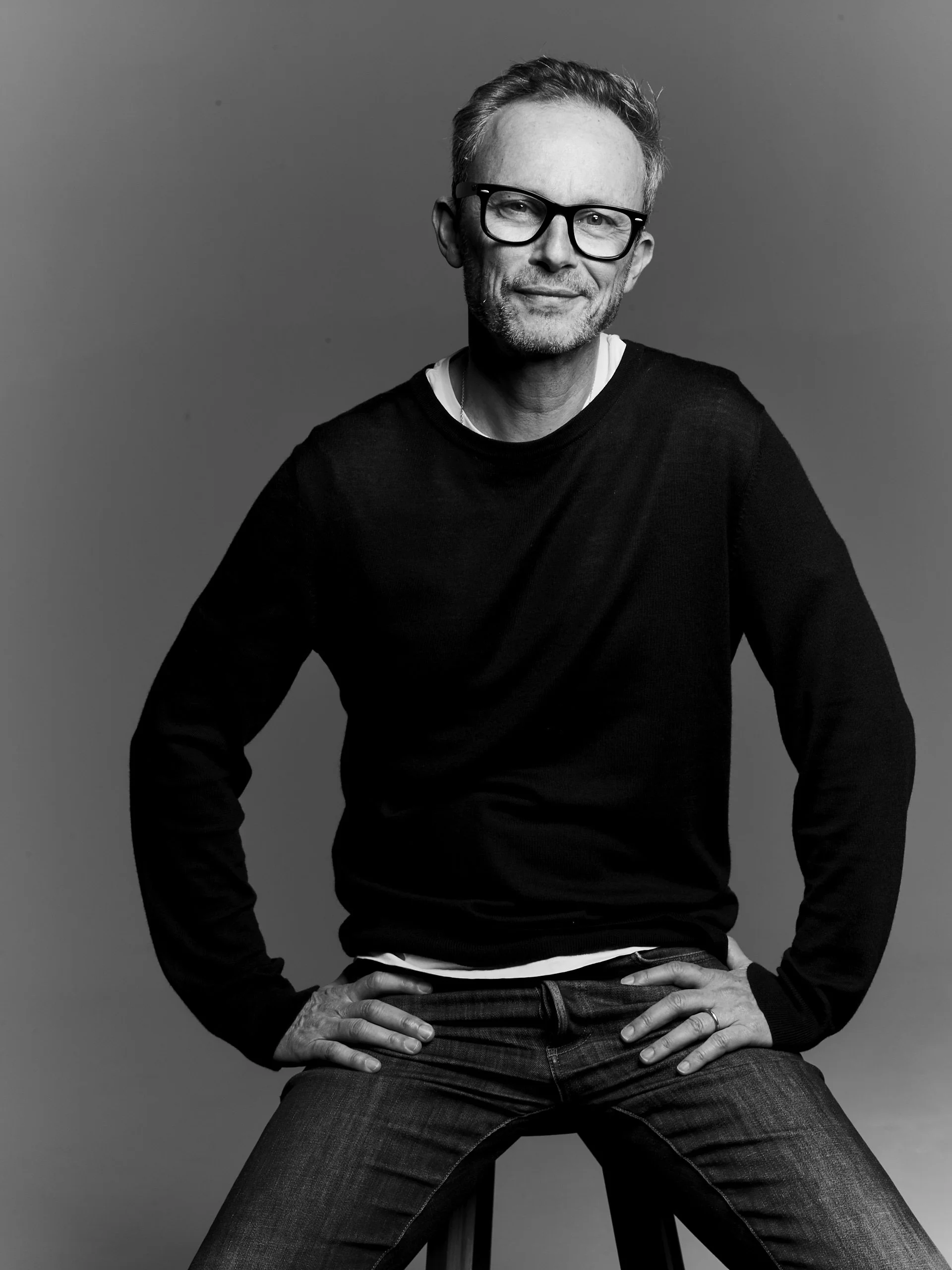
Olivier Lebrun’s way of understanding hair was shaped first by fashion. Working on shoots, editorials and runway shows taught him how much hair can change a face, a silhouette or the mood of an image. When the salon later became central to his work, he began looking at hair differently. A cut had to work after the next wash. Color had to live with the fiber. What mattered was not only how hair looked in a photograph, but how it behaved weeks later.
At OLAB Paris, that longer view became part of his practice. Working with the same clients over time meant seeing how hair changed with coloring, styling, seasons and everyday habits. It also meant hearing the same question again and again: what should I actually do at home to keep this result?
BLOWN grew from those observations. The four-product range combines biomimetic formulation with a low-water approach, with two products that rinse out and two that stay on the hair. Lebrun is just as interested in how much product people use, where they apply it and how often as he is in the formulas themselves.
In our conversation, he talks about the fashion years that shaped his eye, what the salon taught him about real hair, why he created BLOWN and where he believes haircare is heading next.
1. What first drew you to hair, and when did you realize it could become both your craft and your way of expressing a point of view?
What first drew me to hair was its paradox. It is something very intimate, but also one of the first things other people notice about us. It belongs to the body, but it also says a great deal about personality, attitude, sometimes even an era.
My career has done a great deal to shape that way of looking at it. I started in fashion, with shoots, editorials, and runway shows. There, I learned to see hair as a visual language: it can change a silhouette, alter a face, create tension, reveal a personality.
The salon came later. That is where I discovered hair in real life: its history, its texture, its transformations, its vulnerabilities, but above all the very personal relationship each of us has with it.
Then, as I developed BLOWN, a third dimension emerged: understanding the fiber more precisely and what formulation could actually do for it.
Ultimately, my perspective developed in that order: first the image, then the reality of hair, then an understanding of the material.
Today, I do not think beauty is about making someone fit a norm. To me, it is more about revealing what already belongs to them.
That is probably when hair became both my profession and a way of expressing my point of view: beauty as an expression of personality.
2. You began in fashion, working across editorials and runway, before the salon became central to your practice. What did moving between those two worlds teach you about the difference between creating an image and creating hair that has to live beyond it?
My career actually developed the other way around: I started in fashion, editorials, and runway shows, before the salon became central to my work.
Fashion taught me to create an image. On a shoot or at a runway show, hair is part of an overall intention. It interacts with the clothing, the face, the light, the era. You are not necessarily trying to create a “beautiful hairstyle”; you are trying to tell a story.
The salon taught me something else.
A haircut does not have to work for a few minutes in front of a lens. It has to live. It has to remain right after a shampoo, in movement, several weeks later, when the person is on their own with their hair.
That is where I understood an essential difference: in fashion, you can guide the material toward a very precise vision for a moment. In the salon, you have to learn to work with it over time.
Those two experiences have remained inseparable for me. Fashion taught me never to lose sight of the intention. The salon taught me that beauty has to keep working when the image disappears.
Today, when I work on hair, I always think about both: what we see, but also what will remain once no one is looking.

3. Which encounters, mentors, or collaborations shaped you most during those formative years, both technically and personally?
I do not think I was shaped by a single person or mentor. It was more a succession of encounters that built my way of working.
In fashion, I was surrounded by photographers, stylists, makeup artists, models, and creative teams, each with a different way of looking at an image.
That is very formative, because you quickly understand that technique is not enough.
You have to know how to observe, listen to an intention, understand what someone else is trying to express, and then find your own response.
Technically, those collaborations taught me precision, speed, and above all adaptability. On a shoot or backstage, you sometimes have to abandon what you had planned within minutes to move toward something more appropriate.
Personally, they taught me the importance of other people's perspectives, not to conform to them, but to refine my own.
I think a great deal of creativity comes from that: having a vision strong enough to know where you want to go, while remaining open enough for an encounter to shift it.
Over time, I have understood that mastery does not necessarily mean knowing exactly what to do in every situation. Above all, it means knowing how to look closely enough to understand what the situation requires.
4. After working with so many faces, textures, and creative teams, what does beautiful hair mean to you today?
Today, beautiful hair is, above all, hair that feels right to me.
After working with so many different faces, personalities, and textures, I no longer really believe in a universal definition of “beautiful hair.”
For a long time, the industry placed a great deal of value on control: more shine, more discipline, more apparent perfection.
With experience, I have moved toward a different vision.
Beautiful hair should retain something of itself: its movement, its texture, its individuality. A curl does not need to be corrected to be beautiful. Fine hair does not need to be artificially transformed into something it is not.
On the other hand, I have become very attentive to the quality of the fiber. When it is respected, properly cared for, and protected, beauty emerges much more naturally.
My work is therefore less about imposing an idea of beauty than about creating the conditions for hair to express its own.
And that is where my vision of luxury meets my vision of beauty.
Luxury is not necessarily about transformation. It is about being able to choose, to embrace a texture, a movement, an identity.
Freedom is a luxury that it is our role to reveal.
5. What do you believe a great hairstylist should be able to see or understand before even touching someone’s hair?
Before even touching the hair, a great hairstylist should already have understood three things: the material in front of them, the person wearing it, and how that hair will have to live after the appointment.
The first reading is technical: density, texture, natural movement, the condition of the fiber, areas of fragility, a history of color or transformation.
The second is human. You have to understand how the person lives with their hair, what they like, what they think they dislike, how much time they want to spend on it, and sometimes distinguish between what they are asking for and what they are really looking for.
And then you have to anticipate.
A cut, color, or treatment should never be conceived solely for the moment the person leaves the salon. You already have to imagine the hair after the next shampoo, several weeks later, in its natural movement and in everyday life.
Perhaps that is where the difference lies between carrying out a technique and truly practicing this profession.
Technique begins when you touch the hair.
The profession begins long before, in the ability to look.
6. What made you create OLAB Paris, and what kind of space did you want it to become for both your clients and your own practice?
I created OLAB Paris because, at a certain point, I needed a place that truly reflected the way I work.
After years in fashion, I was used to environments where every detail had an intention: the image, the light, the pace, the way people interact.
I wanted to bring that same exacting standard to the salon, while removing anything that could make the experience impersonal or mechanical.
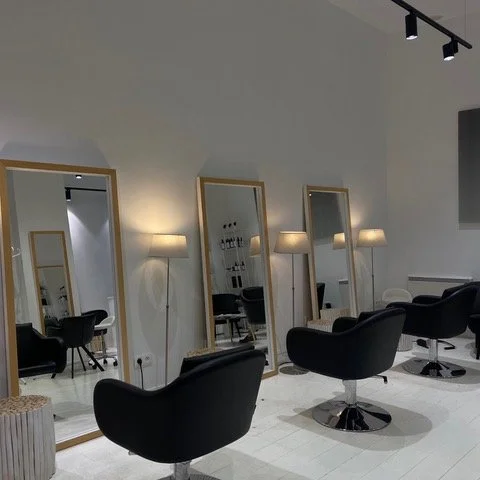
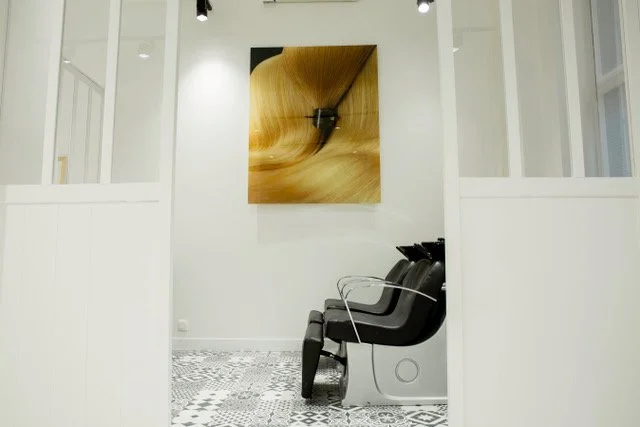
OLAB was to be a more intimate, quieter space, where we could take the time to look at someone's hair, understand its history, and talk with the person before deciding what needed to be done.
Luxury, to me, is not about doing more. It is about being precise enough to do only what is right.
But OLAB has also become essential to my own practice. It is a laboratory for observation. I see hair evolve there, I test protocols, I observe what really works over time, and I listen to the concerns that keep coming back.
BLOWN would probably not have been conceived in the same way without that daily proximity to hair in real life.
OLAB has ultimately become the place where the different parts of my career meet: the eye of fashion, the precision of the salon, and curiosity about the material.
7. How has the long-term relationship you build with clients at OLAB changed the way you understand hair, its evolution, and what people truly expect from care?
My relationships with clients over time have taught me something essential: hair is never in a fixed state.
When you work with the same person for several years, you see how their fiber evolves with coloring, the seasons, styling, changes in length, or simply their everyday habits.
That is very different from a result photographed at a specific moment.
Time reveals what really works.
It also reveals that expectations of care go well beyond the softness or shine achieved immediately after application. Above all, people want their hair to become easier to live with and to retain more of its quality despite the things they do to it every day.
That is an important distinction: an immediate cosmetic effect can be spectacular without necessarily bringing a lasting improvement to our relationship with our hair.
The salon has therefore gradually moved me away from a purely corrective approach. Waiting until the fiber is very compromised before trying to mask or compensate for the damage seems limited to me.
What interests me more is continuity: caring for the fiber, preserving its quality as much as possible, and limiting the accumulation of damage.
That is also where my definition of luxury evolved.
In care, luxury is not only the immediacy of the result. It is its ability to last over time.
True luxury may be a result that time confirms.
8. Was there a particular recurring question or salon experience that made you feel it was time to create BLOWN?
I do not think there was a single moment when I said to myself, “I need to create a brand.”
It was more of an accumulation.
At the salon, I kept seeing the same concerns: colored, lightened, compromised hair, people using a lot of products but still feeling they constantly had to start over.
And one question kept coming back in different forms: “What do I actually need to do at home to maintain this result?”
That is probably where BLOWN began.
But another consideration was taking up more and more space: water.
Our industry uses an enormous amount of it, in formulas but above all in the way we use products. And for me, using water sparingly is not a trend or an environmental argument added afterward. It is a reality, and it has become a design philosophy.
So I asked myself how to rethink a ritual: more leave-in formulas, more concentrated products, textures that are easy to rinse when water is still necessary, and much more precise quantities.
But there was absolutely no question of asking consumers to accept lower performance in the name of responsibility.
It was exactly the opposite.
For a habit to evolve, the result has to be convincing enough to make people want to do it again. That is where trust is built.
I also wanted a different relationship between BLOWN and its user. Not a succession of effects intended to temporarily disguise a concern, but a process people commit to: understanding their hair, adopting the right techniques, respecting dosages, and seeing what consistency can really change.
Trust should not come only from what the brand claims. It should come from what users observe for themselves over time.
The name BLOWN actually contains that philosophy: Beauty Low On Water & Natural Intelligence.
It is not a name onto which we later grafted a vision. The vision was already contained in the name, and even in the way it was presented graphically: direct, recognizable, contemporary.
BLOWN was born from that meeting of beauty, performance, formulation intelligence, and the sparing use of water.
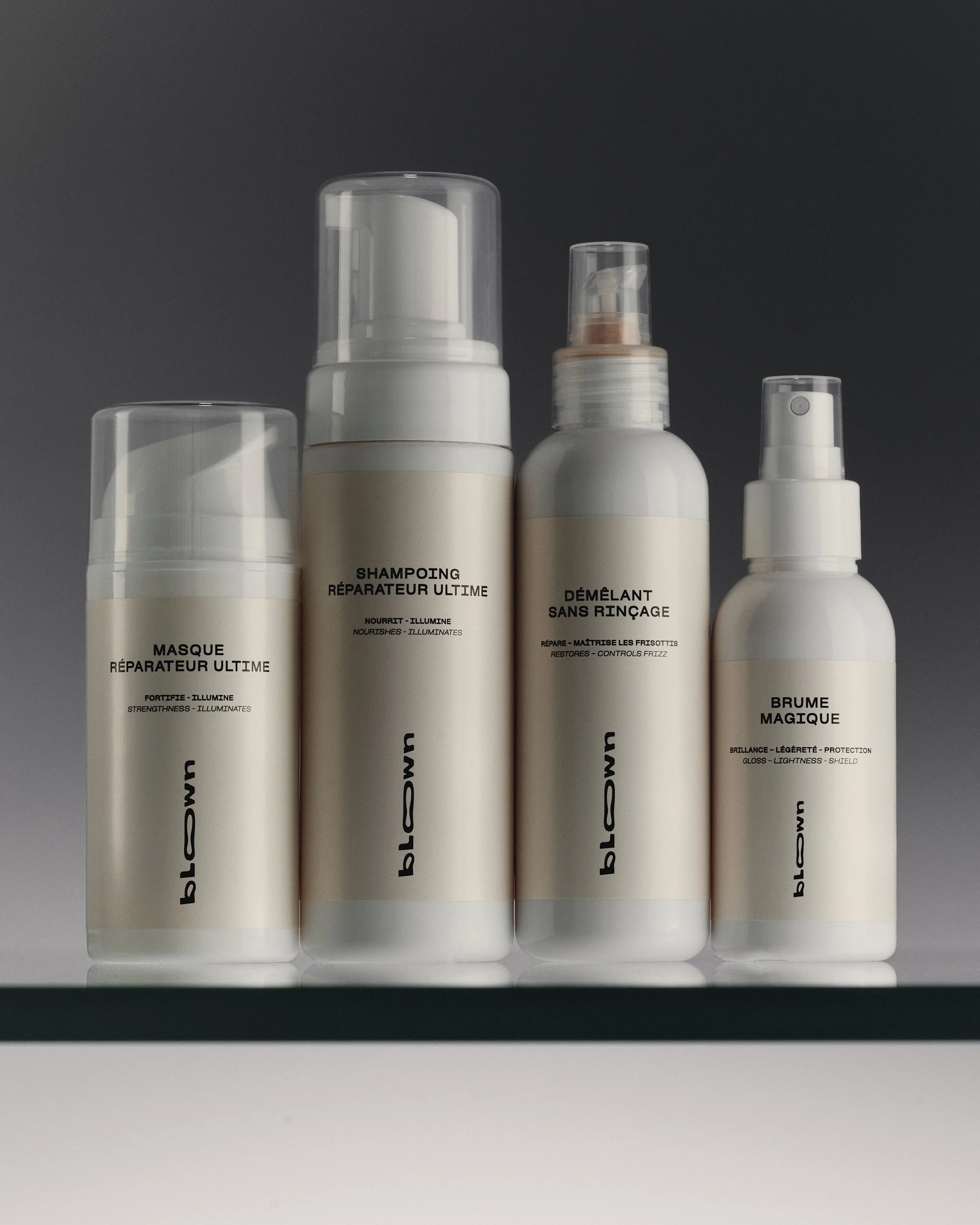
9. The range begins with four products: a foam shampoo, a mask, a leave-in conditioner, and a mist. How did you build this system, and what role does each step play within the complete ritual?
From the outset, I did not want to create four independent products. I wanted four complementary functions.
The question was very simple: what does hair really need, and when?
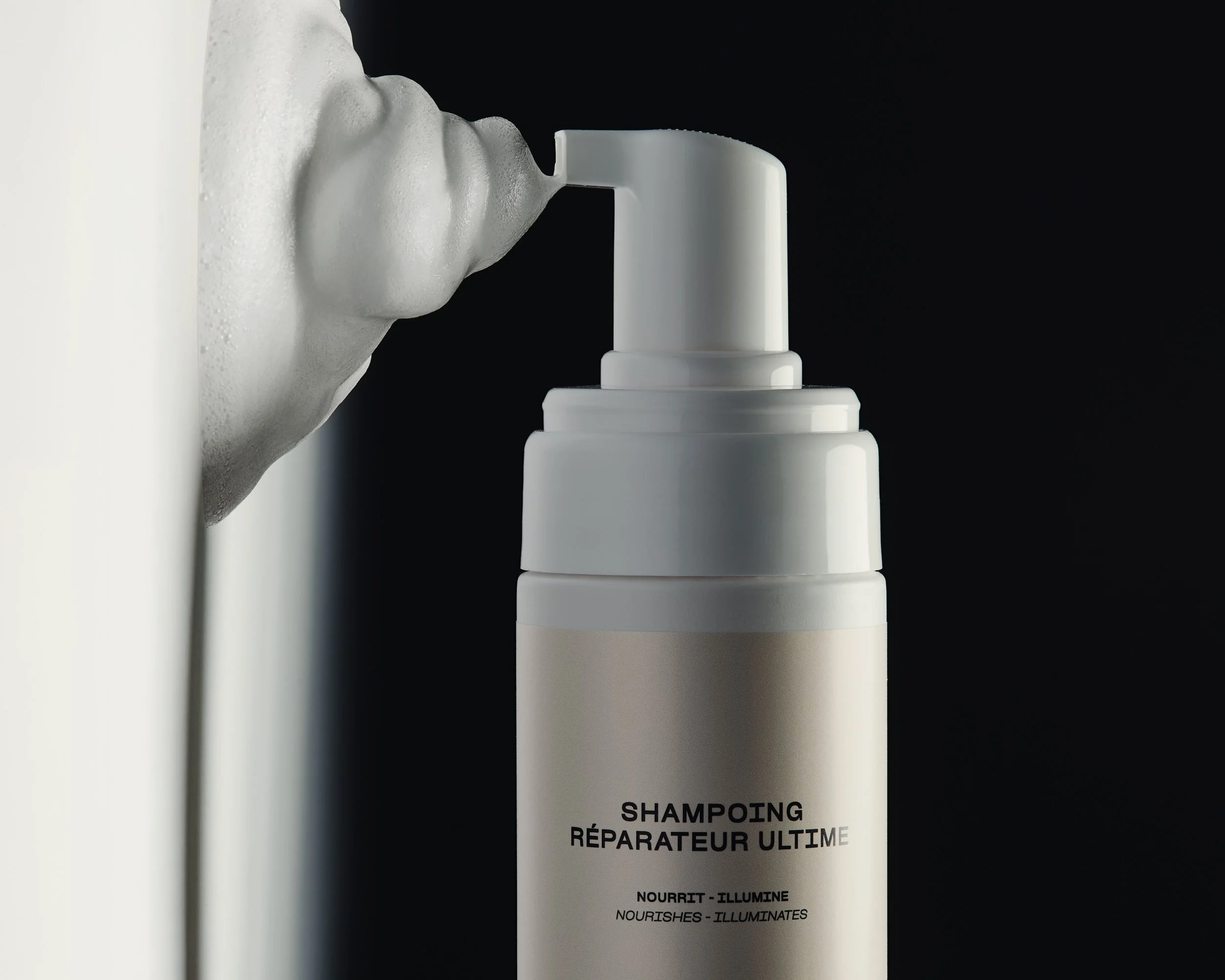
The shampoo opens the ritual. Its foam is already formed, allowing immediate distribution and a more controlled application. It cleanses and prepares the fiber for the rest of the care.
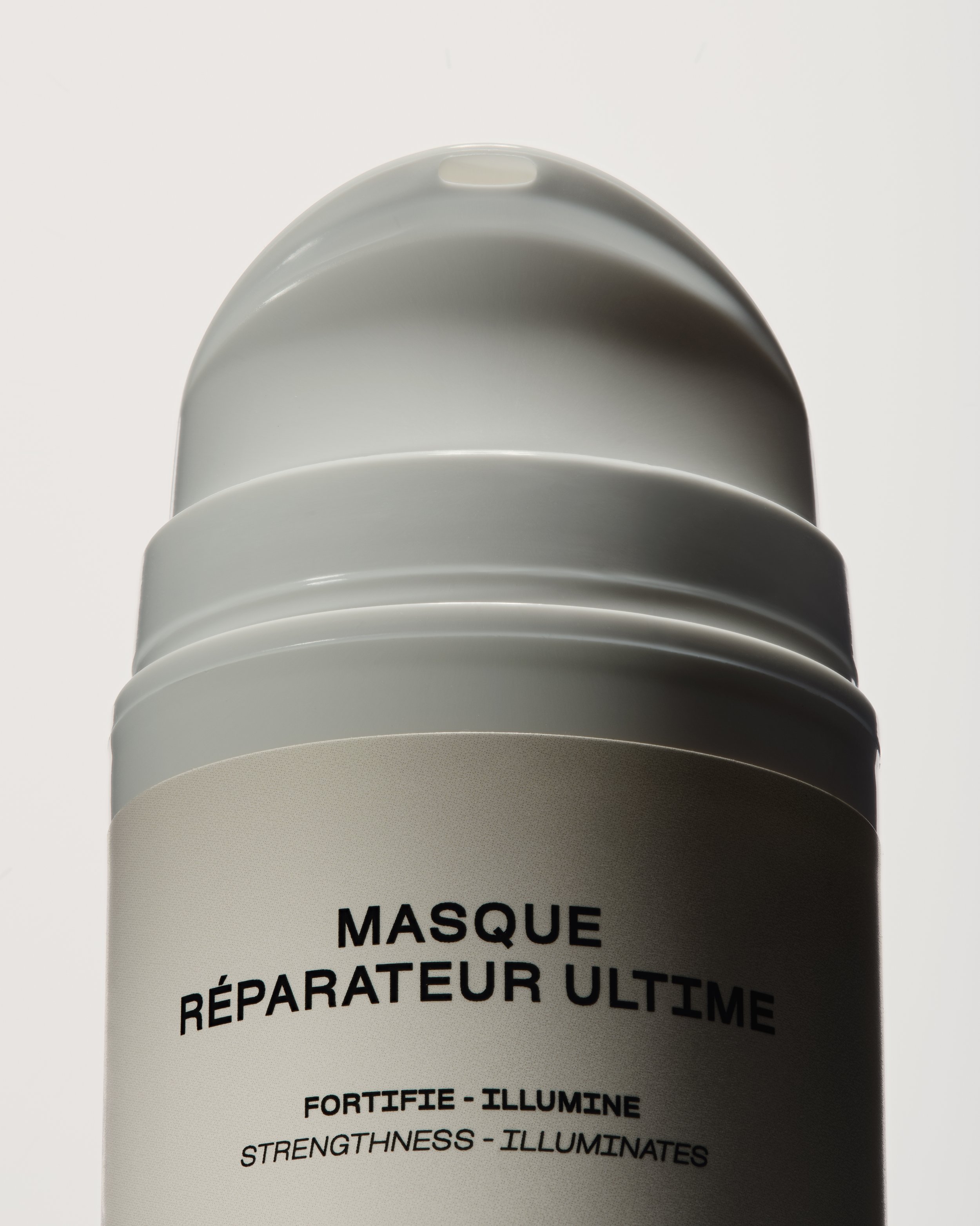
The mask is the more intensive care moment. It is particularly suited to compromised fibers, working on their suppleness, feel, and overall quality, without seeking a heavy or artificially coated result.
The leave-in conditioner then connects care with everyday life. It makes detangling easier, cares for the fiber after washing, and stays on the hair without requiring another rinse.
Finally, the mist is the lightest step: a few sprays to care for the hair every day and between washes.
The architecture directly reflects our philosophy on water: two rinse-off products, two leave-ins.
That may seem simple, but it was a real design decision. We wanted to move part of haircare out of the shower and ask ourselves, at each step, whether the action, the amount of product, and the water it requires were really useful.
In beauty, we have long equated more steps and more product with greater effectiveness.
I am not sure that equation is right.
BLOWN instead seeks the number of steps truly needed to achieve a consistent result, then makes sure each one has a real reason to exist.
10. Texture, dosage, sequence, and pleasure all influence whether a routine is actually followed. How did you design the sensory experience and gestures around the formulas?
An excellent formula used incorrectly can become a bad experience.
That is why, at BLOWN, dosage, texture, the order of the steps, and the pleasure of use are part of product design.
Every step had to be intuitive.
The shampoo already comes as a foam: you do not need to keep adding more product to get a lathering sensation.
The mask offers a more enveloping moment, but its texture has to remain easy to distribute and rinse out.
Then the ritual shifts to two leave-in steps, where precision becomes essential. The conditioner is used in a small amount, adjusted to the hair; the mist, in just a few sprays.
What I like about this way of applying the products is that it gradually teaches users to observe their hair.
How much do I really need? Where should I apply the product? Does my hair need the full ritual today, or only certain steps?
So there is an almost educational dimension to the BLOWN experience.
And pleasure is fundamental. The fragrance, the feel, the textures, and the ease of application make people want to return to the product.
Pleasure is not the opposite of performance. It encourages the consistency that allows performance to express itself.
A care brand should therefore not only design good formulas. It should also design the conditions that make people want to use them well.
11. BLOWN brings together a low-water approach, high naturality, and biomimetic formulation. How do these three principles work together in the performance and identity of the products?
To me, low-water, naturality, and biomimicry are not three separate marketing arguments. They come from the same way of thinking about a formula.
Using water sparingly first forces us to ask where water is really necessary, both in the product and in its use. That explains the prominent role of leave-in formulas and our work on concentration, dosage, and ease of rinsing.
Naturality meets another requirement. I do not think “natural” automatically means “effective,” any more than I believe nature and science should be set against each other.
A high level of naturality only makes sense if the ingredients are chosen for a function and combined intelligently.
That is where our biomimetic approach comes in.
We started with what we observe in the fiber: the importance of amino acids, its lipid environment, hydration, pH, the condition of the cuticle, and its protection against repeated stress.
That reading led us to develop BLOWN's eight signature complexes.
The idea is simple: not to accumulate ingredients to make a formula longer or multiply promises, but to combine complementary actives around targeted actions.
TRI-AMINO, KERA-LIPID, HYDRA-SILK, and CUTICLE-SEAL, for example, organize different families of ingredients around specific functions related to amino acids, lipids, hydration, or cuticle quality.
To me, that is their value: creating an architecture of actions rather than an accumulation of actives.
The result must be intelligent in its design, but above all real in the experience.
I did not want to create four products that all promise to do everything. I wanted each formula to know exactly why it exists, and the complexes to work in relation to one another throughout the ritual.
Ultimately, that is what Natural Intelligence means to me: observing the material, understanding its needs, then intervening appropriately.
Technology only has value when it produces something that can be understood and perceived in real life.
12. What does your own haircare and beauty routine look like today, and which products, including those outside BLOWN, do you genuinely return to?
My routine is probably much simpler than you might imagine for someone who works in beauty.
Over time, I have learned not to confuse accumulation with effectiveness. I prefer a few products whose function I really understand, used at the right time and in the right amount.
For hair, obviously, I use BLOWN. But I use it as I advise people to in the salon: I first observe the condition of the hair and adapt the ritual. I do not think hair has exactly the same needs every day.
For skincare, I like discovering brands that have a real point of view on formulation and experience. I return in particular to Janine Knizia Skincare, MANTLE, and Noble Panacea.
They are three different worlds, but each has a strong identity and intention.
I think it is essential, when creating your own brand, to keep looking at what others are doing. Creating BLOWN has not diminished my curiosity; it has probably strengthened it.
A strong brand should never demand an exclusive gaze.
And then there is fragrance. I like BYREDO. Fragrance belongs to a different register: it does not need to solve a problem. It acts on emotion, memory, presence. It is probably the most instinctive part of my routine.
Being surrounded by products all day has paradoxically made me more selective.
Today, in beauty, I am looking less for accumulation than for what feels self-evident.
13. From your position between the salon, fashion, and product development, which changes in the haircare industry feel most meaningful to you right now?
What seems most interesting to me today is that haircare is beginning to move beyond an essentially cosmetic approach and enter a real culture of care, targeting, and evidence.
Softness, shine, and control obviously remain important. But a more demanding question is emerging: what does this product actually do for my hair, and what changes when I use it regularly?
There is a lot of talk about the “skinification” of haircare. What interests me is not simply transferring skincare ingredients or vocabulary to hair.
It is importing the method: identifying a concern, selecting actives with a specific function, understanding the consistency required, and seeking to measure the result objectively.
The scalp is also becoming much more prominent. That is a logical development, provided we do not confuse the scalp with the fiber. One is living skin, the other a keratinized structure. They belong to the same hair environment, but they do not have the same needs.
The other major transformation concerns resources.
Using water sparingly will become a reality that is increasingly difficult to treat as secondary. In my view, that should change the very design of the product and the ritual: is rinsing really necessary? How much product should be used? How many steps are really useful? Can we achieve greater performance with less product and fewer resources?
Finally, I think we are gradually moving away from a single definition of beautiful hair. Not every texture needs to be corrected or standardized.
All these developments ultimately move in the same direction: more understanding, targeting, and evidence.
And that is where the future of haircare lies for me.
It will probably be much more technological in its design, but much more pragmatic in its use.
Technology for its own sake does not interest me.
It becomes interesting when it simplifies an action, addresses a concern precisely, or makes it possible to achieve a better result with greater precision.
The future of haircare will therefore not necessarily mean inventing ever more products.
It will mean becoming much more intelligent in the way we care for hair.
14. What are you still hoping to explore through OLAB and BLOWN, and what would you like the next chapter of your work to make possible?
Today, I see OLAB and BLOWN as two very different tools that can continue to enrich one another.
OLAB allows me to observe at very high resolution: a person, their hair, its history, and then its evolution over time.
It is an extraordinary setting for understanding what really works and what is still missing.
BLOWN makes something else possible: turning those observations into formulations, protocols, and solutions that can reach beyond the salon.
I would like to take that exchange between the two much further.
To keep exploring targeted actives and technologies, deepen our understanding of the scalp and the fiber, develop our complexes, create ever more precise formulas, and continue to question how much water, product, and how many steps are really needed.
But the next chapter is not only about products.
I would like BLOWN to build an increasingly intelligent relationship with its users: not simply telling them what to buy, but helping them understand their hair, choose, measure out their products, adjust their ritual, and see for themselves what consistency can change.
Because I believe the haircare of tomorrow will have to achieve a fairly difficult synthesis: being more technological without becoming more complicated, more responsible without becoming less desirable, more effective without necessarily requiring more resources.
Technology in the design. Pragmatism in the use. Restraint in the resources. Pleasure in the experience.
And always freedom as the ultimate goal.
OLAB makes it possible to understand at the scale of one person. BLOWN can turn that understanding into a system capable of helping many more people.
So I am not simply trying to create more products or more services.
I would like to help build a more intelligent, freer, and more conscious way of caring for hair.
