

Rhodista: Pamela Manasievski on Bone Broth, Bioavailability, and Beauty from Within
The collagen supplement category has grown on the promise that beauty can be swallowed. Powders, capsules, peptides, hydrolyzed proteins: the format changes, but the premise often remains the same. Put collagen into the body, and the body will know what to do with it.
Rhodista begins from a more exacting question: what can the body actually recognize, absorb, and use?
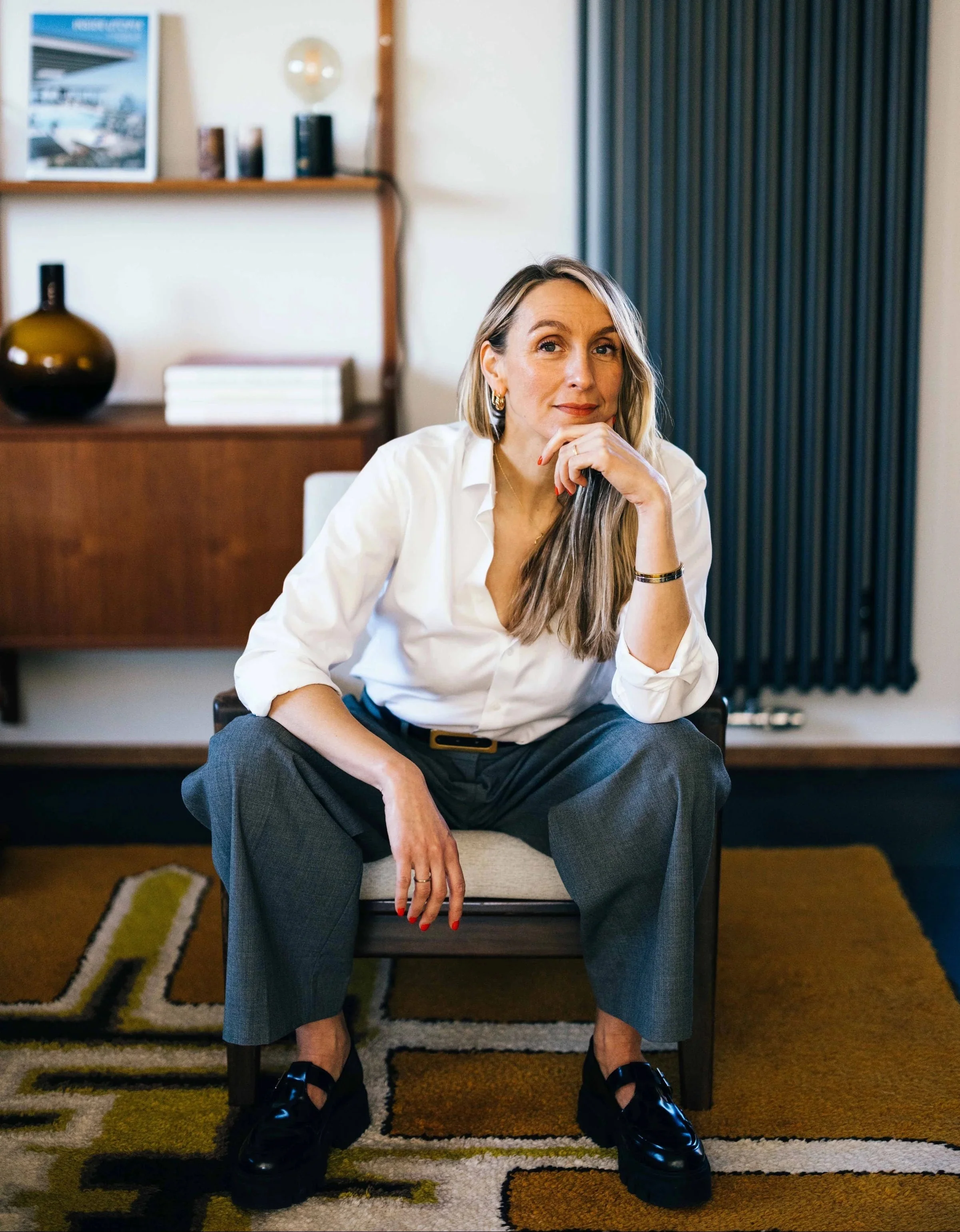
Pamela Manasievski did not arrive at bone broth through the supplement industry. She spent thirteen years as an interior architect before training in functional nutrition. The turning point was personal: rosacea that repeatedly returned after antibiotics, each time more aggressively. Bone broth entered her life as a tool for intestinal support, and the connection between digestive balance, inflammation, hormones, and skin became impossible for her to ignore.
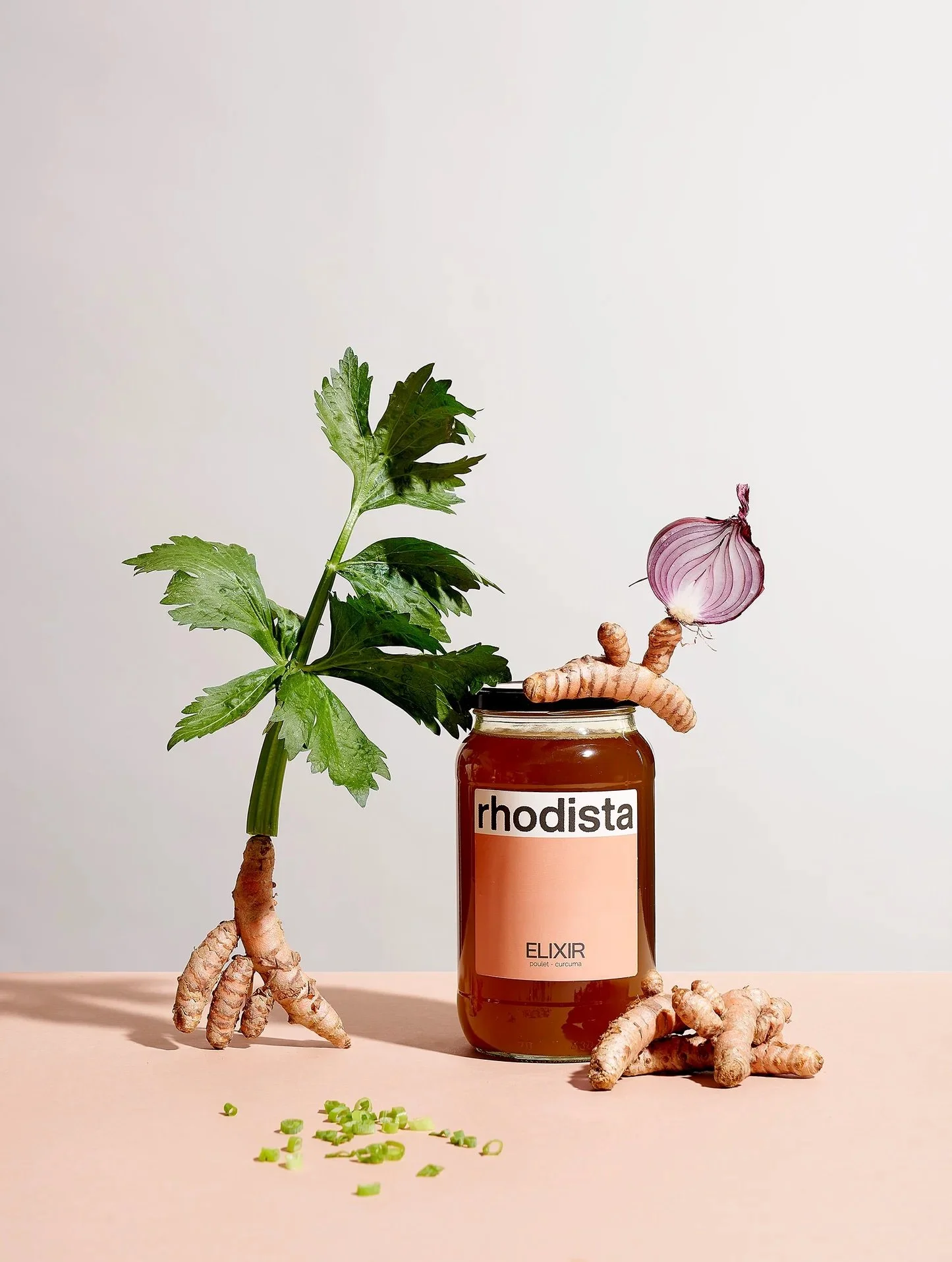
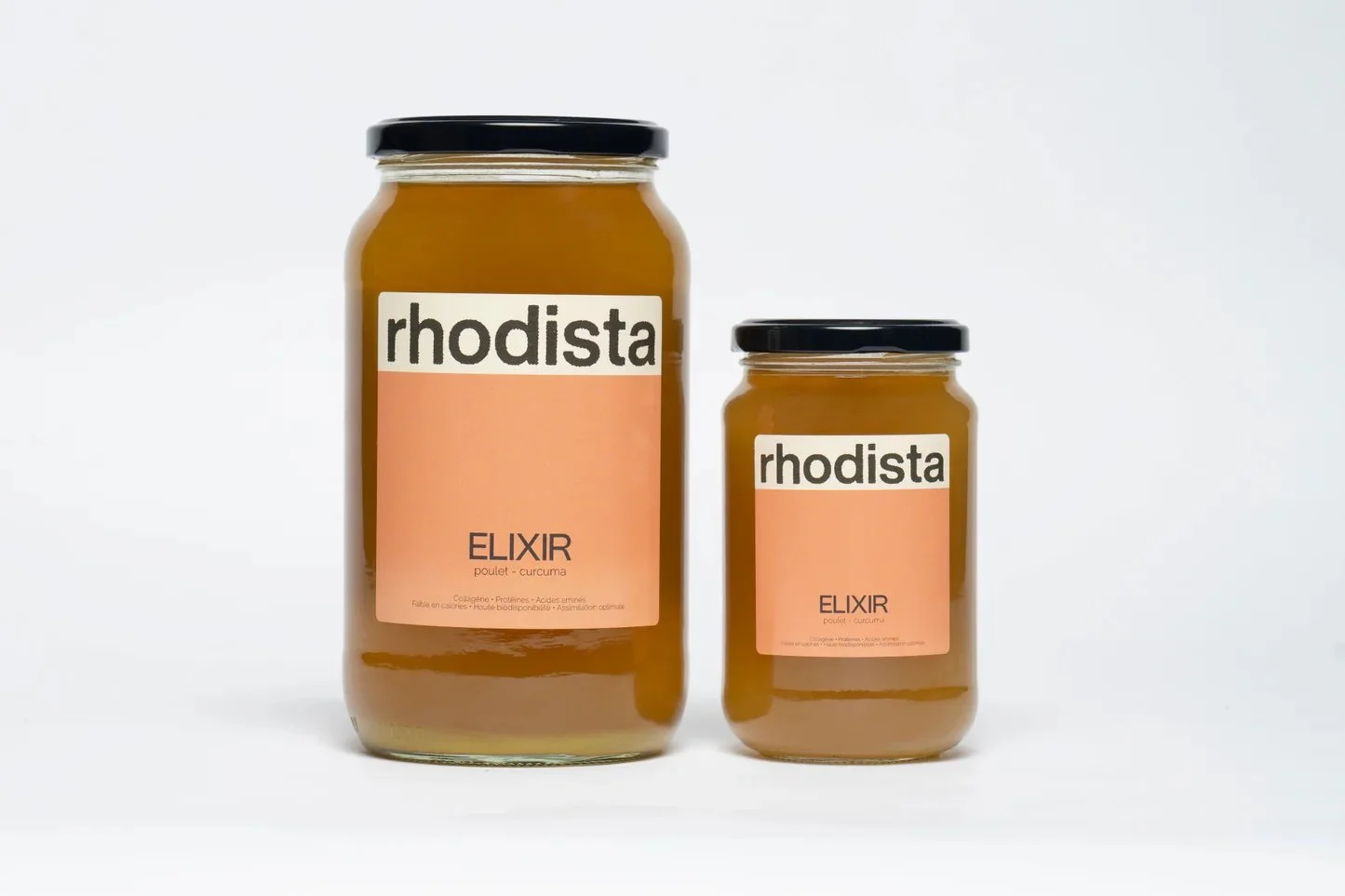
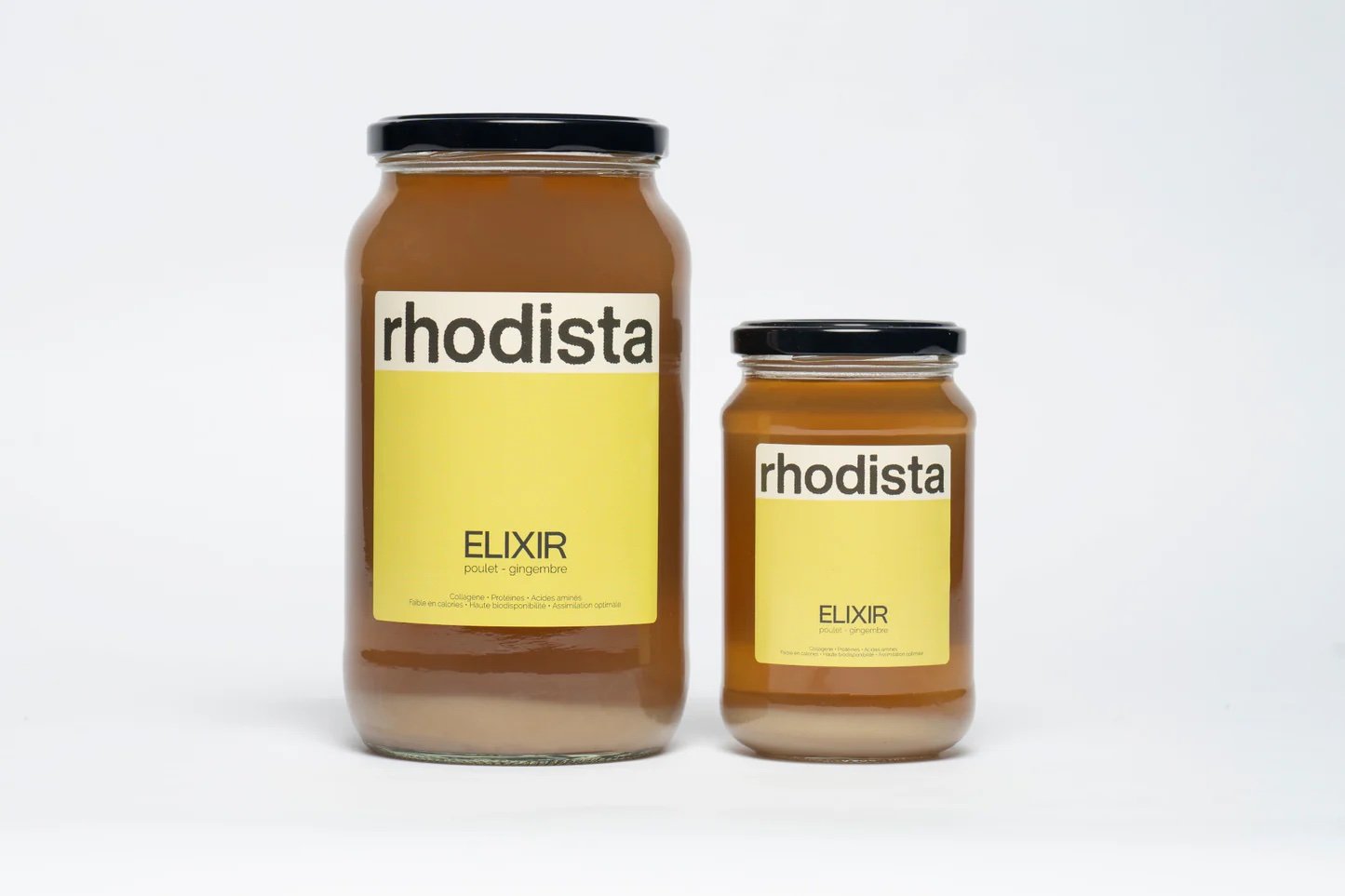
What followed was not an attempt to modernize an ancestral food by stripping it into a powder. Rhodista keeps the logic of the whole-food matrix: organic bone broth elixirs slowly cooked in Belgium for up to 24 hours, made from locally sourced ingredients, traceable farms, grass-fed and free-range animals, fresh roots, no powders, no flavor enhancers, no unnecessary additions. The argument is not nostalgia. It is bioavailability.
This makes Rhodista interesting in a beauty-from-within market that often confuses richness on paper with usefulness in the body. Pamela Manasievski’s language is precise: Rhodista does not promise, it accompanies. It is a daily ritual built through repetition, sensation, and the slow accumulation of micro-choices.
In this conversation, she reflects on functional nutrition, rosacea, collagen, perimenopause, postpartum recovery, athletic performance, boxing, longevity, and why beauty may have less to do with appearance than with the feeling of inhabiting a body that is supported from the inside.
Read the full interview below.
If this article resonated, come inside the Future of Skincare newsletter on Substack. Beauty Signals is the deeper layer within it, weekly patterns where skincare meets culture, for skin intellectuals, beauty anthropologists, and the cosmetics curious. Read the opening free, full access at latte with me level.
You spent 13 years as an interior architect before building Rhodista. What did that first career teach you that you still use every day as a founder?
My background in interior architecture is with me every day, particularly in all of Rhodista’s creative direction. The visual identity, the colors, the labels, the stands we create for trade shows and events, I design and draw all of them myself. It’s a direct continuation of what I was doing before.
I kept that aesthetic sensibility, that sensitivity to materials, volumes, visual balance. And also something very concrete: having worked with tools like Photoshop means I can stay very autonomous in creation and move fast in execution.
Beyond aesthetics, architecture taught me to think in terms of the full experience. A space is not limited to what you see, it has to be felt, lived. I apply exactly the same logic to Rhodista: every product has to make sense, have a function, but also create an emotion. It’s that discipline around detail, and that capacity to transform a vision into reality, that stays with me now.
Bone broth is one of the oldest foods in human history. What sparked your conviction that it could become a modern beauty-from-within ritual?
It starts with my own experience. I trained in functional nutrition and have always continued learning in order to help my clients. It was during a food profiling training that I rediscovered the benefits of bone broth.
At that point I was 42 and dealing with rosacea flare,ups. I had already treated them several times with antibiotics, both oral and topical. But every time I stopped, the symptoms came back, often more intensely.
At a certain point, I wanted to change my approach. I decided to work more from the inside. I started preparing broths for myself, with the idea of supporting the intestine, and we know how deeply intestinal balance is connected to the skin and hormones.
Very quickly, my skin calmed down. Then the flare,ups disappeared entirely. That is where everything began.
I then realized that this ancestral product had enormous power, but that it was no longer adapted to how we live today. Making a real bone broth requires time, slow cooking, sometimes up to 24 hours, and access to quality ingredients. With Rhodista, I wanted to make that ritual accessible again. To reinterpret it with a contemporary sensibility, make it desirable, and integrate it easily into daily life.
You describe Rhodista’s elixirs as “liquid skincare.” What helps people make the connection between what they drink and what they see on their skin?
The shift almost always happens through experience. When energy returns, when digestion settles, when the skin becomes more luminous, the connection becomes natural.
For a long time, beauty and nutrition were treated as separate, as if the skin could only be addressed from the outside. That is changing. People understand that the skin is a reflection, that it expresses an internal state: digestive, inflammatory, hormonal.
What I observe is a progression of very concrete signals: skin that is more supple, more stable, less reactive. And above all, a global sensation of well-being.
There is also an important dimension of ritual. Drinking your elixir every day creates a regularity, a form of attention to oneself. And it is often that consistency that allows results to anchor over time. Rhodista doesn’t promise. It accompanies. And it’s that combination of sensation, consistency, and understanding the body that allows people to make the connection in a very tangible way.
Bioavailability is a key part of your approach. Why does it matter so much?
Bioavailability is the body’s capacity to absorb, use, and genuinely benefit from the nutrients it receives. It’s not only what you eat that counts, but what your body is able to assimilate.
This is an essential point, because today many products are rich on paper but poorly usable by the organism.
At Rhodista, we chose to work with raw, unprocessed ingredients and slow, low-temperature cooking, up to 24 hours. This process allows nutrients to be extracted naturally, in a form the body recognizes and knows how to use. The body doesn’t have to decode or transform. It receives, it integrates.
And that is where the difference is made: in that simplicity, that naturalness, and above all in the regularity of the gesture. Because in the end, it is those well-assimilated inputs, repeated over time, that genuinely support the skin, energy, and overall equilibrium.
Rhodista is made with organic, locally sourced ingredients in Belgium. What are you most proud of in your process?
The coherence, above all. Every step has been designed to remain faithful to our values: organic ingredients, local sourcing, slow cooking, no compromise.
We know precisely where each ingredient comes from, and that is something I care about enormously. We work exclusively with raw products, no powders, no flavor enhancers, no unnecessary additions. Everything is pure, readable, essential.
The ginger and turmeric, for example, are used as fresh roots, grated and infused. It’s a demanding choice, but one that preserves all of their natural richness.
We respect the cooking times, not only for the bones but also for the vegetables and aromatics, so that each element retains its nutritional qualities as fully as possible. We are working at a human scale, with committed partners, where nothing is left to chance. This is still a 100% artisanal production, and that is something we emphasize strongly. Being organic does not automatically mean being high-quality, you can be organic and industrial. That is absolutely not our approach. The farmers we work with have pastures their animals can access year-round.
We also have very precise traceability: we have visibility over the diet of the animals we work with. That is fundamental, because what the animal consumes inevitably ends up in the final product. We follow the entire chain, from the animal’s feed to the bone broth, to guarantee a product of irreproachable quality.
Your community includes people navigating perimenopause, postpartum recovery, and athletic performance. What unites these needs?
The common thread is the body, at different moments in life when it needs support, repair, and balance.
Today we work with health professionals, including gynecologists and functional medicine practitioners, who recommend Rhodista to their patients in both postpartum and perimenopause contexts. In both phases, we find very similar needs: remineralization, tissue support, overall recovery.
This is also what we observe in athletes. Ligaments, tendons, and joints are under significant stress and require a regular supply of specific nutrients.
Bone broths contain naturally occurring collagen and amino acids that contribute to supporting these structures, joints, tissues, and skin. In periods like perimenopause, where we observe a loss of skin firmness linked to declining collagen, this becomes even more relevant.
We also have very concrete feedback from the field. We work with Elodie Clouvel, a modern pentathlon athlete training for the next Olympic Games in Los Angeles. She told us that after integrating Rhodista into her protocol, the pain she was experiencing in her Achilles tendon had eased significantly.
What unites all these profiles is a search for simple, natural, effective solutions. Rhodista is not a singular answer, it is a foundation. A ritual each person can rely on, whatever their moment of life.
You often speak about longevity through nutrition, movement, and sleep. Where does Rhodista fit into that ecosystem?
Longevity is not about living longer. It’s about living better, with energy, mobility, mental clarity, and a body that remains functional over time.
It’s a global approach, built on very simple but essential pillars: quality nutrition, movement, good sleep, stress management. Nothing extreme, but real regularity.
We often look for quick, one-time solutions, whereas longevity is built through repetition. These are daily gestures, almost invisible, that accumulate and create a real impact over time.
Rhodista fits precisely into that logic. It’s a simple ritual, easy to integrate, that supports the body daily, at the level of the skin, tissues, energy, overall balance. It’s not about radically transforming your lifestyle, but about adding a sound, coherent habit that you can sustain over time.
For me, longevity is that: micro-choices repeated, becoming a foundation. And Rhodista was designed as one of those essential gestures, almost instinctive, that you keep in the long run.
Boxing has been part of your personal transformation. How has it shaped your relationship to the body, and how does that influence the way you talk about beauty-from-within?
Boxing reconnected me deeply to my body, but also to my mind. It forced me back to the essentials, to refocus on what truly matters, away from the superfluous.
It is also a sport that helped me accept my body. Between the ages of 2 and 17, I went through a significant medical path linked to scoliosis, multiple operations, years of plaster casts and braces. Those are experiences that leave a mark, and I struggled with them for a long time.
Boxing was a turning point. It allowed me to move past that sometimes difficult relationship with my body, to see it differently, not as something to correct, but as something strong and capable. It also brought me considerable emotional calm, channeling stress and giving me a form of inner stability.
Beauty, for me, is not a question of appearance. It is a sensation. Feeling strong, aligned, alive. And that is exactly the vision I carry with Rhodista: a beauty that begins from the inside, built through balance, through respect for the body, and through that capacity to feel well, genuinely.
If you could bring one thing from the food world into beauty and supplements, what would it be?
The notion of real quality. Not just marketing.
In food, we are beginning to understand the importance of the origin of ingredients, of how they are transformed, of their nutritional density. We know how to tell the difference between a raw, living product and an ultra-processed one.
That is exactly the level of demand I would like to see more of in beauty and supplements. To come back to something more essential, more readable. To ask simple questions: where does this ingredient come from? In what form is it used? Is it genuinely useful for the body?
Concretely, that would mean putting back at the center ingredients that have proven their value across centuries: natural omega-3 sources like oily fish, oils rich in polyphenols like olive oil, antioxidant-rich fruits like berries. Simple, powerful ingredients that the body recognizes and uses.
I think the future lies in this return to the essential, but with a very high standard of exigence. Less, but better.
What does a realistic, good morning look like for you today?
My ideal morning is simple, but very structured. I try to create a space where I can reconnect to my body before connecting to everything else.
I start with gentle stretches, to wake the body progressively. Then some movements to stimulate lymphatic circulation, small jumps in place, and gestures inspired by Qi Gong, like light tapping on the arms, legs, behind the knees, and the groin. These are very simple practices, but incredibly effective for restarting energy.
Then I drink a glass of electrolytes I prepare myself: filtered water, a pinch of Guérande salt, lemon juice, and a little raw honey.
I follow with dry brushing, always in that same circulation logic, then a cold shower, a real reset. Only after all of that do I take my Rhodista elixir. It has become a deeply anchored ritual, almost instinctive. Then breakfast, usually quite simple: eggs, Greek yogurt, blueberries, almonds, and always a spoonful of olive oil with concentrated tomato. Everything organic, as raw as possible.
What I pay attention to above all are very simple signals: my energy, my mental clarity, the sensation in my body. A good protocol doesn’t have to be perfect. It has to be realistic, sustainable, and above all repeatable over time. That is where everything plays out.
