

From Alpine Botanicals to Bio-Intelligent Skin Health: Susanne Kaufmann on 22 Years of Formulation
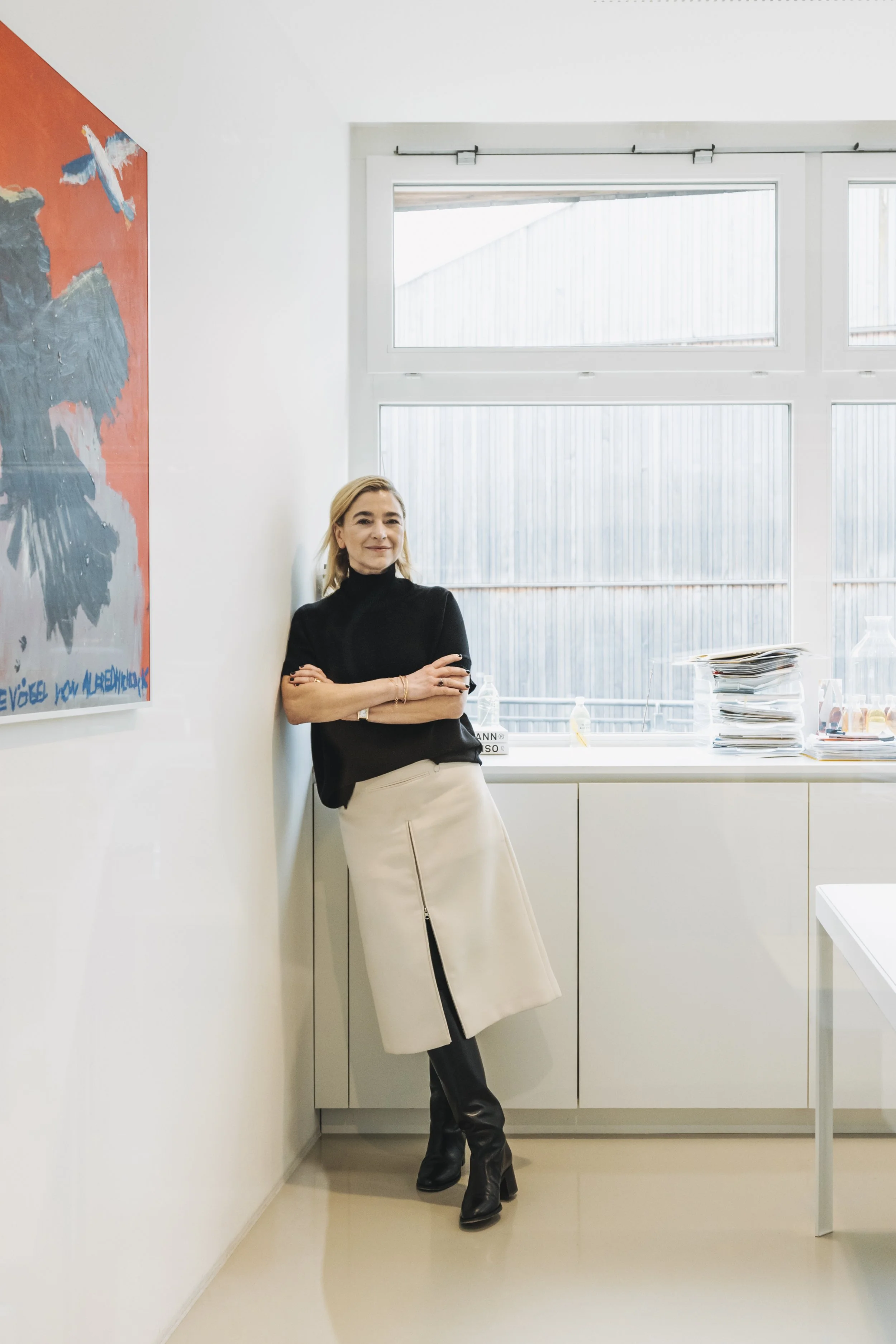
Crédits Angela Lamprecht
Susanne Kaufmann began in 2003, before high-performance natural skincare had a stable vocabulary, before “clean” had become a market category, and before botanicals were widely allowed to be both sensorial and clinically serious. She built from the Bregenzerwald in Austria, where Alpine plants, spa culture, local production, and hand-finished quality formed the original grammar of the maison.
But this conversation is not about the origin story. Future of Skincare has already met Susanne Kaufmann at the beginning of the site’s own life, when the conversation centered on the spa at Post Bezau, the philosophy of the natural, and the roots of the brand. What matters now is what happens after a category catches up to a founder who was early.
The recent launches suggest that Susanne Kaufmann is not settling into reference. They read less like range expansion than formulation evolution: a plant-derived approach to renewal through NovoRetin™, ectoin used to connect photoprotection and barrier support, vitamin C formulated around brightness without aggression, rich textures rethought as systems of comfort, resilience, and repair.
The through-line is not novelty. It is fluency. After more than two decades of observing how botanical systems behave on skin, Kaufmann’s current work asks a more exacting question: how can skincare become more advanced without becoming more aggressive? How can daily protection defend, reinforce, and restore at the same time? How can science become sophisticated enough to understand nature properly, rather than flattening it into either folklore or marketing?
In this second FOS conversation, Susanne Kaufmann reflects on Alpine botanicals, bio-intelligent actives, retinol alternatives, ectoin, ritual, photoprotection, and why the next chapter of beauty may depend less on correction than on long-term skin function.
Read the full interview below.
If this article resonated, come inside the Future of Skincare newsletter on Substack. Beauty Signals is the deeper layer within it, weekly patterns where skincare meets culture, for skin intellectuals, beauty anthropologists, and the cosmetics curious. Read the opening free, full access at latte with me level.
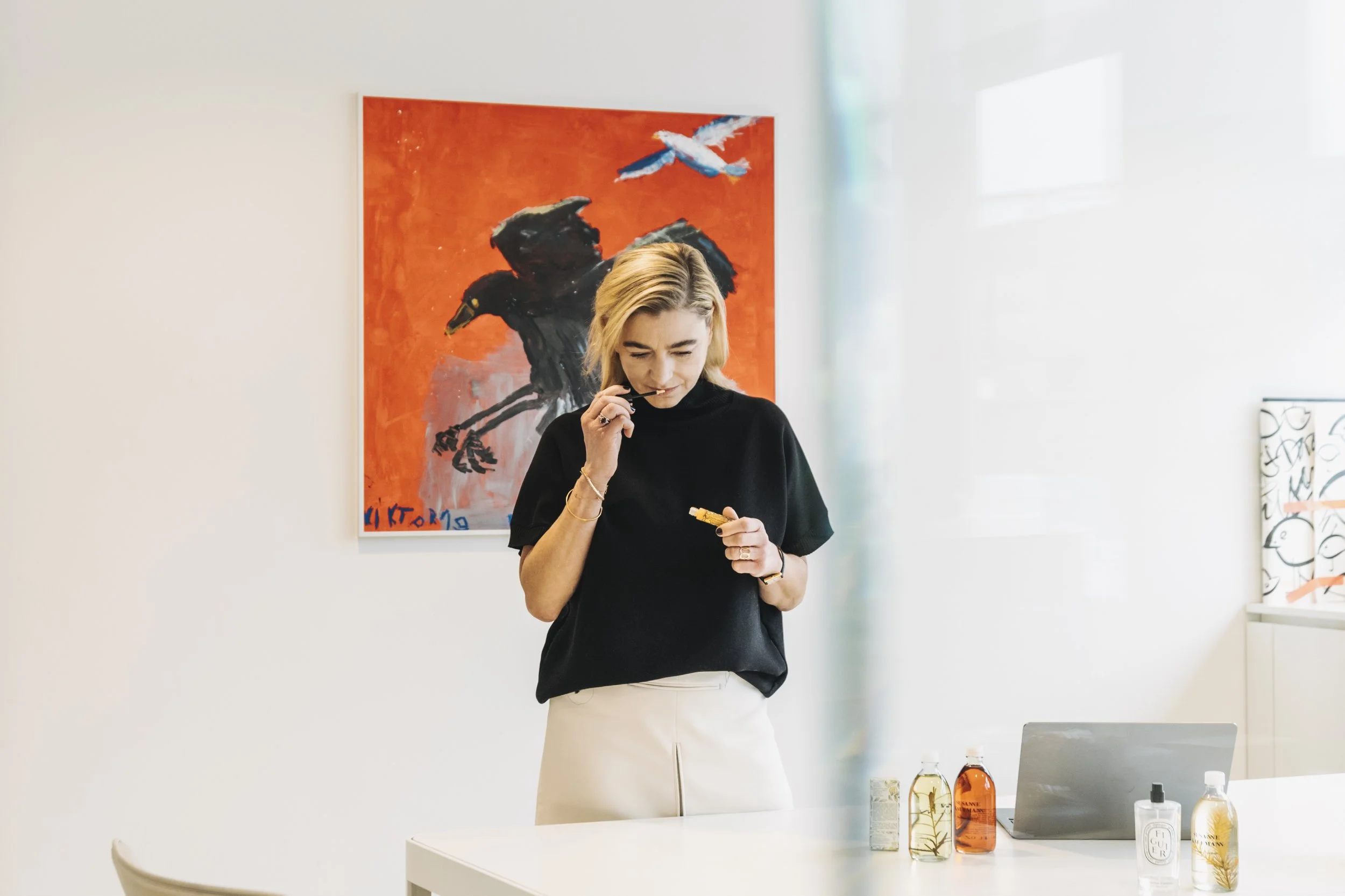
Crédits Angela Lamprecht
You have spent over two decades observing how Alpine plants behave on skin. At some point, that relationship must have shifted from discovery to something closer to fluency. What do you know now about the capabilities of botanicals, and where does science need to advance their study?
A plant does not arrive with one isolated function; it brings a whole architecture of protective compounds, antioxidants, lipids and aromatic molecules that can support the skin in different ways. Over time, I have become more interested in their precision: which part of the plant, grown in which conditions, extracted how, at what concentration, and in dialogue with which other actives. That is where efficacy really begins.
Alpine botanicals have always fascinated me because they survive in a demanding environment. They adapt, strengthen, protect themselves. I think skin responds very well to that kind of resilience when the ingredient is selected properly and formulated with discipline. But science still needs to advance in how it studies whole botanical systems, not only isolated molecules. We are getting better at validating traditional knowledge, but we still need deeper work on bioavailability, synergistic effects, and how plant actives behave on different skin states over time. For me, the future is not nature versus science. It is science becoming sophisticated enough to understand nature properly.
The industry has spent years in a complicated relationship with retinol: effective, but often aggressive, and something many people cannot tolerate. Your Nutrient Serum takes a different path with NovoRetin™, a plant-derived molecule that works with what the skin already produces naturally. What led you to that choice, and what did you want it to do that conventional retinoids could not?
I wanted to find a way of supporting renewal that felt more in harmony with the skin and our brand values, especially for people who are sensitive and reactive — that is why I was interested in NovoRetin™.
It works by inhibiting the enzyme that breaks down the skin's own retinoic acid, which means the skin retains more of what it naturally produces. In other words, it works with a process the skin already understands. What mattered to me was creating a formula that could improve firmness, texture, and the appearance of fine lines without overstimulation. I wanted renewal without the side effects of traditional retinols, and I wanted a serum people could use consistently. Consistency is often where the real result comes from.
The Nutrient Serum and the Advanced Anti-Ageing Rich Cream are designed as a duo: two formulas with distinct architectures, meant to work in sequence. What are they saying together that neither could say alone?
For me, the pairing is really about amplifying results. The Nutrient Serum is very active in how it supports renewal — it encourages smoother texture, improved firmness, and overall skin vitality. Anti-Ageing Rich Cream works to reinforce the skin barrier, deeply hydrate, and improve elasticity. When you use them together, you are not just layering products — you are creating the right conditions for the skin to perform more optimally.
When do you know a formula has truly earned the word "rich"? Not only in texture, but also in its effect and the time it takes to see results.
For me, "rich" begins with texture — it is about how a formula feels the moment it touches the skin. A rich cream should have a certain density and generosity, something that feels cocooning and deeply comforting without becoming heavy or occlusive.
But texture alone is not enough. True richness comes from a balance: in texture, in substance, and in after-effect. The skin should feel immediately comforted, but also better supported several hours later. It should hold hydration, feel more resilient, and maintain that sense of care beyond the first application.
At the same time, skin changes with climate, season, and personal preference. Some people want that enveloping texture, while others prefer something lighter — especially in warmer months, more humid environments, or if their skin is more combination or oily. That is why we see richness as one expression within a broader wardrobe of textures, and why we are also developing a lighter version to offer the same philosophy in a more fluid, weightless form.
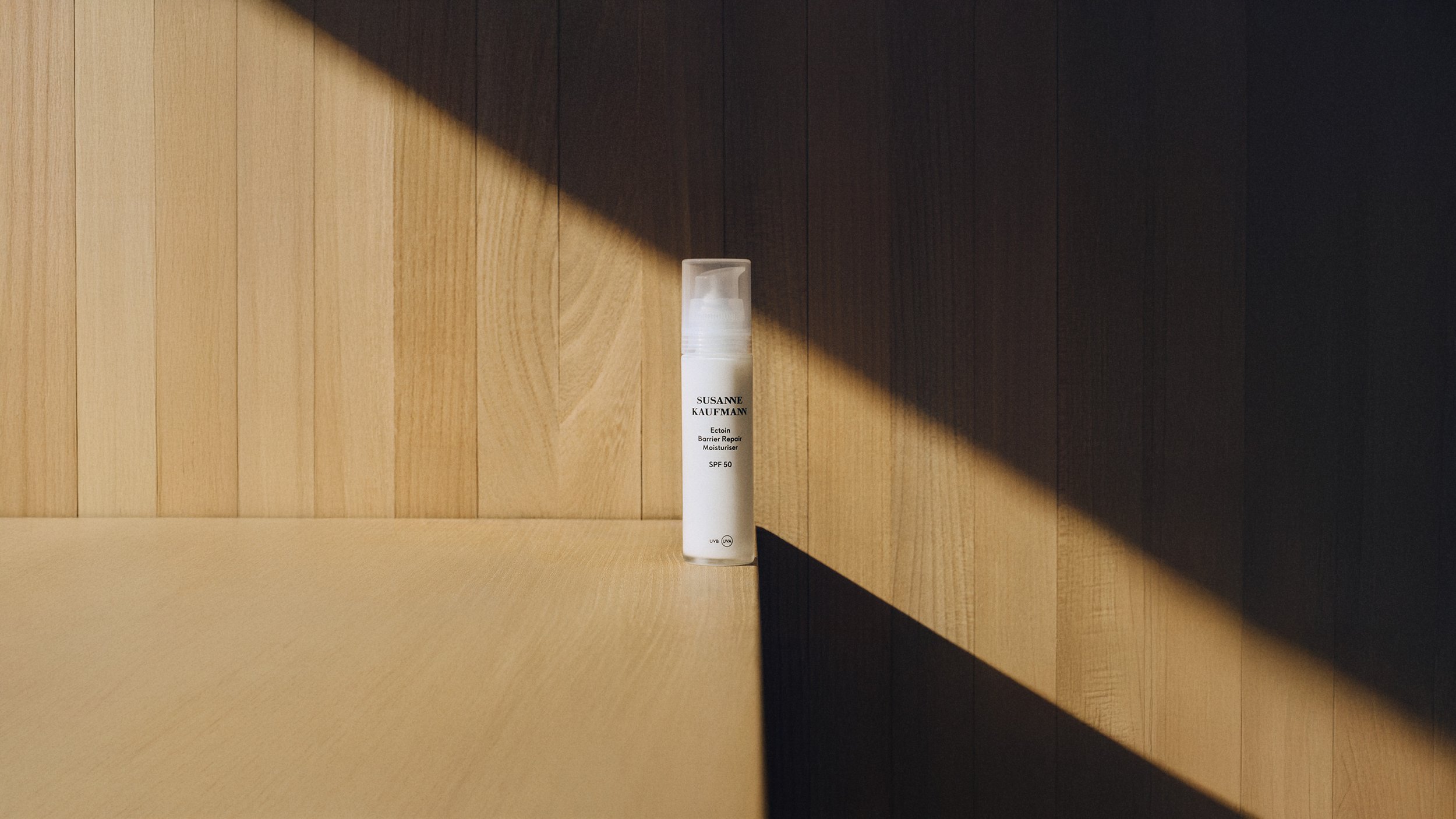
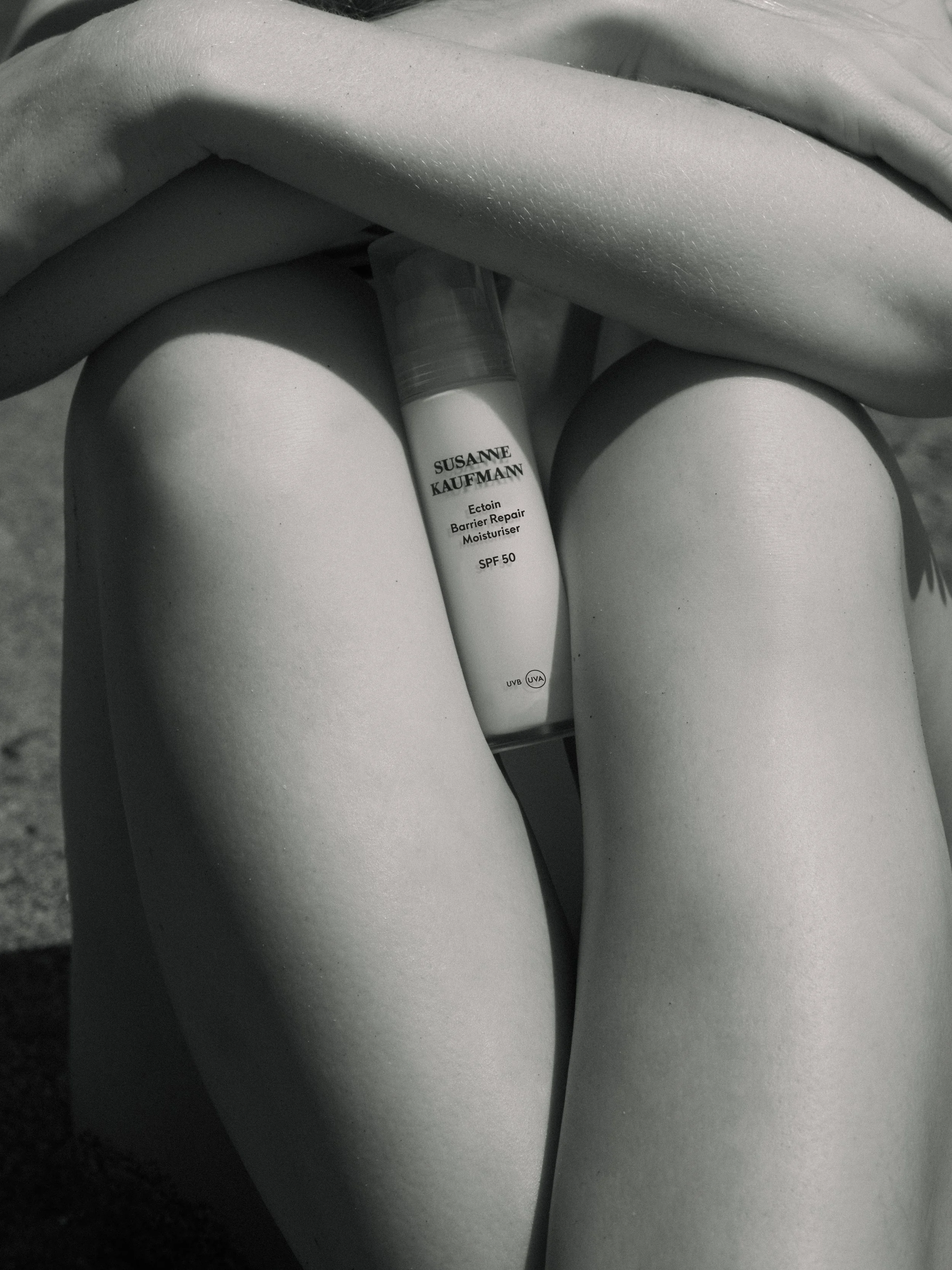
The Ectoin Barrier Repair Moisturiser SPF 50 does something I find genuinely interesting. It treats photoprotection and barrier repair as a single act, rather than two separate steps. Ectoin, a molecule first found in bacteria that survive extreme environments, sits at the center of the formula. How did that kind of science find its way into a brand so rooted in Alpine botanicals?
Very naturally, actually. People sometimes imagine Alpine botanicals and biotechnology as two different languages, but for me they belong to the same philosophy. I have always been interested in ingredients that know how to survive stress and help the skin do the same. Alpine plants do exactly that. Ectoin, which comes from microorganisms, has adapted to extreme environments.
What matters to me is whether an ingredient is biologically meaningful and whether it serves the skin with integrity. Ectoin is a stress-protection molecule associated with barrier support, moisture retention, and defence against environmental stress. So when we were developing daily SPF care, it made complete sense to ask more of that step. Why should photoprotection only defend against UV and do nothing else? If skin is exposed every day to UV, pollution, heat, oxidative stress, then daily protection should also help it remain calm, hydrated, and intact. That is how this kind of science enters the brand: not as a departure from our roots, but as a continuation of our belief in resilience.
Sun protection is a category where the conversation has barely evolved. Apply it, reapply it, and that is mostly it. Your approach suggests something more considered. What should daily photoprotection do for the skin beyond UV defense?
It should do much more. Of course broad-spectrum UV protection is non-negotiable, but daily photoprotection should also support the condition of the skin wearing it. It should help preserve barrier integrity, reduce discomfort, maintain hydration, and protect against the broader reality of environmental stress, not only UVB and UVA in isolation.
For me, a modern SPF has to acknowledge how people actually live: indoors and outdoors, exposed to pollution, blue light, temperature shifts, dryness, and overworked skin barriers. So daily photoprotection should defend, but it should also reinforce. It should leave the skin feeling more stable at the end of the day than it did in the morning. That is the standard I think this category now has to meet.
The Vitamin C Complex Serum is a newer addition: a category you had not entered before, and one that is technically demanding to get right. What made this the right moment, and what did your version need to say that the existing version did not?
Vitamin C is one of those categories where the idea is easy but the execution is not. It is incredibly well known, but also often unstable, irritating, or disappointing in real-life use. I was not interested in entering the category just to say we had one. The right moment came when we felt we could create a version that was both effective and genuinely a pleasure to use.
Our approach was to work with stabilised vitamin C, because potency is only useful if the ingredient remains active and can be tolerated. I also wanted the formula to feel very much like us, which meant pairing brightness with calm. That is why the serum combines vitamin C with a soothing mushroom blend to support hydration, reduce visible sensitivity, and strengthen the barrier. So what our version needed to say was: radiance, clarity, and collagen support do not have to come at the expense of comfort. It had to be technically credible, but also wearable every day.
You have always held sensorial experience and clinical evidence together as equals. As the formulas become more scientifically precise, how do you prevent the ritual dimension, the texture, the smell, the gesture, from becoming secondary?
For me, this is where our spa philosophy becomes essential. Everything we do begins with the understanding that skincare is not only about end results, it is also about how you arrive at them. In the spa, you see very clearly that touch, texture, and atmosphere change the way the skin responds. The ritual is not separate from the outcome — it is part of it.
As our formulas become more scientifically precise, I see it as a responsibility to protect that way of thinking. Precision should not make skincare feel clinical or distant. It should still feel intuitive, grounding, and sensorially complete. The texture must invite touch, the scent should support a moment of calm, and the application should encourage a slower, more deliberate gesture.
This is something we are very conscious of in development. A product has to perform, but it also has to belong to a ritual. Because when people connect to that ritual, they use the product differently — more consistently, more attentively — and that, ultimately, is what allows the formula to deliver its full potential.
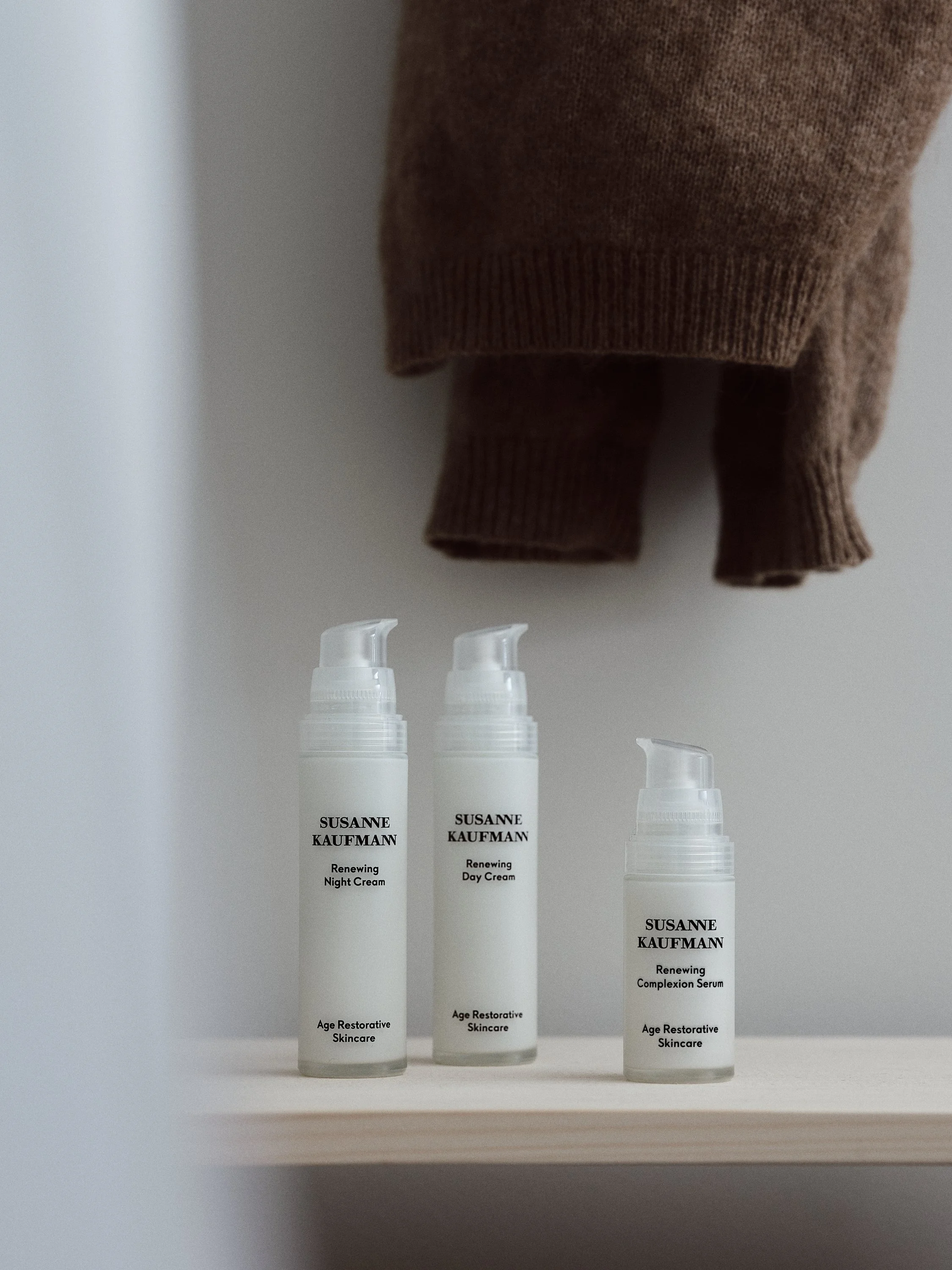
You still personally inspect every product before it leaves. After twenty-two years and more than ninety references, what does that gesture protect that no process can replace?
It protects a sense of responsibility that cannot be systemised. Processes are essential, of course, but they are designed to ensure consistency — not intention. When I review our formulas and final developments, I am asking a more fundamental question: does this truly reflect what we set out to create?
That involvement keeps me closely connected not only to the formula, but to the entire process behind it. We produce locally in Europe, and that proximity is very important to me. It allows us to work more carefully, more transparently, and more responsibly — whether that is in how we source our ingredients, how we manufacture, or how we think about packaging and environmental impact.
Being closely involved in the evaluation of our products and batches ensures that nothing becomes disconnected, that every step — from raw material to finished product — still holds meaning and integrity.
Walk me through what you actually use on your own skin right now, morning and evening. Not the ideal protocol. The real one.
In the morning, I keep it quite simple. I cleanse gently, then I usually use a serum depending on what my skin needs most that day. Lately, with a lot of travel, I find myself reaching for the Ectoin Repair Serum whenever my skin feels a little more stressed or depleted. I always finish with Ectoin Barrier Repair Moisturiser SPF 50, because daily protection is non-negotiable for me.
In the evening, I give the skin a little more support. I cleanse thoroughly, then I use our best-selling Nutrient Serum because I like what it does for texture and overall skin vitality without creating irritation. After that I apply the Advanced Anti-Ageing Rich Cream. If my skin feels particularly tired, dry, or overexposed from travel or weather, I use a more generous amount and really take time with the massage. That is the real routine: not many steps, but very consistent ones.

Twenty-two years in, the category you pioneered is everywhere. What does Susanne Kaufmann need to say next, and what is the one thing you still want to resolve?
I think what we need to say next is actually something very fundamental: to bring the focus back to overall skin health. There has been a shift towards very targeted, often aggressive correction, but I believe the future is about supporting the skin as a living system — helping it function at its best, not just look different.
In the Austrian Alps, life follows nature's rhythms and plants adapt to extremes. That has always shaped how I think about skin. Inspired by the Alpine spa tradition, we create high-performance skincare that blends rare botanicals with bio-intelligent actives to help the skin build resilience. For me, this is about active restoration — supporting the skin so it can repair, protect, and strengthen itself over time.
What I still want to resolve is the gap between what people are told skincare should be and what skin actually needs. There is still too much noise, too much aggression, too much correction. I am interested in long-term skin health — in resilience, in balance, in skin that functions optimally over time.
If there is one thing I want to keep refining, it is that balance: how to create products that are ever more advanced, while still feeling instinctive, calming, and completely trustworthy.
