

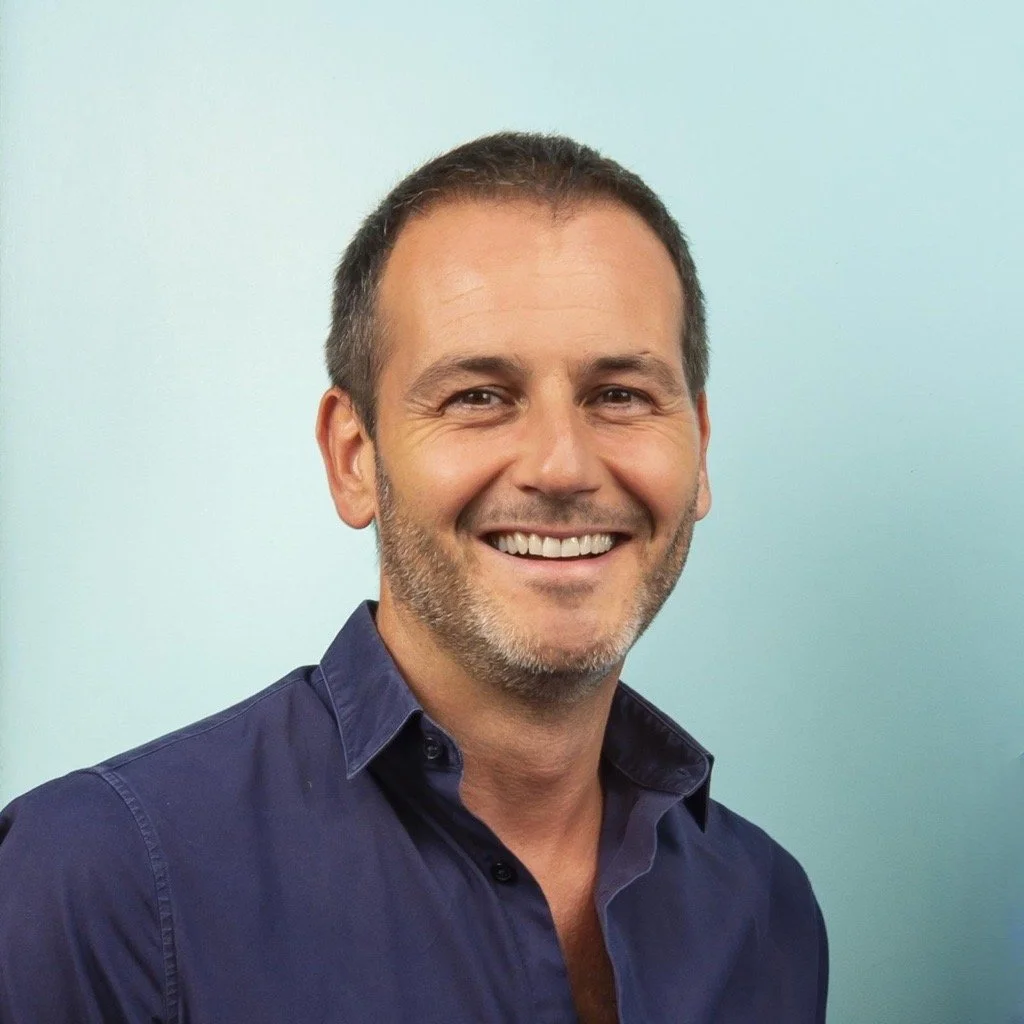
Sébastien Guerra, cofounder of Huygens and La French Beauty. Image supplied by La French Beauty.
SÉBASTIEN GUERRA / LA FRENCH BEAUTY
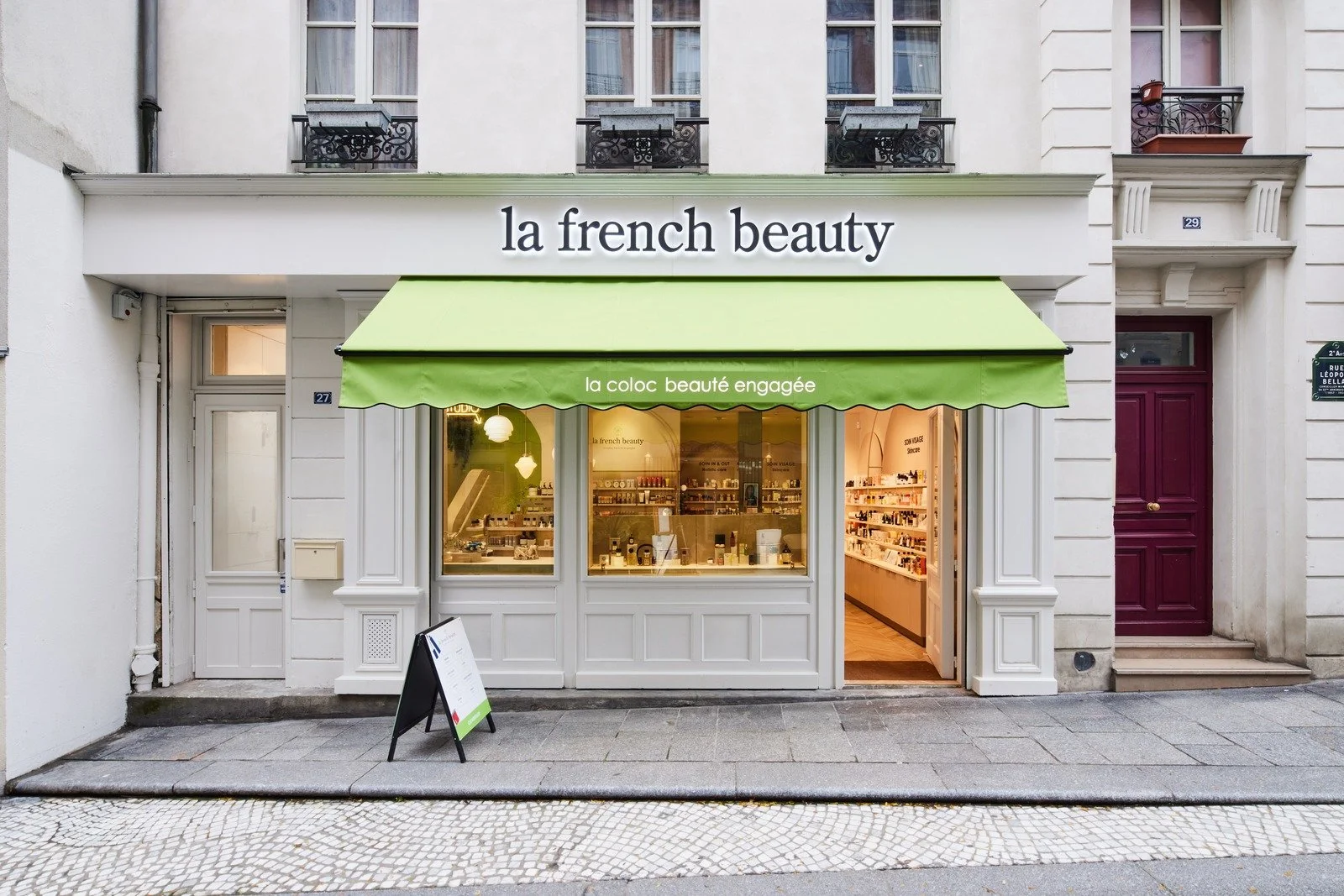
At La French Beauty in Paris, the photograph beside a product is a portrait of the person who made it. For a customer discovering a French skincare or fragrance house for the first time, that small detail changes the introduction. There is a name to remember, a story to ask about and someone behind the counter who knows why this particular bottle is here. At 27 rue Léopold Bellan, dozens of independent brands have the kind of presence in a Paris boutique that few could sustain on their own.
Sébastien Guerra understood the economics of that ambition from both sides of the counter. In 2013, he and his business partner Daan opened Huygens in the Marais. Daan led the creative work on the products. Guerra had to think about what happened between purchases. A customer could love a face cream and have no reason to come back until the jar was empty. Inviting other independent houses into the shop for short residencies gave people something new to discover and gave visiting founders time with customers of their own.
When a rent increase brought the future of the Huygens store into question, Guerra took the idea to the 3 people who knew its customers best. Would the sales team consider representing a whole group of French brands? What began as a 3-month pop-up with 38 houses became La French Beauty. Guerra calls it a coloc, the French word for a shared home. The brands split operating costs, but the part I find most interesting is the knowledge they share. A founder can hear which texture made someone stop, which price gave them pause, and which explanation finally made a product click. With the collective now present in Singapore, our conversation follows what happens when independent French beauty takes that way of selling abroad.
Read the conversation below.
If this article resonated, come inside the Future of Skincare newsletter on Substack. Beauty Signals is the deeper layer within it, weekly patterns where skincare meets culture, for skin intellectuals, beauty anthropologists, and the cosmetics curious. Read the opening free, full access at latte with me level.
Sébastien, how did beauty first become part of your life, before it became your profession? What drew you to it?
I may have a slightly unconventional answer to this question, because unlike many people in the beauty industry, I didn't enter it through a passion for products. My background is in business. I studied at ESSEC business school, trained in auditing and was initially heading towards a fairly generalist career in business development or finance. I could have ended up in almost any industry.
But I was drawn to beauty for what it represents: wellbeing, caring for yourself and others, pleasure, creativity, and a certain appreciation for life. There is something fundamentally positive about this industry. Over the past 25 years, I've noticed that many people who choose to work in beauty share this sensibility. Beyond the products themselves, there is often a genuine appreciation for aesthetics, human connection and the desire to contribute something positive to people's lives.
I briefly ventured outside the industry, into high-end furniture, and realised that something was missing. At the time, I couldn't quite explain what it was.
I also love the fact that beauty is such a universal industry. Almost everyone has a relationship with it, regardless of their age, background or purchasing power. And from a business perspective, it's endlessly stimulating. Beyond the quality of the product itself, there is enormous room for creativity in how you build a brand, engage with consumers or reinvent distribution.
Looking back, there has been a consistent thread throughout my career: first learning within major beauty groups, then making our own choices with Huygens, and now helping other independent brands express theirs. Perhaps I'm not primarily a product person. But I have found in beauty an industry where business, creativity and human values come together in a particularly meaningful way.
You co-founded Huygens before creating La French Beauty. What did that experience teach you about developing a product, and about getting people to discover it?
Two things, really, and they were quite different revelations. The first was discovering just how extraordinary the French beauty ecosystem is.
I co-founded Huygens with my business partner, Daan, who was very much the creative force behind the products, formulation and brand universe. My own expertise was more focused on business development and operations. Watching him develop the range, I was struck by the depth of expertise available in France: laboratories, formulators, manufacturers, botanical specialists, packaging suppliers. Whether you wanted to develop organic skincare or sophisticated textures, you could find remarkable partners. And importantly, this expertise wasn't reserved for multinational groups. With determination and the right partners, an independent entrepreneur could access it too.
The second revelation was how challenging it is to bring a new brand to market. We launched Huygens in a rather unusual way: the brand was born the very day we opened our first store in the Marais, on June 26, 2013.
I remember our very first customer. She stopped outside, admired the store and, when we invited her in, confidently told us she already knew the brand because she'd seen it in New York. We had literally just opened! I suspect she had confused us with Kiehl's. But she bought something, and that was our first sale. It was an extraordinary way to start because we had immediate, direct contact with consumers.
Then, about a year later, an article about our Paris store appeared in ELLE Japan. Soon afterwards, Japanese entrepreneurs contacted us and travelled to Paris to discuss franchising the brand. That taught me something about the international appeal of French beauty: when the concept, execution and storytelling come together, an unknown brand can travel remarkably far.
Those early moments were extraordinary, and they remain some of my fondest memories. But they were just the beginning of a much longer adventure. Building a beauty brand is a marathon, not a sprint. You have to keep innovating, launching new products, winning over new customers and new markets, earning loyalty, financing the next stage of growth, and navigating crises you never saw coming. We tend to focus on the few spectacular success stories, sometimes imagining that everything happened almost overnight. Yet even behind those seemingly meteoric trajectories, there are often years of difficult decisions and setbacks. For most independent founders, the reality is far more demanding than the headlines suggest.
But it's also extraordinarily stimulating. Building Huygens has been one of the most exciting adventures of my life, and I wouldn't trade that journey for anything. It also made me realise that many of the challenges we face as independent entrepreneurs are remarkably similar. And that perhaps, by joining forces, we could overcome some of them together. That conviction eventually became one of the foundations of La French Beauty.
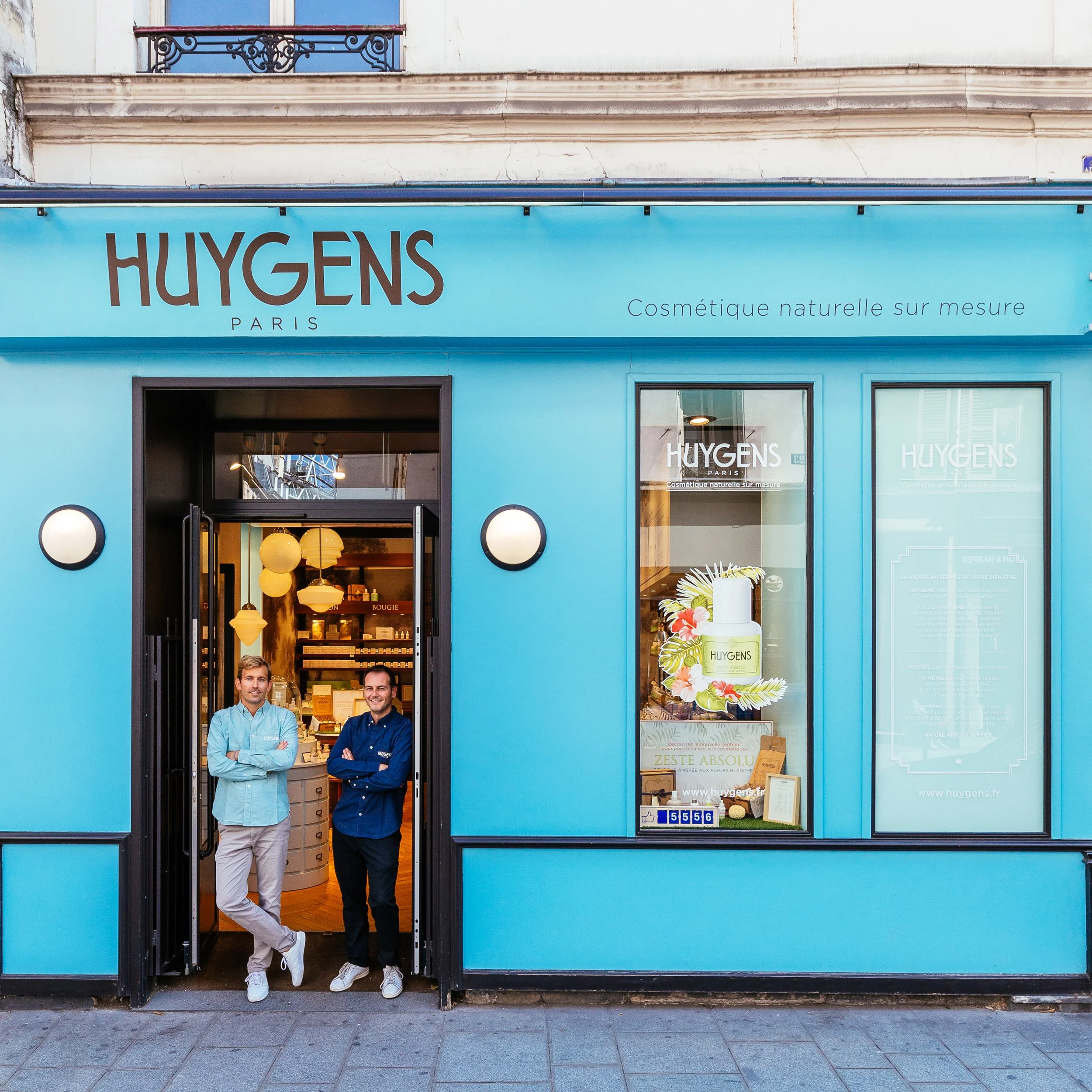
The Huygens storefront in Paris. Photograph by Sebastian Erras.
What inspired you to open your store to other independent brands? Do you remember the first conversations about the idea?
The idea emerged gradually, through a combination of commercial necessity and collective experimentation. At Huygens, we had developed our own retail network, including stores in France and Asia. We loved having direct contact with consumers, but we were also experiencing the increasingly difficult economics of physical retail. With a single brand, maintaining excitement and bringing customers back regularly is challenging. Our returning customers typically visited every three months. To increase that frequency, we needed a constant flow of innovations and new reasons to visit.
So, even before Covid, we started inviting other independent brands into our store for temporary residencies. We gave them a dedicated space for a few weeks, rotating categories and introducing new discoveries to our customers. It worked, and I loved the idea.
At the same time, I was involved in Beautypreneurs, a community of independent beauty founders who shared experiences, supported one another and occasionally joined forces for trade shows and other initiatives. That community was absolutely instrumental.
I remember a conversation at a trade show in Singapore. We were discussing the Advent Calendar we had developed for Huygens, when another founder jokingly suggested I give them a slot in it. I took the suggestion seriously. What if we created an Advent Calendar by independent brands, for independent brands, combining our audiences, products and distribution capabilities? I began developing a collaborative model around that idea.
Then came a decisive moment: after ten years, we were facing a very difficult decision about the future of our historic Marais store, with a significant rent increase. I thought it might be the right moment to test something I had been thinking about for years with fellow beauty entrepreneurs : sharing an entire store with other independent brands. I proposed the idea of a 3-month popup to the Beautypreneurs community.
What started as a practical business experiment became a much bigger adventure. In retrospect, this reflects my own form of creativity. I'm not necessarily the person who invents a new cosmetic texture. I enjoy inventing business models that allow other people's creativity to flourish.
You describe La French Beauty as a “coloc,” a shared home. In everyday practice, what do the brands share beyond an address? Is there a collaboration that has been particularly meaningful to you?
The word coloc comes from colocation, or sharing a home in French. And I think it captures our philosophy rather well. Of course, brands share a store, customers, visibility and operating costs. But what they really share is an entire ecosystem.
Perhaps the most important shared resource is our retail team. When we considered starting La French Beauty, we asked the three members of our Huygens store team whether they would be willing to embark on this new adventure before making the decision to proceed. Imagine going from representing one brand to 38, then more than 60, with new guest brands regularly joining the selection. It was an enormous transformation, and their commitment was essential.
Today, they have developed an exceptional understanding of independent beauty. They compare products across brands, understand consumer expectations and provide objective advice, without brand-specific sales incentives. Crucially, they also speak directly with founders. If customers struggle to understand a product, question its price or dislike a particular texture, that information goes straight back to the brand. For an independent founder without their own retail network, that feedback can be invaluable.
Beyond the store, we share press events, communication channels, digital audiences, retail partnerships, international opportunities and experiments in social commerce. Our collective Advent Calendar is a particularly tangible example. It has become a recurring product that brings together the creativity and audiences of multiple brands.
But what I value most is the collective intelligence that develops between founders who might otherwise see each other as competitors. The word I keep coming back to is mutualisation: sharing resources, opportunities and knowledge to create more value together than we could individually.
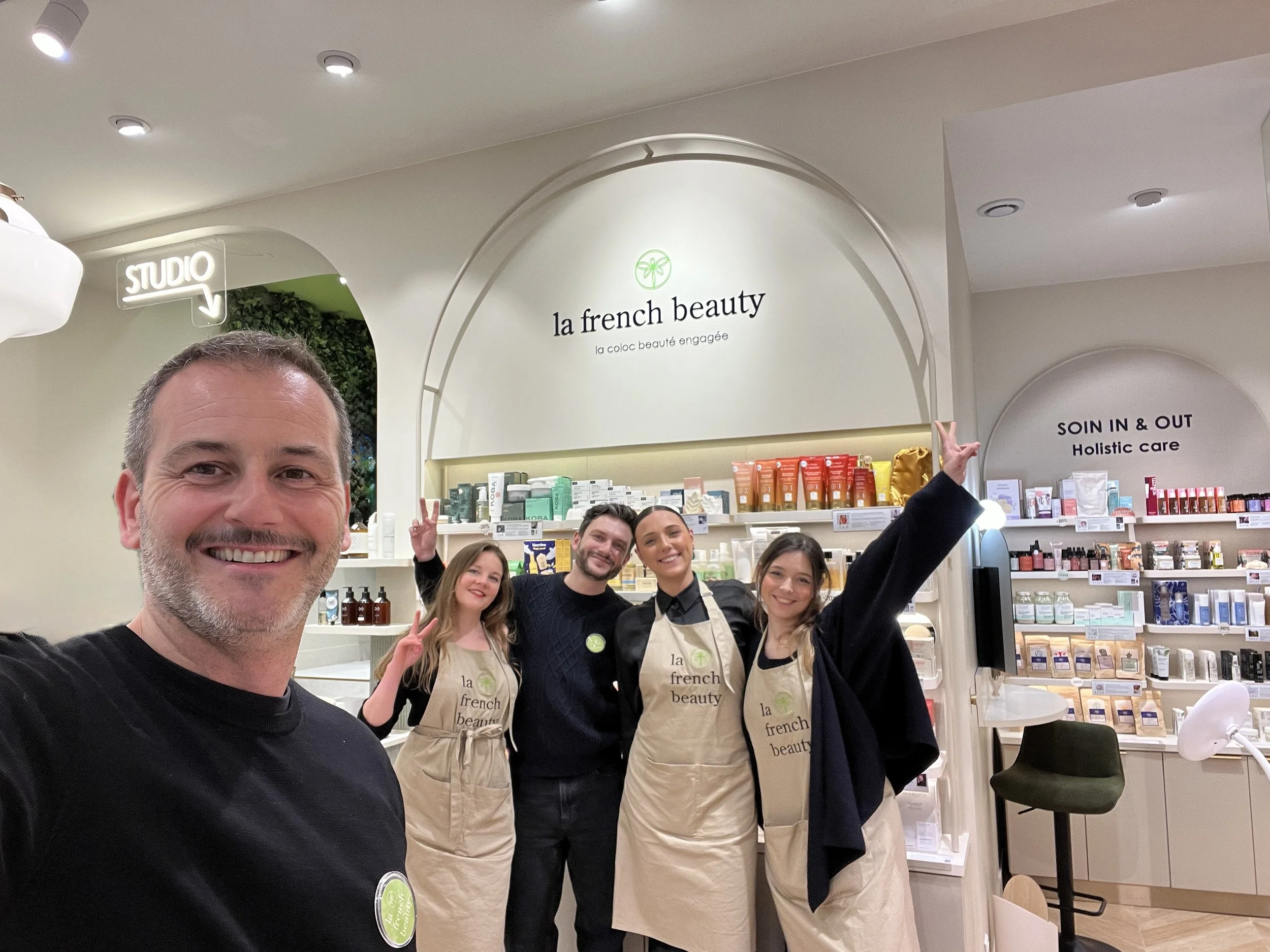
The team at La French Beauty. Image supplied by La French Beauty.
When you discover a new brand, what makes you want to meet the founder and eventually give their products a place in your store?
I'm looking for a strong point of view, and a certain amount of audacity. There are already thousands of beautifully executed beauty products. Good execution is essential, but it isn't enough to make a new brand interesting. I want to understand what genuinely distinguishes it. Is it addressing a neglected need? Introducing an unexpected gesture? Challenging an established convention? Offering a new approach to an existing category?
I'm particularly receptive to unconventional ideas, providing they're intuitive enough for consumers to adopt. I also appreciate multi-purpose products, clever formats and innovations that simplify people's lives rather than make their routines unnecessarily complicated.
And I'm personally quite sensitive to pricing. Beauty shouldn't systematically equate innovation with ever-higher prices. France has a remarkable industrial ecosystem, and I believe it is possible to create excellent, sophisticated products that remain accessible. For me, there is a form of generosity in offering real quality at a fair price.
Of course, I also want to meet the founder. Independent brands are often direct expressions of someone's personal convictions, expertise or life experience. But the final test is always whether that vision has been translated into something genuinely compelling for the consumer.
How do you assess a skincare product before selecting it? What do you need to understand about its formula and observe while using it to form an opinion?
We start with formulation standards. La French Beauty has a written clean formulation charter, with clear requirements concerning natural-origin ingredients, certain excluded substances and recognised certification standards. And we apply it at product level, not just brand level. We may decide to carry some products from a brand but exclude others if they don't meet our requirements.
Beyond that initial screening, I look for genuine product quality, efficacy and differentiation. However, I should clarify something: I'm not a cosmetic chemist, and I don't pretend to be one. One of the strengths of La French Beauty is precisely that product selection benefits from collective expertise rather than relying on a single person's judgement.
I place enormous trust in our store team. They handle products every day, test them, compare them and receive direct feedback from customers. They are often particularly good at identifying the difference between a product that sounds impressive on paper and one that genuinely wins people over.
We also draw on the expertise of founders within our collective, some of whom have very specialised knowledge in skincare, formulation, makeup or fragrance. And when a brand can support its claims with robust testing, instrumental measurements or clinical evidence, that naturally carries more weight than marketing promises alone.
I also have particular respect for founders who pursue environmental excellence almost uncompromisingly - through 100% deposit-return packaging systems or waterless formulations, for example. These decisions can make life considerably harder for a young company, but they reveal a great deal about the strength of its convictions.
Finally, I'm very attentive to sensoriality. A surprising texture, an elegant finish or an immediate pleasurable effect can transform the experience. A product needs to work, certainly. But it also needs to make people want to use it again.
Which developments in formulas or skincare habits interest you most right now? Has a recent product surprised you?
I'm particularly interested in the shift from correcting the visible signs of ageing towards protecting skin health and supporting longevity. The vocabulary itself is changing. We're hearing more about prevention, resilience, skin longevity and pro-ageing, rather than simply fighting ageing. I wouldn't call it a universal change of attitude, though. The interest in ageing well coexists with an equally visible appetite for aesthetic medicine and surgery.
From a formulation perspective, biomimicry is particularly interesting, as is the increasing attention paid to the skin barrier and microbiome.
I'm also curious about the rediscovery of natural resources through modern research, including mushrooms and their bioactive compounds. Adaptogenic mushrooms, for instance, are attracting increasing interest across wellness and supplementation. There is fascinating scientific research, although the strength of evidence varies considerably between ingredients and claimed benefits.
And I love innovations that surprise you through the actual experience of using a product. A recent example is the Crème Régénérante à l'Avoine by Les Poulettes Paris, which genuinely surprised me with its texture. At first glance, it looks like a fairly rich cream. But when you massage it into the skin, tiny droplets of water appear, creating a remarkably fresh sensation before leaving a comfortable, moisturising veil.
It's based on an interesting water-in-oil emulsion technology, known as the Water Drop effect, combined with ingredients such as organic French oats, niacinamide, ceramides and bakuchiol. What I particularly enjoy is that it combines a sophisticated sensory experience, reminiscent of Korean skincare innovation, with French formulation expertise and a natural-origin approach. It's a small moment of surprise that makes an everyday gesture more enjoyable.
I've also been impressed by the fragrance quality and lather of some powder-to-gel cleansing products that consumers reconstitute at home.
When someone walks into La French Beauty without knowing the brands, where do you start? What gives them the confidence to try a product they have never heard of?
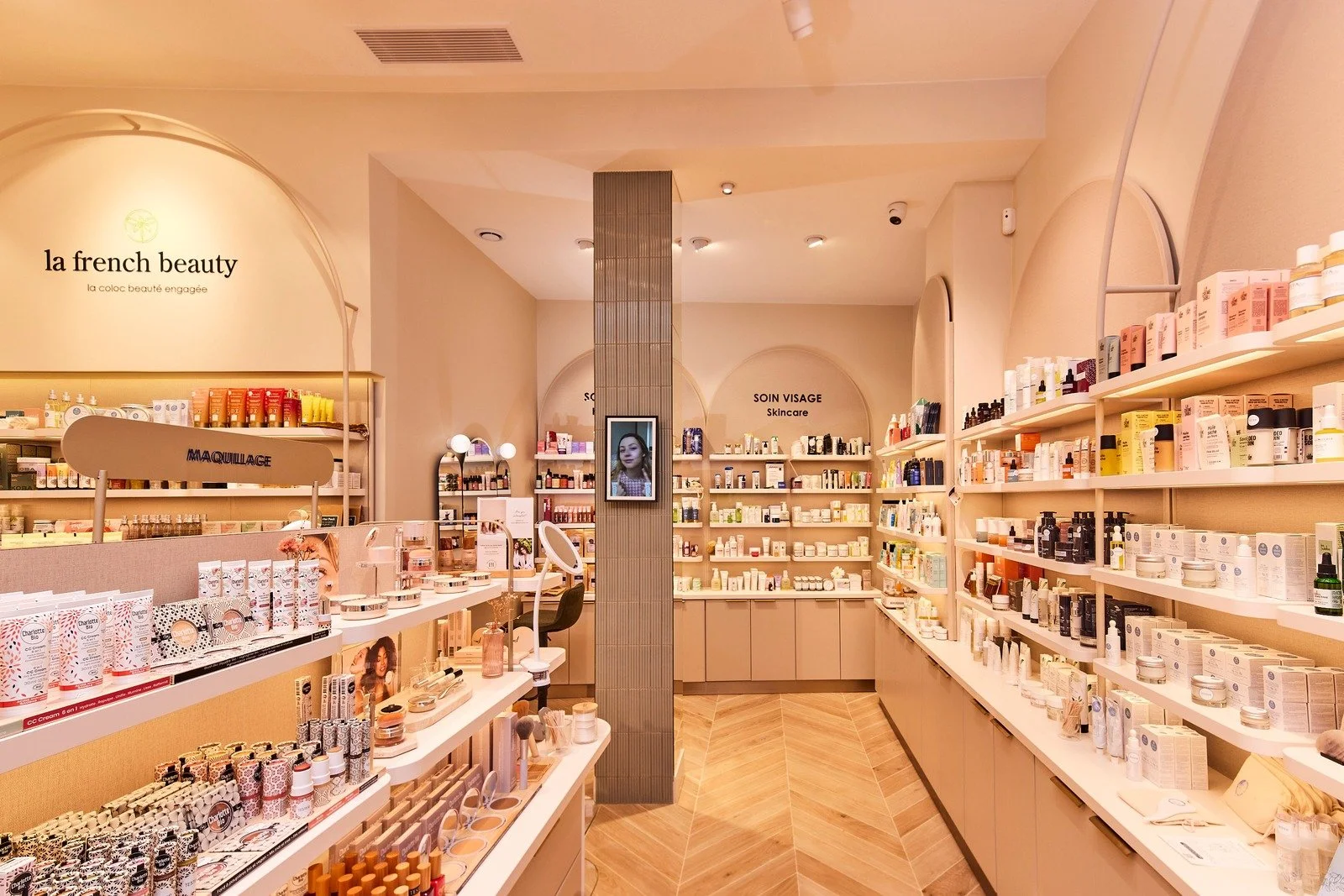
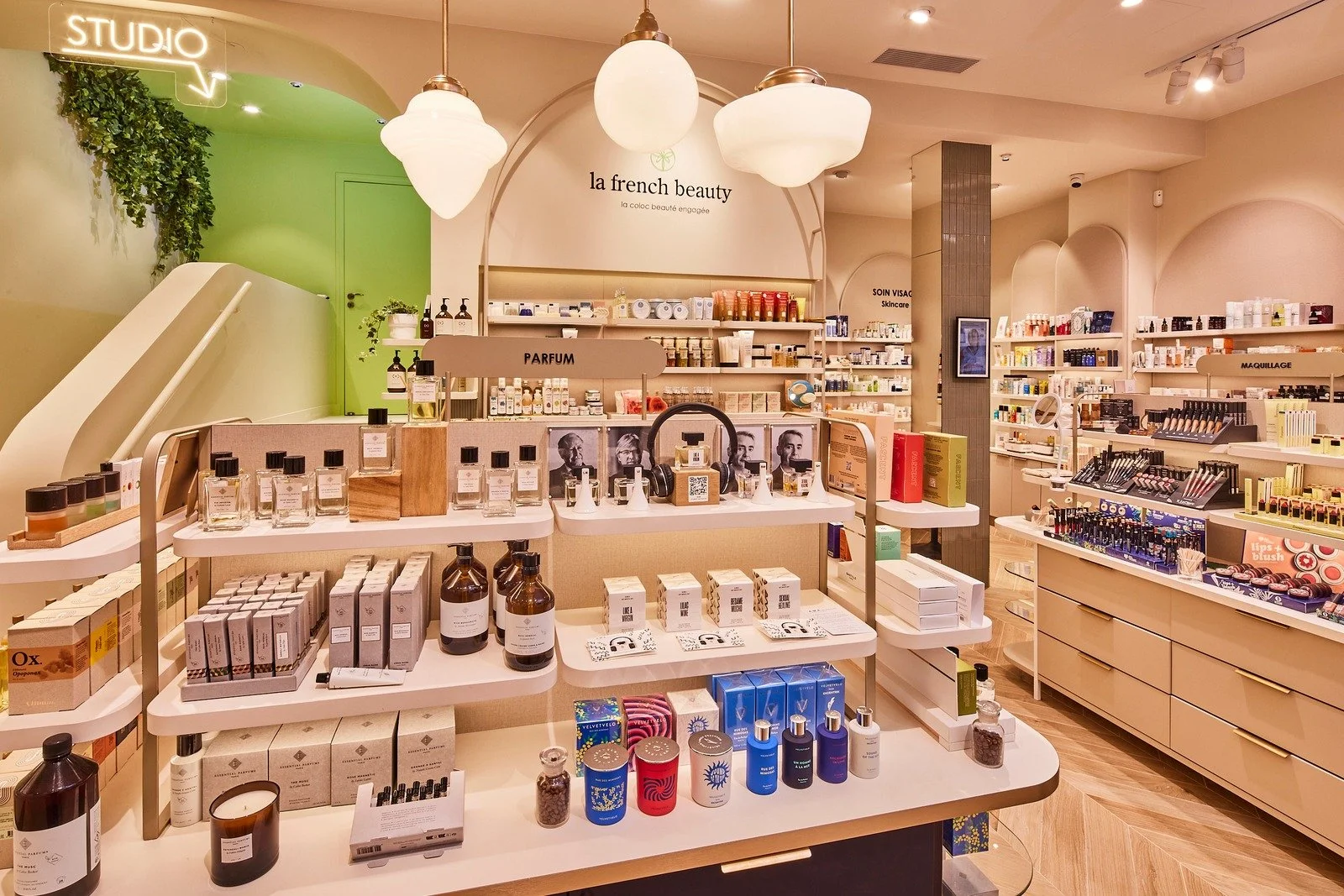
There's a rather interesting moment when people first enter the store. Everything tells them they're in a beautiful Parisian beauty destination. They recognise the skincare, perfume and makeup categories, the elegant merchandising, the atmosphere. But then they realise they don't recognise most of the brand names.
In a traditional department store or pharmacy, familiar brands provide immediate reference points. At La French Beauty, those reference points are largely absent. That's deliberate, of course, but it means we have to help customers navigate differently. Our team explains that the store is dedicated to independent French beauty, with a carefully curated selection of brands sharing common commitments.
We've also designed the store to encourage independent discovery. Each brand has its own presentation, including the founder's photograph, their story, key commitments and a hero product. The information is available in French and English, and digital brand passports provide additional detail. So customers can explore at their own pace, without feeling pressured.
Then conversation usually begins naturally. Some visitors are extremely knowledgeable and ask very specific questions. Others simply want to discover something representative of contemporary French beauty.
International visitors, particularly Americans, sometimes ask what French women actually use, whether it's skincare, makeup or fragrance. There's a certain mythology surrounding French beauty, and it's enjoyable to explore that with them.
Ultimately, trust comes from several things working together: the credibility of the environment, the reassurance of our selection standards, the stories behind the brands and, above all, the expertise and sincerity of the team.
What have you learned from customers that you might not have discovered while working solely on the brand side? Have their questions changed since you opened?
What continues to amaze me is people's appetite for discovery. There's an almost inexhaustible curiosity about beauty. Consumers want to know what's new, what might work better, what might make them feel good. And their decisions are often much more emotional than the industry sometimes acknowledges.
Of course, customers are increasingly informed. They ask about ingredients, naturalness, efficacy, sustainability and value for money. But beauty isn't a purely rational purchase. People also buy something because they love its smell, enjoy its texture, identify with its story or simply feel they deserve a little pleasure.
I think we're seeing several fascinating cultural shifts. For example, niche fragrance is attracting a younger and increasingly male audience. Some young men are approaching fragrance almost as they might approach fashion or sneakers: as a way to express identity, individuality and taste. At the same time, we see growing interest in holistic wellbeing, preventative skincare and ageing well. These developments say as much about society as they do about cosmetics.
And interestingly, I'm quite optimistic about the future of personal advice in physical stores, even as AI becomes more sophisticated. Technology can provide extraordinary amounts of information. But beauty remains intimate and sensory. Sometimes people don't simply want an answer. They want to talk to someone, touch a product, smell it and enjoy the experience of discovering something new. There's still a place for that small leap of faith, and for pleasure.
You bring skincare, fragrance, makeup and beauty supplements together in one place. Do you see customers making connections between these categories in the way they care for themselves?
Absolutely. And I think this is one of the defining strengths of French beauty. The industry has traditionally organised itself into fairly distinct categories. But consumers don't necessarily experience beauty that way.
We increasingly see connections between skincare and makeup, with hybrid products combining treatment and immediate cosmetic benefits. Fragrance is also evolving, with solid formats, more intimate applications and products that blur the boundaries between perfume, skincare and wellbeing. And nutricosmetics reflect the growing interest in looking at beauty from both inside and outside. It's an interesting category, although not always an easy one to explain or sell in a conventional beauty store, because consumer expectations and purchasing habits can be quite different.
Personally, I'd love to push that convergence further. I've sometimes imagined having a small collagen or matcha bar, or introducing wellness drinks into the experience. Our Paris store has limited space, but we do have a studio where we can explore more experiential formats.
What's particularly interesting is that France has legitimacy across all these categories. We have an extraordinary heritage in perfumery, skincare science, makeup artistry, haircare and botanical expertise. Unlike some beauty movements that are strongly associated with one particular category, French beauty has the ability to connect all of them.
It's part of what I would call the French soft power of beauty, or even the French Touch: a combination of expertise, creativity, sensoriality and art de vivre. And it's something we want La French Beauty to embody.
What distinguishes independent French beauty today, in your view? What would you like people, particularly outside France, to discover beyond the names they already know?
I think the most fascinating thing about independent French beauty is that behind almost every brand, there's a person with a very particular story. These brands aren't generally conceived by large organisations looking to fill a gap in their portfolios or gain another percentage point of market share. They often begin with an individual.
It might be a formulator fascinated by an ingredient, an entrepreneur trying to solve a personal problem, someone rediscovering a regional botanical tradition, or a perfumer translating memories and emotions into a fragrance. Sometimes the original impulse is scientific. Sometimes it's artistic, cultural or deeply personal. That diversity is what makes the independent beauty landscape so interesting.
And France offers an extraordinary environment for these entrepreneurs. We have world-class expertise in formulation, fragrance, manufacturing, ingredients and design, which allows independent founders to turn very personal ideas into sophisticated products.
To me, this is where beauty connects with the wider world of creative industries. There's a powerful individual creative impulse, supported by a remarkable industrial and cultural ecosystem.
At La French Beauty, our mission is to amplify those individual voices. When you enter our store, you can discover the founder behind every brand. And we're finding that this storytelling travels particularly well internationally.
In Singapore, for example, where we've developed two retail locations, customers are genuinely interested in meeting founders, understanding their journeys and participating in workshops when they visit. They aren't simply buying a French product. They're discovering a person, a point of view and a piece of contemporary French culture. That's what I'd love international audiences to see: French beauty is not limited to the prestigious names that built its reputation. There is a whole new generation of creators writing its next chapter.
You are also developing La French Beauty through retail partners. What do you want to preserve about the Montorgueil experience as the brands reach new audiences?
The first thing is the integrity of our selection, and the ability to preserve each brand's individuality within a collective environment.
It's an interesting balancing act. Every founder would ideally love to have an entire store to express their universe. But retail space is limited, and too much information can overwhelm consumers. Even in our Paris flagship, where we showcase our entire permanent selection, brands often have relatively little space. So we've learned to focus on what really matters: the founder's story, the brand's commitments, its distinctive proposition and a carefully chosen selection of products.
This discipline becomes even more important as we expand through retail partners. Our permanent shop-in-shop at Ecocentric in Lyon, established in 2024, is a good example. It brings together 20 fragrance and beauty brands from our collective, selected to suit a different retail environment and customer base. Rather than trying to replicate Montorgueil on a smaller scale, we adapt the assortment and presentation while preserving the essence of each brand.
The brands themselves decide whether they want to participate, and the retailer makes the final selection based on its market and customers. Our role is to bring coherence to the whole, without erasing what makes each brand distinctive. That means consistent merchandising, equitable treatment, accessible information and the ability to discover the people and commitments behind each brand, including through digital brand passports.
Ultimately, what we're building is also a collective mark of trust. When consumers recognise La French Beauty as a reference for carefully curated independent French beauty, that recognition benefits every brand in the selection. And the relationship works both ways: each brand contributes its own creativity, expertise and credibility to the collective. That's the principle we want to preserve as we grow: allowing individual brands to become stronger together, without losing what makes them unique.
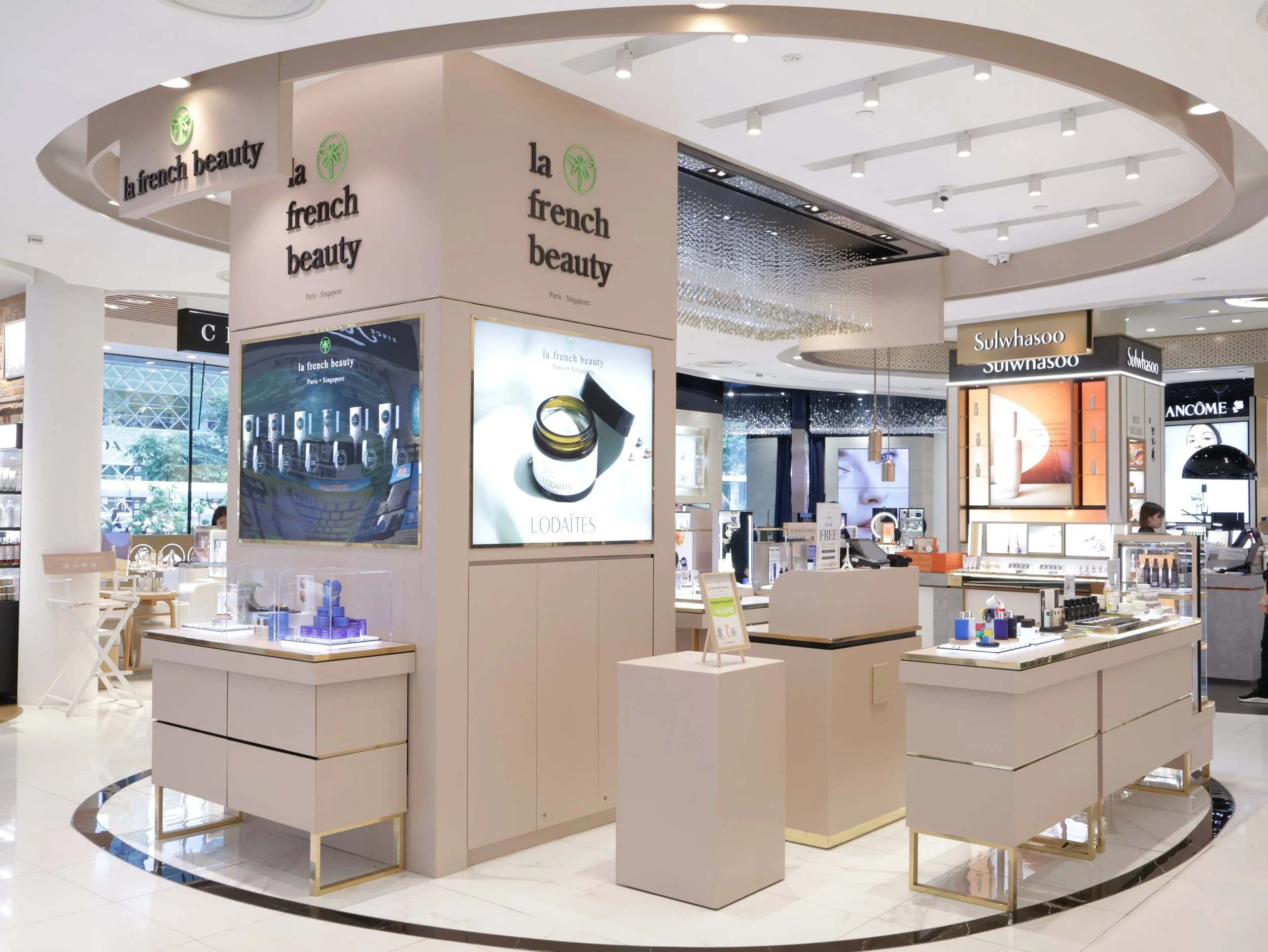
La French Beauty in Singapore. Image supplied by La French Beauty.
What are you most looking forward to building next at La French Beauty? What excites you about the new generation of brands emerging today?
After more than three years, I feel we're entering a particularly exciting new phase. La French Beauty began as an experiment. We had to invent the model as we went along, learn what worked and gradually develop the organisation, systems and expertise needed to support it. Today, we have a remarkably diverse portfolio of independent French brands, thousands of product references and a constant flow of innovations. Our challenge is no longer finding opportunities. It's choosing the right ones.
Personally, what excites me most is international development. We've already demonstrated the potential of our concept in Singapore, and I'd love to take the experience further, perhaps even operating our own flagship in an Asian market to connect directly with local consumers.
I'm also very interested in the United States. American visitors represent a significant part of our Paris clientele, and their curiosity about independent French beauty is striking. It's an extraordinarily difficult market for an individual emerging brand to enter. But collectively, I believe we have the potential to achieve things that would be much harder separately.
The other project I'm especially enthusiastic about is developing treatment cabins within our Paris flagship. Today, we can introduce consumers to a brand through its products and its story. But imagine allowing a brand to express its entire philosophy through a facial, a personalised treatment or a complete sensory ritual. It would take the idea of our shared flagship to another level.
We've been deliberately cautious because creating a high-quality treatment experience requires significant expertise and operational discipline. But I see enormous potential.
Ultimately, what excites me about the new generation of brands is their diversity and creative freedom. And what excites me about La French Beauty is finding new ways to give that creativity an audience.
What does your own skincare routine look like? Which products do you use and genuinely enjoy, including those outside Huygens and the La French Beauty selection?
My routine is probably rather simpler than people might expect from someone who's spent 25 years in beauty. One thing has definitely changed since creating Huygens: I've become much more demanding about natural-origin ingredients, formulations and sensoriality. Once you become accustomed to well-formulated natural and organic cosmetics, particularly cleansers, you develop quite high expectations.
I'm especially attentive to sulfate-free cleansing products and beautifully composed fragrances for body care. And to be perfectly honest, these days I use almost exclusively independent brands. Not necessarily out of principle, but simply because I have access to such an extraordinary variety of products that I genuinely enjoy. There's more than enough to build a complete routine.
In the morning, I have two long-standing Huygens favourites. The first is Le Concentré Hyaluronique, a lightweight serum with aloe vera, two molecular weights of hyaluronic acid and a wonderfully fresh cucumber scent. I'm particularly attached to it because it marked an important moment in the history of Huygens, when we started developing more specialised, high-performance facial skincare. It's still one of my favourite products. The texture is light, it absorbs quickly, and the cucumber freshness has become part of my morning ritual.
I follow it with our cucumber eye-contour treatment.
In the evening, I make a conscious effort to cleanse my face properly and apply a richer cream, especially during winter. It may sound rather basic, but consistency doesn't always come naturally!
I'm also constantly discovering products through La French Beauty, which makes complete loyalty to one routine quite difficult. Recently, I've been particularly impressed by Démélé, a French haircare brand with a very interesting scalp-first approach. Their sulfate-free formulations have genuinely changed my expectations of natural haircare, both in terms of lather and the way my scalp feels.
I also love the fragrances and textures of the powder-to-gel shower products from Less is More. It's fascinating how something that requires an extra step of preparation can ultimately deliver such a pleasurable experience.
At 48, I've also become increasingly interested in supplementation and broader wellbeing. Omega-3 and magnesium are part of my habits, and I've recently discovered functional mushrooms. I'm currently enjoying Terraphy's Lion's Mane-based Concentration formula, which I add to my morning coffee. It's become a little ritual I look forward to.
Fragrance is another story entirely. I'm not particularly faithful to one scent. I enjoy changing with the seasons and my mood. Right now, I'm especially fond of Cuir de Russie by Le Jardin Retrouvé.
But if I had to mention a fragrance outside the independent beauty world, it would be Patchouli Impérial by Dior, created by François Demachy. It brings back vivid memories of my years at Dior. There's something about the richness and elegance of that patchouli interpretation that has stayed with me. Fragrance has this extraordinary ability to bring you straight back to a particular period of your life. And perhaps that's what I appreciate most about beauty: beyond formulations and performance, it's deeply connected to our personal memories, emotions and everyday rituals.
Finally, which three beauty or wellness products, brands or places would you most like our readers to discover right now, and why?
First, a sound bath in Paris. I recently discovered this through the Airbnb Experiences community, as La French Beauty has just started hosting its own beauty experience for visitors to Paris. I had the opportunity to try a sound bath with another host, and I absolutely loved it. For about an hour and a half, you simply lie down, disconnect and let yourself be immersed in sounds and vibrations. You might even fall asleep. It’s a wonderful sensation of letting go, something I don’t find particularly easy in everyday life! I’m increasingly drawn to these kinds of experiences. I think one of the greatest luxuries today is simply being able to disconnect completely, even for a short while.
Second, the Osmothèque in Versailles, an extraordinary institution dedicated to preserving the world’s olfactory heritage, including fragrances that have long disappeared. I love the idea that perfume, something so intangible and intimately connected to memory, can have its own conservatory. I’ve spent much of my professional life in beauty and fragrance, and I believe understanding where we come from is essential to appreciating where we’re going. For anyone curious about perfumery beyond its commercial dimension, it’s a fascinating place to discover.
And finally, I would recommend a night under the stars in the mountains. Once a year, I try to escape for a hiking trip with a friend, carrying everything we need and sleeping outdoors. It’s not always comfortable. You might spend hours climbing with a heavy backpack, get caught in the rain or question why you thought it was such a good idea in the first place. But then you wake up in the middle of the night, look above you and see an extraordinary sky full of stars. Those moments are difficult to describe, and I’ve never once regretted making the effort.
Sport has become an important part of my personal balance, but I’m not particularly driven by performance. What I value is the discipline, the discovery and, increasingly, the opportunity to disconnect. I spend so much of my working life connected to screens and constantly processing information that I actively seek experiences that make multitasking impossible. Swimming does that for me too. But being out in the mountains, exposed to the elements and surrounded by nature, takes it to another level. Perhaps that’s my personal definition of wellness: not necessarily making life more comfortable, but occasionally stepping outside your comfort zone to feel more alive.
La French Beauty’s October 2026 portfolio
100bon, Absolution, Algologie, All Tigers, Amae, Amewat, Anne Millois, Bastille, Berdoues, Biosalines, Blancrème, Boplume Dermatologie, Charlotte Bio, Cozie, Cultiv, Demain Beauty, Démêlé, D-Lab Nutricosmetics, Eclo, Enfance Paris, Essential Parfums, Estime & Sens, Fascent, Guérande Cosmétiques, Huygens, Ixage, JOD, Kadalys, Koba Skincare, Laboté, La Crème Libre, Le Jardin Retrouvé, Les Huilettes, Les Petits Prodiges, Les Poulettes, Less is More, L’Odaïtès, Madame La Présidente, Magnifaïk, Maison Maison Paris, Medspa, Minimaliste, Mi-Rê, Miyé, Monsieur Barbier, Omnisens, Oolution, PH Fragrances, P.Lab Beauty, Poécile, Pomponne, Pureality, Radish Gang, Rocambole, Rose et Marius, Royer Cosmétique, Sabe Masson, Skin Diligent, Syra, Terraphy, T.Leclerc, Un Plus Trois, Végétalement Provence, Velvetvelo
